Deciding on a cedar shake roof replacement is one of the harder calls homeowners face, because cedar can be patched and repaired for years before it truly reaches end of life, and the line between “still worth fixing” and “time to replace” isn’t always obvious. Homeowners in Manassas and surrounding areas with cedar shake roofs typically love the look and feel of the material, but they also know it requires more upkeep than asphalt or metal and eventually needs replacement. Knowing when repairs stop making financial sense, what the warning signs are, and what replacement actually involves helps homeowners plan ahead rather than react to a sudden failure. This guide walks through the signs, the numbers, and the questions every cedar shake homeowner should ask.
- When repair works: Localized damage on otherwise sound cedar can be repaired for many more years of service.
- When replacement makes sense: Widespread rot, curling, or splitting across the roof signals end of life.
- What it costs: Cedar shake replacement typically runs $18,000 to $40,000 for a typical home.
Why Cedar Shake Roofs Reach a Different End of Life Than Other Materials
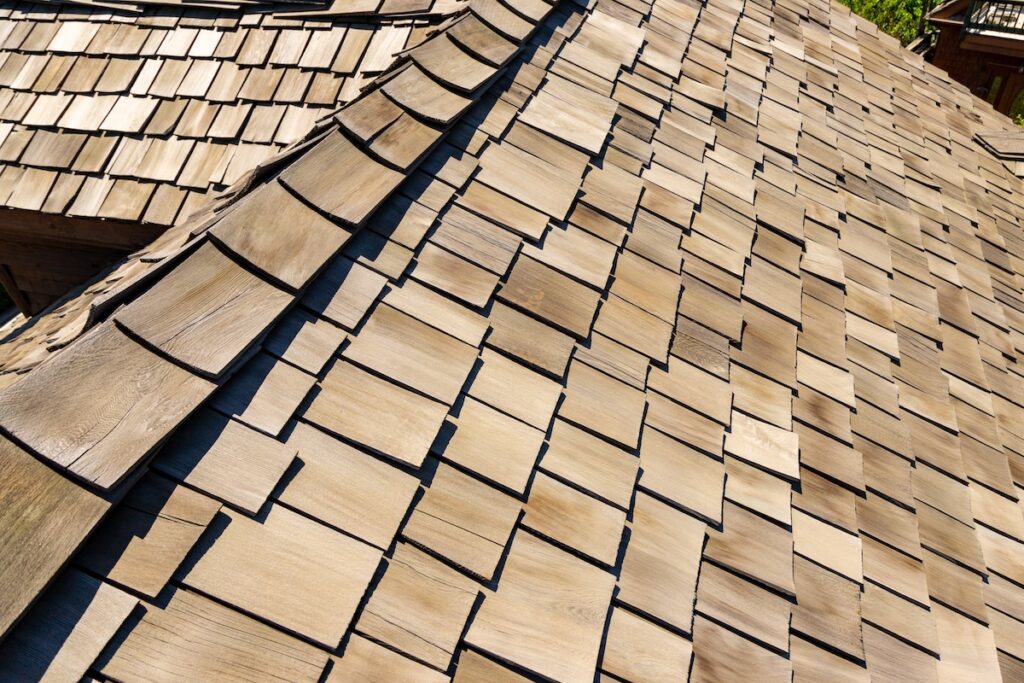
Cedar shake roofs age differently than asphalt or metal, which means the signs to watch for and the decisions involved are also different. Understanding what’s happening to the wood helps homeowners make smart calls about repair versus replacement.
What Actually Wears Out on a Cedar Shake Roof?
Cedar shake roofs wear out through a combination of moisture cycling, UV exposure, and biological growth that gradually breaks down the wood fibers. Cedar is naturally resistant to rot and insects, but no wood lasts forever, and over decades the shakes lose their natural oils, develop cracks, and become more susceptible to moss, algae, and mildew. Hardware fails too, with the original nails sometimes rusting out before the wood itself fails. The flashing around chimneys, vents, and valleys also ages and needs replacement well before the shakes themselves do. In Manassas and surrounding areas where humidity and freeze-thaw cycles are significant, cedar shake roofs typically reach replacement age between 25 and 40 years.
- Moisture cycling: Wetting and drying breaks down wood fibers over years.
- UV exposure: Sunlight degrades the wood’s natural oils and surface.
- Biological growth: Moss, algae, and mildew accelerate wood breakdown.
- Hardware aging: Original fasteners can fail before the wood itself.
What’s the Difference Between Cedar Shakes and Cedar Shingles?
Cedar shakes and cedar shingles look similar but are actually different products with different lifespans and installation methods. Shakes are split from the wood block, giving them a rough, textured surface that’s thicker and more rustic-looking. Shingles are sawn, with a smoother surface and more uniform appearance, and they’re typically thinner. Shakes generally last 30 to 40 years, while shingles typically last 25 to 30 years under similar conditions. Both come in different grades (premium, No. 1, No. 2, and No. 3 for shakes), and the grade significantly affects lifespan and price. Homeowners in Manassas and surrounding areas should know which they have before pricing replacement.
- Cedar shakes: Split, thicker, rougher texture, longer lifespan.
- Cedar shingles: Sawn, thinner, smoother appearance, shorter lifespan.
- Grade differences: Premium and No. 1 grades last longest.
- Visual identification: Shakes have a more textured, irregular look.
4 Signs Repair Is No Longer Making Sense
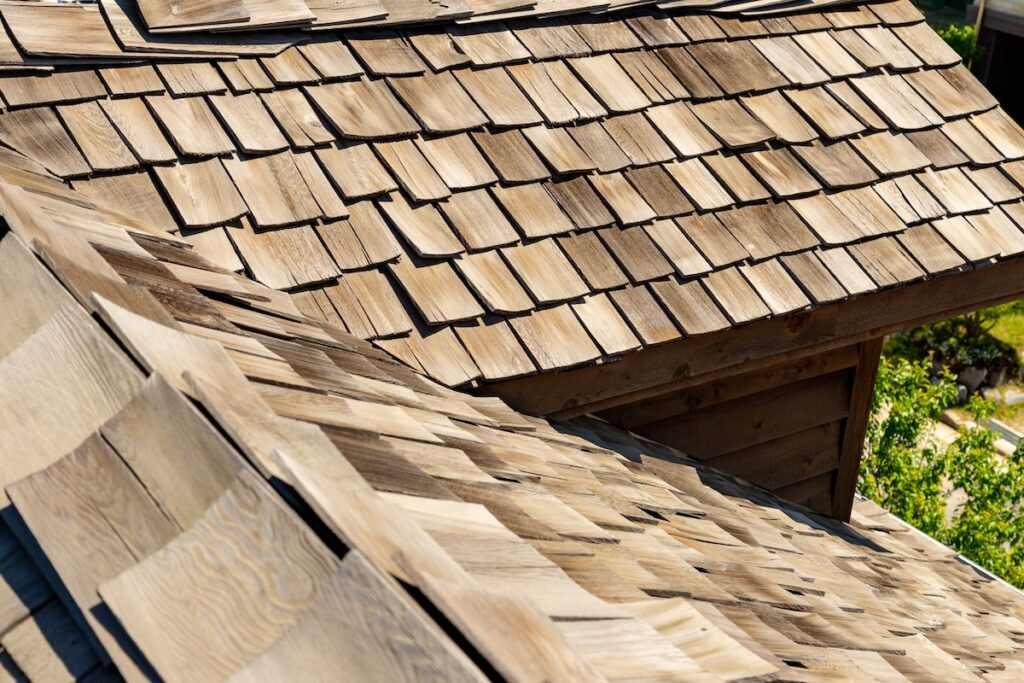
When cedar shake repair stops making financial sense usually comes down to four specific signals. Recognizing them helps homeowners avoid throwing good money after bad.
1. Widespread Splitting, Curling, or Cupping
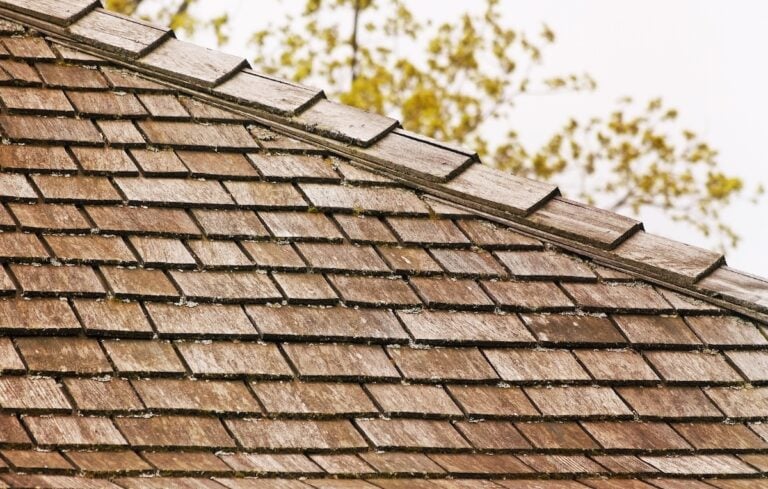
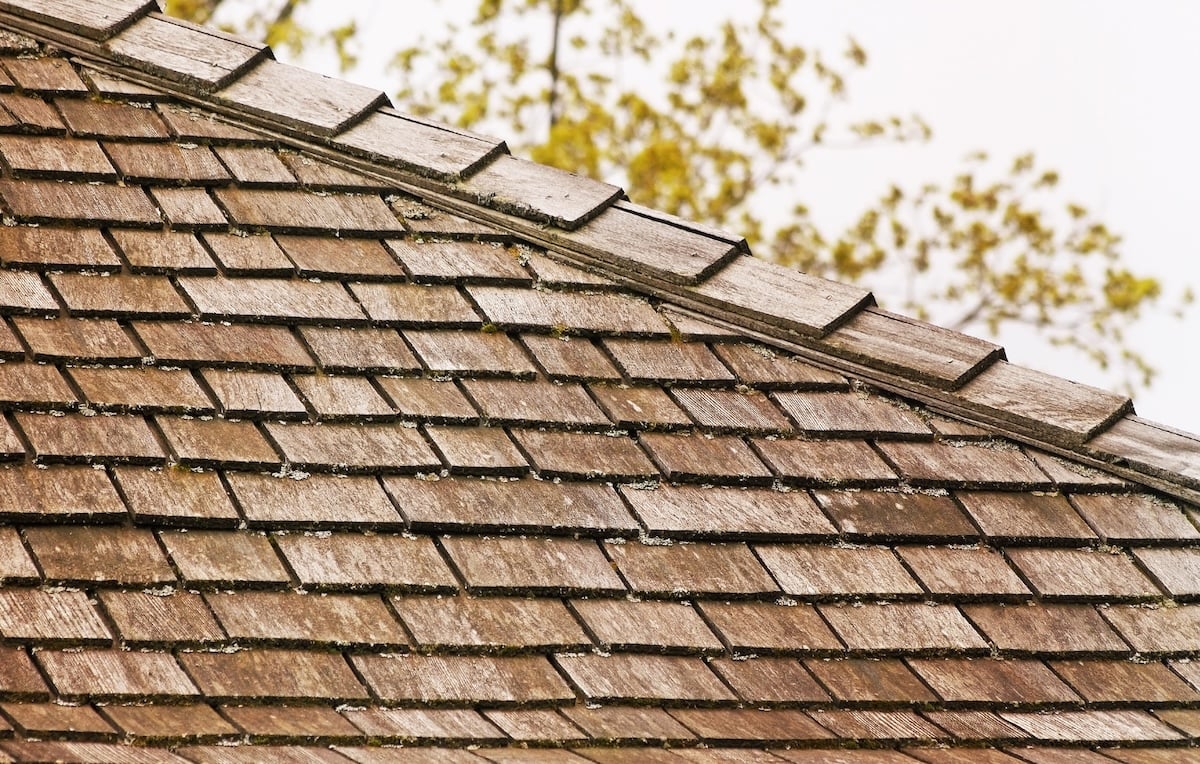
Widespread splitting, curling, or cupping across the roof tells you the wood has reached the end of its useful life. A few cracked shakes here and there can be replaced, but when you can see cupping (where the shake curls up at the edges) or widespread cracking across multiple slopes, the material itself is failing. At this point, spot repairs become a constant cycle as new shakes fail next to the ones just replaced. Cupping also creates gaps where water can sneak under shakes, which can lead to leaks even when individual shakes look intact from the ground. Inspections from a knowledgeable contractor confirm whether the damage is localized or roof-wide.
- Cupping: Edges curl up, creating water entry points.
- Splitting: Cracks running with the grain across many shakes.
- Pattern of failure: Damage appearing across multiple slopes, not just one area.
- Replacement cycle: Constantly chasing new failures as old ones are patched.
2. Rot and Soft Spots in Multiple Areas
Rot and soft spots tell you that moisture has been getting into the wood faster than it can dry out, and once rot is widespread, replacement is usually the smarter call. Cedar is naturally rot-resistant, but the natural oils that protect it deplete over decades and the wood loses that resistance. Soft spots feel spongy underfoot or when pressed, and they often appear first in the lower edges of shakes, in valleys, and around penetrations. Rotted shakes can’t be repaired; they have to be removed and replaced. When you’re finding rot in multiple locations across the roof, the material is signaling it’s done. Trying to chase rot across a failing roof gets expensive quickly.
- Soft spots: Wood feels spongy when pressed.
- Lower edge failure: Bottom of shakes most prone to rot.
- Valley damage: Standing moisture accelerates rot.
- Multiple locations: Widespread rot signals systemic failure.
The Cedar Shake & Shingle Bureau’s grading rules (CSSB-97) have been adopted by the International Residential Code and the International Building Code as the standard for cedar shake and shingle quality, with premium and No. 1 grades providing the longest service life of 30 to 40 years under normal conditions, which is why understanding the original grade on your roof helps homeowners predict when replacement will be needed.
3. Repeated or Multiple Leaks Across the Roof
Repeated leaks or multiple active leaks across different parts of the roof signal that the protective layer has reached the end of its life. A single leak in a defined spot is often a repair, but leaks showing up in valleys, around penetrations, along ridges, and in random spots in the field tell you the underlying material and underlayment are failing as a system. Cedar shake roofs depend on the combined performance of the wood, the underlayment, and the spaced sheathing, and when leaks appear in multiple unrelated spots, the whole system is breaking down. At this point, paying for repair after repair just delays the inevitable. Homeowners often hit this point between years 25 and 35 of a cedar roof’s life.
- Multiple leak sources: Leaks in unrelated locations signal system failure.
- Recurring leaks: Same spot leaking after repeated repairs means the area needs full work.
- Hidden damage: Underlayment failure may be invisible until leaks reveal it.
- Repair fatigue: Multiple repair calls in a year point to bigger problems.
4. Hardware Failure and Underlayment Breakdown
Hardware failure and underlayment breakdown often happen before the shakes themselves are fully done, which can shorten a cedar roof’s useful life if not addressed. Original installation nails can rust out, especially if galvanized rather than stainless steel were used, leaving otherwise sound shakes loose or missing. The underlayment beneath the shakes, often felt paper in older installations, breaks down faster than the wood and loses its waterproofing ability. When a roof inspection reveals failing fasteners across the roof or underlayment that’s brittle and torn, full replacement starts to make more sense than partial repairs. This is why cedar shake roofs sometimes need replacement before the shakes themselves look obviously bad.
- Nail failure: Original fasteners may rust out before shakes fail.
- Underlayment breakdown: Felt or synthetic underlayment degrades over decades.
- Loose shakes: Sound wood detaching from the roof due to fastener issues.
- Comprehensive inspection: Specialists check fasteners and underlayment, not just shakes.
What Cedar Shake Replacement Actually Involves
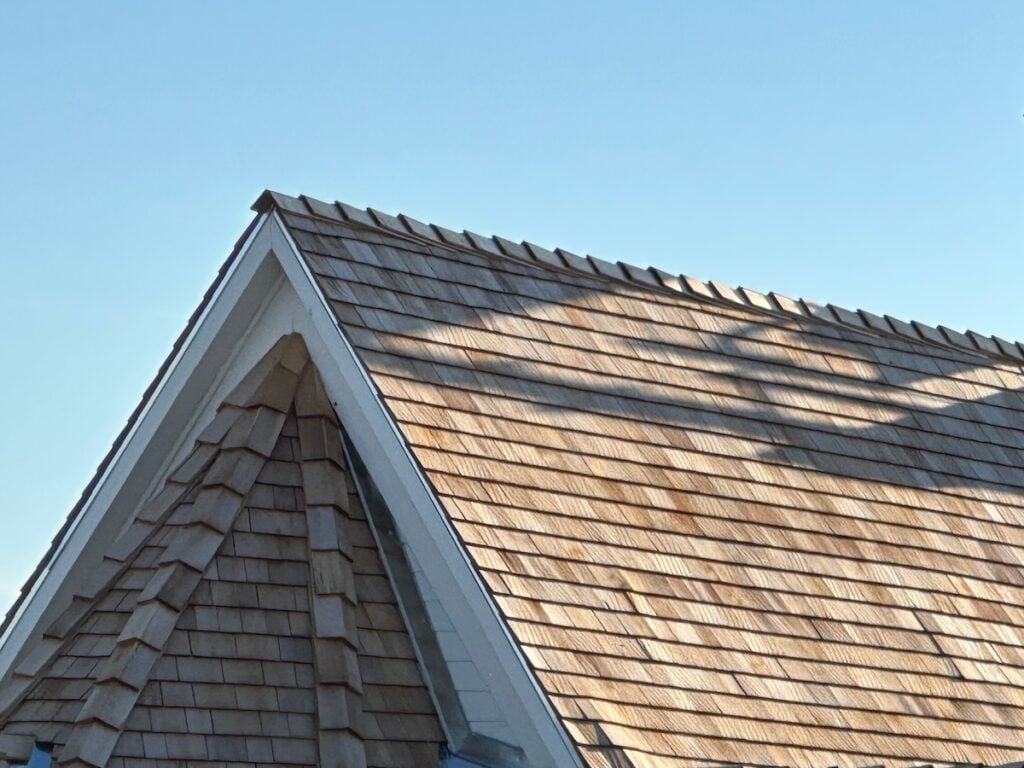
Cedar shake replacement isn’t a quick job, and homeowners benefit from knowing what to expect before scheduling work. The process differs from asphalt replacement in several ways.
What’s the Typical Process for a Cedar Shake Replacement?
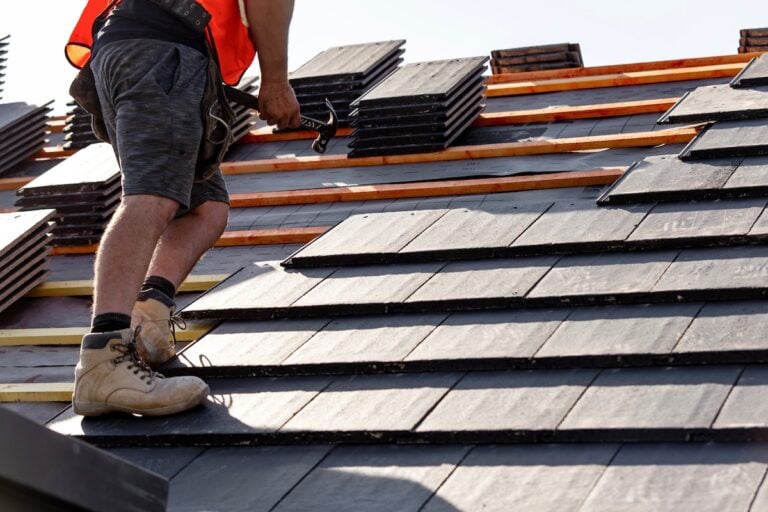
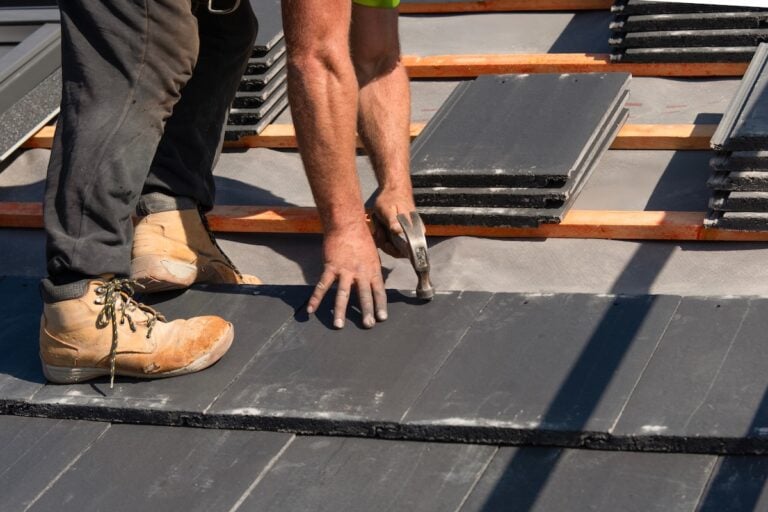
A typical cedar shake replacement starts with structural inspection, then full tear-off of the existing shakes and underlayment, inspection and repair of the sheathing, installation of new underlayment, then careful placement of new shakes from the eaves up. Cedar shakes require specific exposure patterns and spacing for proper drainage and air circulation, which means installation takes longer than asphalt. Most cedar shake replacements take 5 to 10 days depending on roof size and complexity, compared to 1 to 3 days for asphalt. The job also requires specialty fasteners (stainless steel ring shank nails), specific underlayment, and sometimes ventilation upgrades that older homes weren’t built with. Homeowners in Manassas and surrounding areas should expect a longer timeline and higher cost than asphalt work.
- Full tear-off: Old shakes and underlayment removed completely.
- Sheathing inspection: Substrate evaluated and repaired as needed.
- Specialty materials: Stainless steel fasteners and proper underlayment.
- Longer install: 5 to 10 days typical, weather permitting.
What Should Cedar Shake Replacement Cost?
Cedar shake replacement typically costs $18,000 to $40,000 for an average home, depending on roof size, complexity, shake grade, and labor rates. That’s roughly $12 to $20 per square foot for materials and labor combined, with premium grade shakes running higher. The cost is meaningfully higher than asphalt because of material cost, the time the installation takes, and the specialty skill required. Repairs on a cedar shake roof typically run $500 to $3,000 depending on scope, so once you’re looking at multiple repairs annually adding up to several thousand dollars, replacement starts to make sense. Many homeowners also use the timing of replacement to consider whether to switch to a different material entirely.
- Cost range: $18,000 to $40,000 for typical homes.
- Per square foot: $12 to $20 installed, depending on grade.
- Cost vs. asphalt: Roughly 2 to 3 times the cost of an asphalt replacement.
- Repair threshold: Multiple repairs adding up to thousands annually signals replacement.
Should Homeowners Consider Switching Materials at Replacement?
Switching materials at replacement is worth considering because cedar shake is a high-maintenance, high-cost material that not every homeowner wants to keep. Modern alternatives like architectural asphalt shingles with cedar-shake styling, synthetic cedar shake (made from polymer composites), or metal roofs designed to look like cedar can deliver the visual appeal of cedar at a fraction of the cost and maintenance burden. Switching materials may require some structural and aesthetic considerations, and HOA rules in some neighborhoods restrict material choices on historic homes. A reputable contractor in Manassas and surrounding areas can walk through the options and pricing for each path. The decision often comes down to how much you love the cedar look versus how much maintenance you’re willing to keep doing.
- Asphalt with cedar styling: Designer asphalt shingles that mimic cedar appearance.
- Synthetic cedar shake: Polymer composite products with 40 to 50 year lifespans.
- Metal roofing: Standing seam or stamped metal designed to look like cedar.
- HOA review: Check neighborhood rules before changing materials.
Frequently Asked Questions
How long does a cedar shake roof last?
A cedar shake roof typically lasts 30 to 40 years, with premium and No. 1 grade shakes on the higher end and No. 2 or No. 3 grades on the lower end. Climate, installation quality, and maintenance all affect lifespan. In humid mid-Atlantic climates, expect the middle of that range with proper care.
How much does cedar shake repair cost?
Cedar shake repair typically costs $500 to $3,000 for individual issues like replacing damaged shakes, repairing flashing, or addressing localized rot. Major repairs involving multiple slopes or significant structural work run higher. Once annual repair costs start exceeding $3,000 to $5,000, full replacement starts to make financial sense.
Can I replace just part of my cedar shake roof?
Partial replacement of a cedar shake roof is sometimes possible for isolated sections like a single slope, but it’s rarely the best long-term value. New cedar next to old creates a color mismatch that lasts for years, and the older sections will continue aging while the new ones are still fresh. Most contractors recommend full replacement when major work is needed.
Will switching from cedar to asphalt hurt my home’s value?
Switching from cedar to asphalt may or may not affect home value, depending on the neighborhood, the buyer pool, and the quality of the asphalt installation. In neighborhoods where cedar is expected on historic homes, switching can reduce appeal. In other neighborhoods, lower maintenance and predictable cost can be a selling point. Check comparable sales and HOA rules before deciding.
How often should cedar shake roofs be inspected?
Cedar shake roofs should be professionally inspected once a year and after any major storm. Annual inspections catch the small problems that lead to bigger ones, and cedar specifically benefits from cleaning, sealant work, and minor repairs that extend its life. Most reputable contractors familiar with cedar offer this service.
What if I can’t find a cedar shake contractor nearby?
If a cedar shake specialist isn’t available locally, it may be worth bringing one in from a wider region for major work. The Cedar Shake & Shingle Bureau directory can help locate experienced installers. For minor repairs or assessment, a general roofer can sometimes handle the work, though specialists deliver better results on cedar.
Choose Springfield Roofing & Sheet Metal for Honest Roofing Guidance
When homeowners are weighing cedar shake roof replacement against another round of repairs, the most important thing is finding the right contractor for the work that needs to be done. Springfield Roofing & Sheet Metal is a 1st and 2nd generation family-owned and operated company serving Manassas and surrounding areas with a dedicated in-house crew, full labor and material warranties, and CertainTeed 5-Star Select Shingle Master certification. We specialize in asphalt shingle and sheet metal roofing rather than cedar shake, and we’ll happily refer cedar work to qualified specialists when that’s what your home needs. If you’re considering switching to asphalt shingles or another material we install, contact Springfield Roofing & Sheet Metal today for a free estimate and honest guidance on the best path for your home.