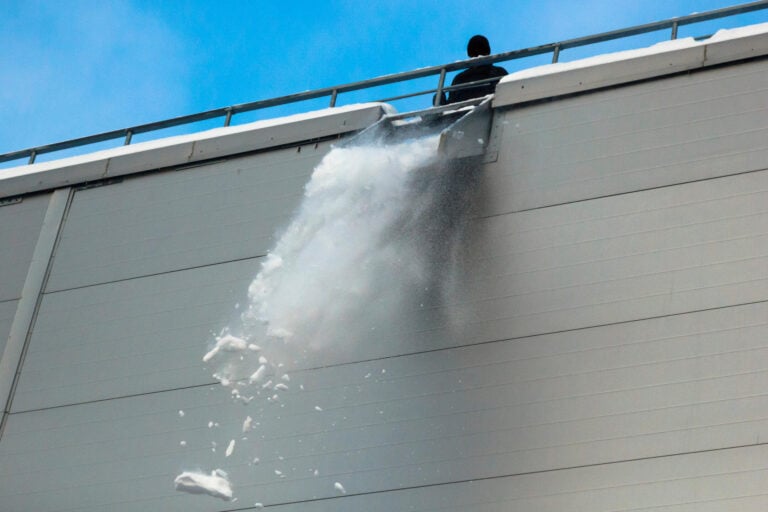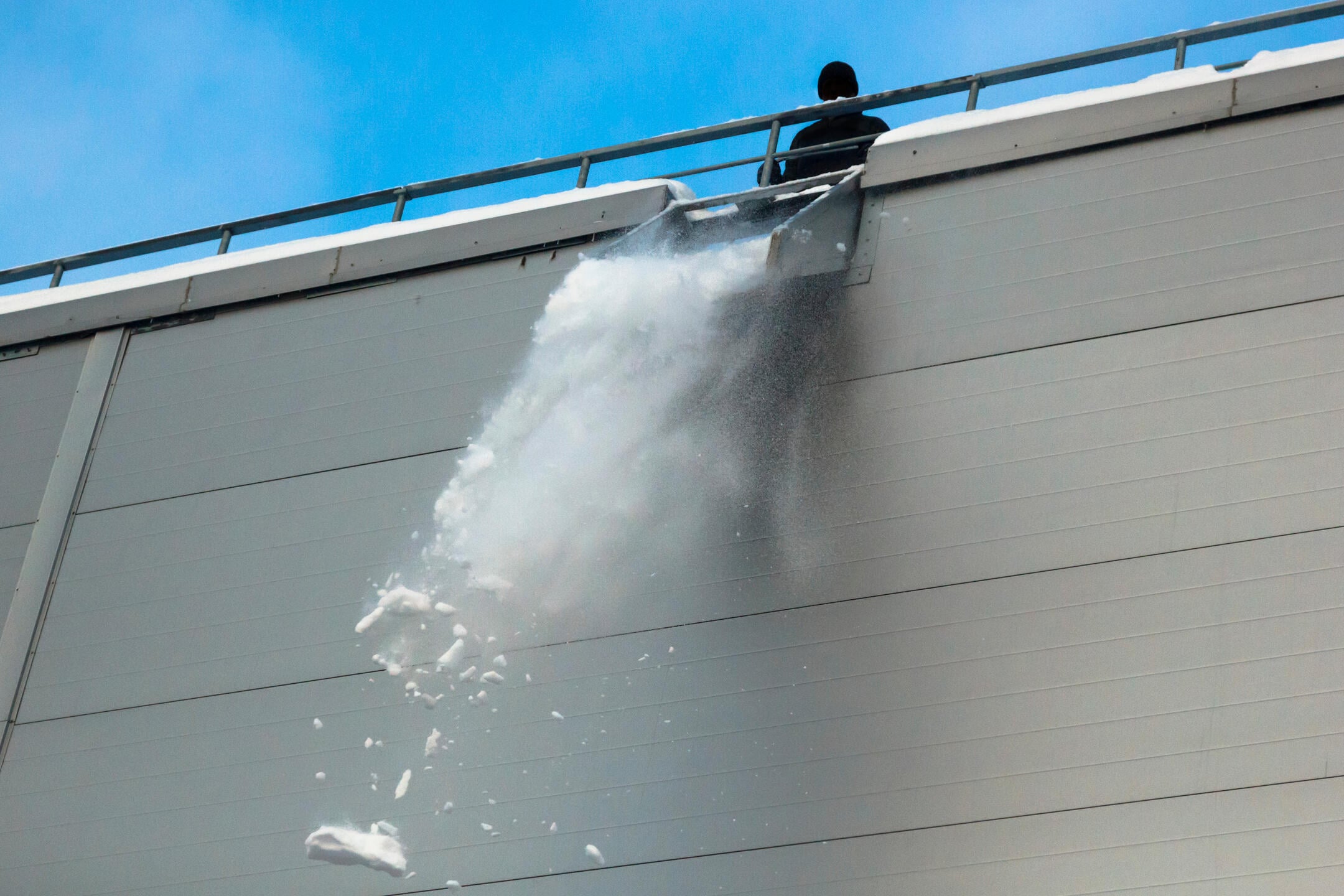
A heavy snowfall can turn a quiet winter weekend into a serious problem for any commercial building. Flat and low-slope roofs hold snow instead of shedding it, and the weight adds up faster than most people expect. Planning for commercial roof snow removal before the first storm protects your tenants, your inventory, and the structure itself. A clear plan also helps you keep your building’s roof system performing through every season without costly surprises. Here is what property managers should know before winter arrives.
In this guide, you will find:
- Why snow and ice create real risks for commercial roofs
- A step-by-step approach to safe snow removal
- Signs that it is time to clear the roof
- How to decide between in-house crews and professionals
The Real Cost of Ignoring Snow on a Commercial Roof
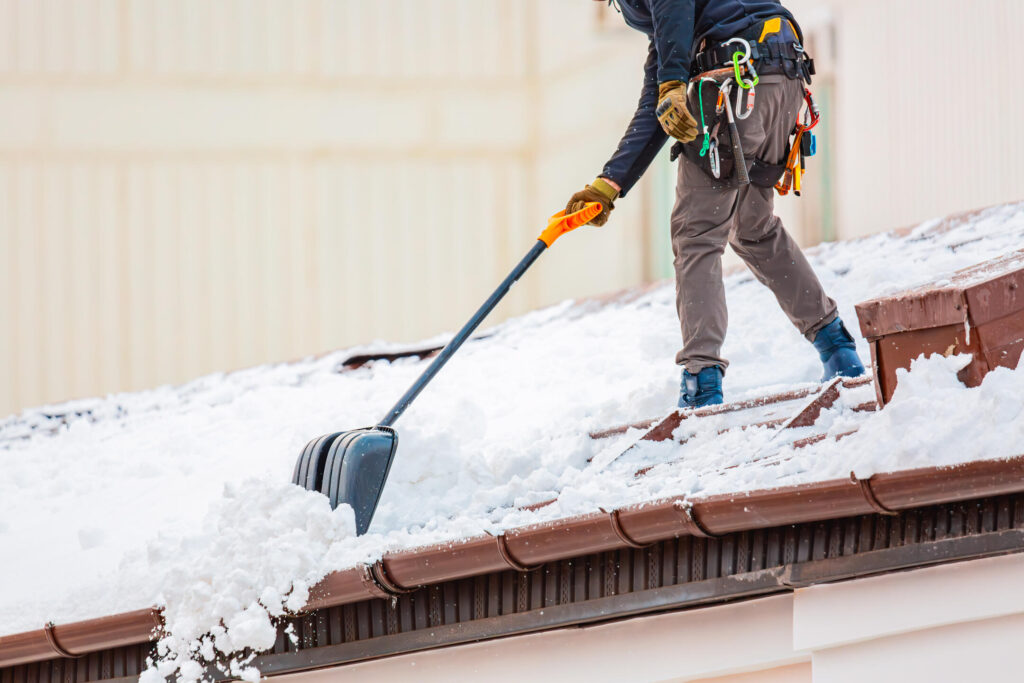
Snow may look harmless from the parking lot, but it can place enormous stress on a commercial roof. Large, wide-span roofs on warehouses, retail centers, and office buildings collect snow across thousands of square feet, and every inch adds weight to the structure below.
According to one insurance industry guide, a foot of fresh snow can weigh anywhere from about three pounds per square foot when light and dry to as much as 21 pounds per square foot when wet and heavy, which means heavy snow on a commercial roof can quickly create significant structural stress. Here is why a proactive approach matters:
- Reduces structural risk: Removing excess snow helps keep the load within what the roof was designed to carry, lowering the chance of sagging or collapse.
- Prevents leaks and interior damage: Melting snow that cannot drain can find its way through seams, flashing, and penetrations, damaging ceilings, equipment, and inventory.
- Protects people below: Ice buildup and falling snow at roof edges create hazards for tenants, employees, and visitors near entrances and walkways.
- Limits business disruption: A roof failure or major leak can shut down operations for days or weeks, which often costs far more than planned snow management.
For property managers in Manassas and surrounding areas, winter storms can be unpredictable, with heavy, wet snow followed by rain or freezing temperatures. That combination is exactly what makes a written snow plan worth having before the season starts.
7 Steps for Safe and Effective Snow Removal
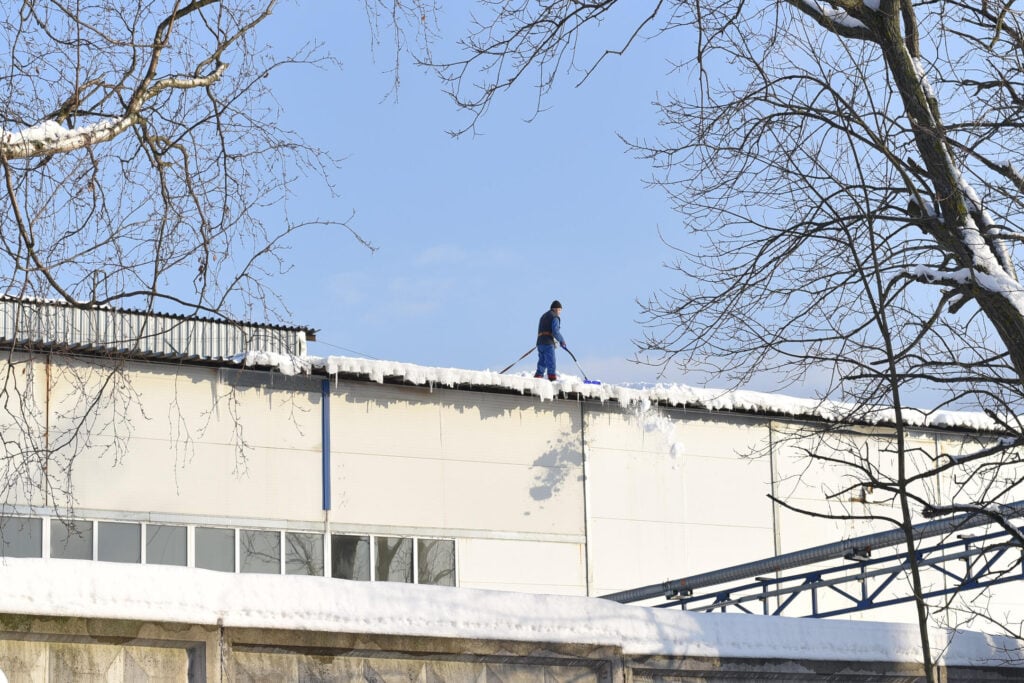
Clearing snow from a commercial roof is not as simple as sending a crew up with shovels. Done incorrectly, snow removal can damage the roof membrane, overload certain areas, or put workers at serious risk.
1. Build a Snow Plan Before Winter
The best time to plan is long before the first flake falls. A solid plan identifies who is responsible, when removal is triggered, and how crews will safely access the roof.
- Confirm your roof’s design snow load with building records or an engineer
- Create a roof map showing drains, skylights, equipment, and edges
- Line up a qualified contractor in advance, before demand spikes
2. Wait Until the Storm Has Passed
Snow removal during an active storm is unsafe and often ineffective, since new snow simply replaces what was cleared. Once the storm ends, crews can begin working with better visibility and footing.
3. Assess the Roof Before Anyone Goes Up
If the roof shows signs of stress, such as sagging or unusual sounds, a structural engineer should evaluate it before workers step onto it. Safety comes before speed, and no amount of snow is worth risking a collapse while a crew is on the roof.
4. Clear the Most Critical Areas First
Not all snow needs to go at once. Start with the areas that carry the most risk.
- Roof drains and scuppers, so meltwater can escape
- Drift areas near parapets, walls, and rooftop equipment
- Roof edges and the centers of structural bays
5. Leave a Protective Layer
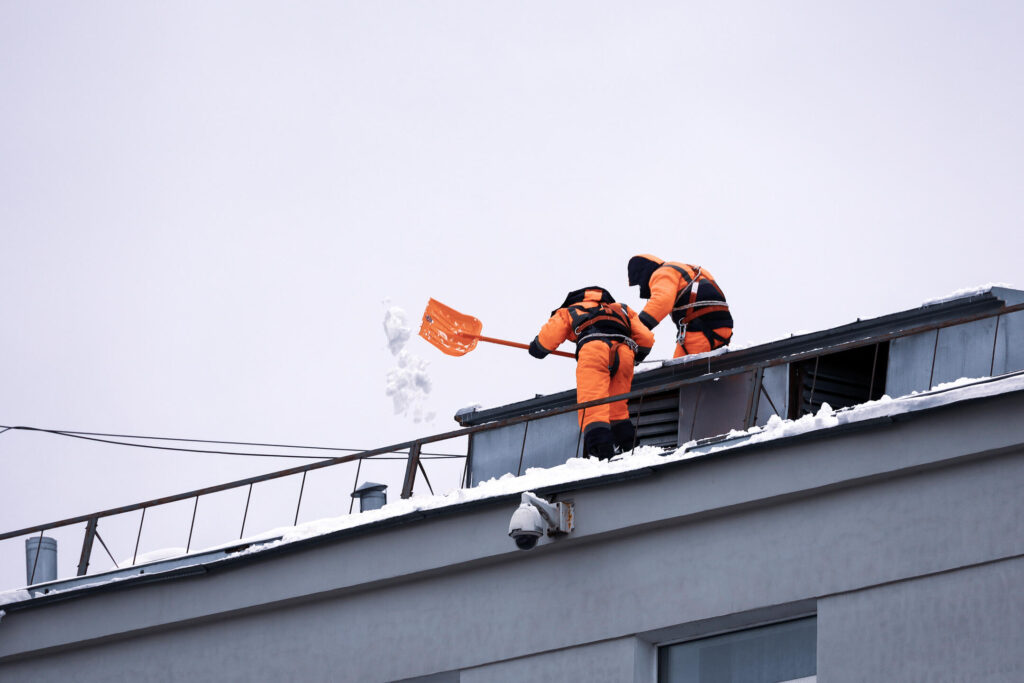
Shoveling down to the roof surface can puncture or tear the membrane. Crews should stop a couple of inches above the surface and use plastic shovels or snow rakes rather than metal tools or picks that can easily damage roofing materials.
6. Remove Snow in a Balanced Way
Clearing one side of a roof while the other stays fully loaded creates uneven stress. Snow should be removed in a balanced pattern, and it should be moved directly off the roof rather than piled in another spot, where it can compact and add concentrated weight.
7. Inspect After Removal
Once the roof is clear, check drains, flashing, seams, and rooftop units for damage. Catching a small tear or loose flashing right away prevents it from becoming a leak during the next melt.
Following these steps helps protect both the roof and the people working on it. A consistent process also makes it easier to document your efforts, which can be helpful for insurance and maintenance records.
Warning Signs It Is Time to Clear the Roof
Snow depth alone does not tell the whole story. Wet snow, ice layers, and drifts can push a roof toward its limits even when the total snowfall seems modest.
Watch for these signs that removal should not wait:
- Sagging ceilings or roof deck: Visible deflection inside the building is a serious warning that requires immediate attention.
- Doors that stick or will not latch: Interior doors that suddenly bind can signal that the structure is shifting under weight.
- Creaking or popping sounds: Unusual noises from the roof framing are a sign of strain and should never be ignored.
- New leaks or water stains: Water appearing during or after a snowfall often means meltwater is backing up and finding a way in.
- Large drifts against walls or equipment: Drifts can concentrate several times the weight of surrounding snow in one small area.
- Rain falling on existing snow: Snow acts like a sponge, absorbing rainwater and adding considerable weight in a short time.
- Ice blocking drains: When drains freeze over, water has nowhere to go and can pond, refreeze, and add load.
If you notice any of these warning signs, limit access to the affected area and contact a professional right away. It is always better to act early than to wait and hope the weather turns warmer.
In-House Crew or Professional Snow Removal?
Some property managers consider using maintenance staff to clear roofs, while others hire roofing professionals. Each approach has tradeoffs, and the right choice depends on your building, your staff, and your risk tolerance.
Comparing Your Options
The table below highlights the key differences between handling roof snow removal internally and hiring a qualified roofing contractor:
| Factor | In-House Maintenance Staff | Professional Roofing Contractor |
| Roof knowledge | Limited; may not recognize membrane types or weak points | Trained to protect membranes, seams, and flashing |
| Safety equipment | Often lacks proper fall protection and training | Uses harnesses, anchors, and established safety plans |
| Risk of roof damage | Higher, especially with metal shovels or overclearing | Lower, with proper tools and techniques |
| Insurance coverage | May not cover rooftop work or injuries | Should carry workers’ compensation and liability coverage |
| Post-removal inspection | Rarely included | Can identify and repair damage on the spot |
What to Ask a Contractor
Before hiring anyone for roof snow removal, ask the right questions:
- Do you carry general liability and workers’ compensation insurance?
- What tools and techniques do you use to protect the membrane?
- Will you inspect the roof and report any damage after clearing it?
For many buildings in Manassas and surrounding areas, working with a roofing professional offers peace of mind and lower long-term costs. A contractor who understands commercial roof systems can remove snow safely and spot developing problems before they turn into expensive repairs.
Frequently Asked Questions About Commercial Roof Snow Removal
Property managers often have similar questions when winter weather arrives. Here are clear answers to some of the most common ones.
How much snow is too much for a commercial roof?
It depends on your roof’s design snow load, the type of snow, and how it is distributed. A foot of wet, heavy snow weighs far more than a foot of light powder, so weight matters more than depth alone.
Can snow removal damage my roof?
Yes, if it is done incorrectly. Metal shovels, ice picks, and clearing down to the surface can puncture membranes and damage flashing. Leaving a protective layer of snow and using the right tools helps prevent this.
Should we remove all the snow from the roof?
Not usually. The priority is to clear drains, drifts, and high-risk areas while keeping the load balanced. Removing every bit of snow takes longer and increases the risk of surface damage.
Is it safe for our maintenance team to clear the roof?
Rooftop work involves fall hazards, hidden skylights, and slippery surfaces. Unless your team has proper training, fall protection, and insurance coverage, hiring a qualified contractor is the safer choice.
What should we do after the snow is removed?
Schedule an inspection of drains, seams, flashing, and rooftop equipment. Addressing any damage promptly prevents leaks during the next thaw or rainstorm.
Every commercial roof is different, so your snow plan should reflect your building’s specific design and needs. A professional assessment before winter can help you set clear removal triggers and avoid guesswork during a storm.
Be Ready Before the Next Winter Storm
Snow and ice are a normal part of winter, but they do not have to become a crisis for your building. A clear snow removal plan, quick action when warning signs appear, and careful post-storm inspections go a long way toward protecting your roof, your tenants, and your bottom line.
Springfield Roofing helps property managers in Manassas and surrounding areas prepare their commercial roofs for winter and address damage when storms take a toll. To talk through your building’s needs before the next snowfall, contact us today.