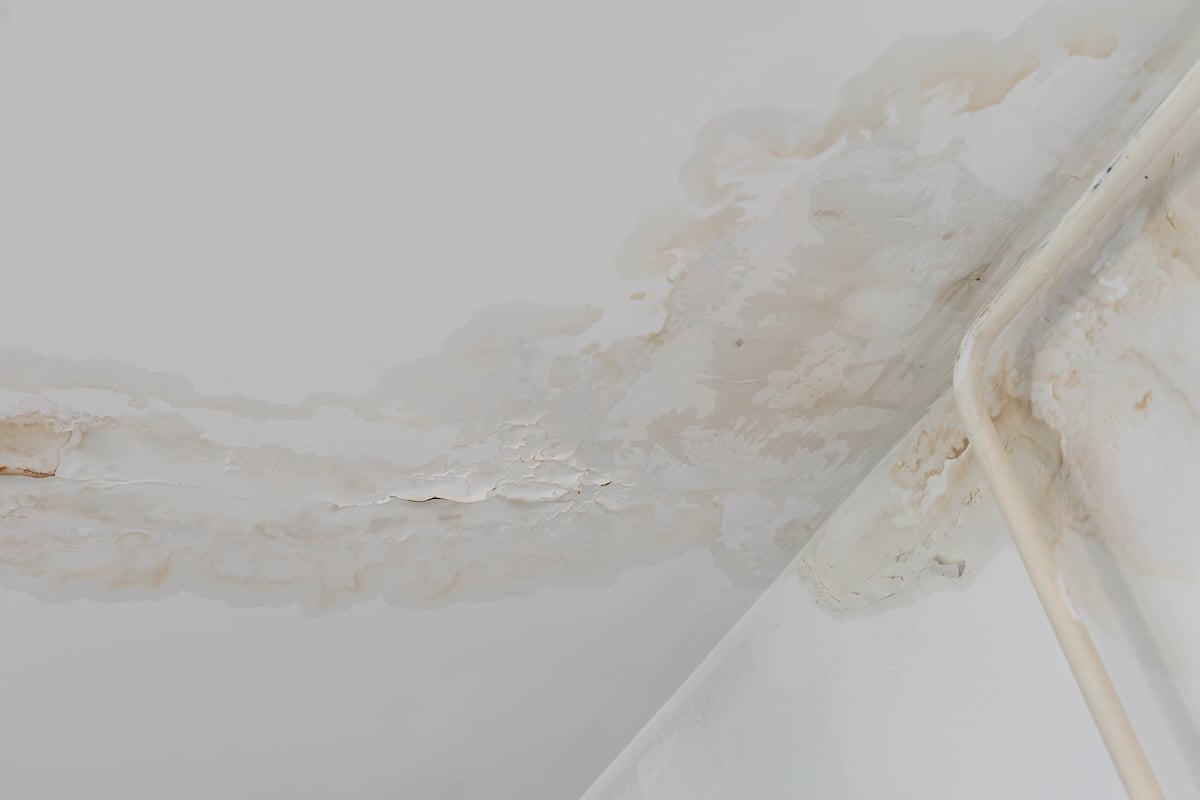
Water stains on ceiling surfaces are one of the clearest signs that something above is letting water in, and ignoring them almost never makes them go away. Homeowners in Alexandria and surrounding areas often notice a small brown or yellow ring forming on a ceiling and hope it’ll dry out and disappear, but the stain is just the visible end of a problem that started days or weeks earlier somewhere in the attic, roof, or plumbing. Figuring out the cause matters because the right fix depends entirely on where the water is coming from. This guide walks through the most common causes, the warning signs that come with each, how to tell which one you’re dealing with, and what to do next.
- Most common causes: Roof leaks, plumbing leaks, HVAC condensation, and ice dams.
- Warning signs: Color, shape, location, and how the stain grows all tell you something.
- Why timing matters: Mold can start in as little as 24 to 48 hours after water damage.
What Causes Water Stains on Ceilings?
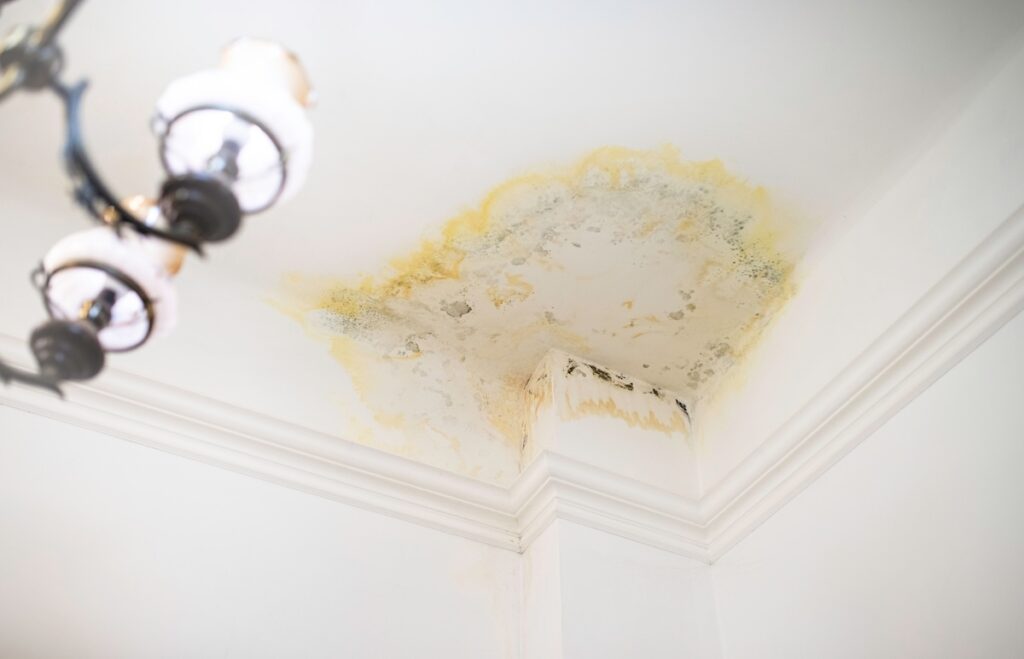
Water stains can come from a handful of different sources, and each leaves a slightly different signature. Knowing what to look for helps narrow down where the water is actually coming from.
How Do Roof Leaks Cause Ceiling Stains?
Roof leaks cause ceiling stains when water gets past the shingles, underlayment, or flashing and finds its way down through the attic to the ceiling drywall below. The water often travels along rafters or trusses before dripping down, which means the stain on your ceiling may be several feet away from the actual roof problem. Common roof leak sources include missing or damaged shingles, failed flashing around chimneys and vents, ice dam backups along the eaves, and cracked skylight seals. Homes in Alexandria and surrounding areas often see roof leaks show up first as small ceiling rings that grow after each rainstorm. Catching them early is much cheaper than waiting until the drywall starts to sag.
- Missing shingles: Wind or age leaves spots without protection.
- Failed flashing: Cracked sealant around chimneys, vents, or skylights.
- Ice dams: Water backs up under shingles when ice forms along the eaves.
- Hidden travel: Water often shows up far from where it actually enters the roof.
What Plumbing Issues Lead to Ceiling Water Stains?
Plumbing issues lead to ceiling stains when a pipe, drain, or fixture above the ceiling leaks water down through the floor and into the ceiling below. Bathrooms directly above living areas are the most common source, with stains often appearing under shower drains, toilets, or sink supply lines. Slow leaks from a loose pipe fitting or a worn shower pan can take weeks to show up on the ceiling, and by then there’s usually significant hidden damage in the floor cavity. Plumbing leaks tend to produce stains in predictable spots tied to fixtures above, which helps distinguish them from roof leaks. A plumber, not a roofer, handles this type of repair.
- Bathroom fixtures: Stains under showers, tubs, and toilets point to plumbing.
- Supply lines: Slow drips from pipe joints leave gradual stains.
- Shower pan leaks: Often the source when the stain is under a tile shower.
- Predictable location: Stains line up with plumbing above, not roof features.
How Does HVAC Condensation Show Up on Ceilings?
HVAC condensation shows up on ceilings when an air handler, condensate line, or ductwork in the attic drips water onto the ceiling below. Air conditioners pull moisture out of the air, and that water has to drain somewhere. When the drain pan overflows, the condensate line clogs, or duct insulation fails, water collects and eventually drips down. These stains often appear in summer when AC use is heaviest and can show up suddenly after weeks of normal operation. Homes in Alexandria and surrounding areas with attic-mounted HVAC equipment see this most often, and the fix usually involves an HVAC technician rather than a roofer.
- Clogged condensate line: Most common cause of attic HVAC water issues.
- Overflowing drain pan: Backup happens when the line is fully blocked.
- Failed duct insulation: Sweating ducts drip on the ceiling below.
- Summer timing: Stains often appear during peak AC use.
What Different Stain Patterns Tell You
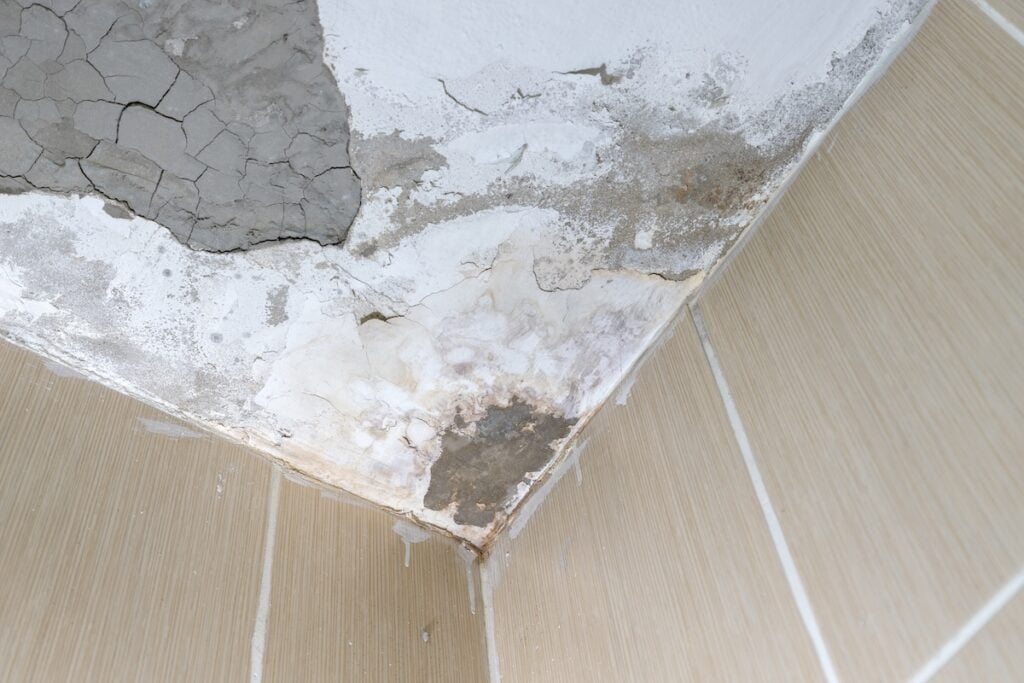
The shape, color, and behavior of a water stain can tell you a surprising amount about what’s causing it. Reading these clues helps you talk to the right professional first.
What Does the Color of a Ceiling Stain Mean?
The color of a ceiling stain tells you how clean the water is and how long the leak has been happening. Fresh, clean water from a roof leak or HVAC system usually leaves a yellow or light brown ring as it dries, with a darker outer edge and a lighter center. Darker brown or amber stains suggest the water has picked up tannins from wood or dust as it traveled through the attic. Black or dark green tones can point to mold, which is a sign the leak has been active long enough for biological growth to start. Reddish or rust-colored stains may mean water is contacting metal somewhere on its path, like nails, ductwork, or pipes.
- Light yellow or tan: Recent or active leak with relatively clean water.
- Dark brown or amber: Older leak that has carried wood or dust residue.
- Black or green: Possible mold growth from prolonged moisture.
- Reddish or rust: Water contacting metal somewhere on its path.
What Does the Shape of a Water Stain Reveal?
The shape of a water stain reveals how the water is moving above the ceiling. A circular or ring-shaped stain usually means water is dripping from a single point above and pooling on top of the drywall before soaking through. A long, linear stain often points to water running along a beam, joist, or pipe before dripping down. Stains that follow the lines of a ceiling feature like a beam or recessed light tell you the water is traveling along a structural path. Spreading stains that grow with each rainstorm point to an active roof leak, while stains that stay roughly the same size may be from a one-time event.
- Circular ring: Single drip point above the ceiling.
- Linear streak: Water running along a beam or pipe.
- Growing stain: Active, ongoing leak that needs immediate attention.
- Stable stain: Possibly from a past event but worth investigating.
When Should You Worry About Sagging or Bubbling?
You should worry about sagging or bubbling drywall when it appears alongside a water stain, because both signal that significant water has soaked into the ceiling material. Sagging drywall is at risk of falling, and the water it’s holding can suddenly release if the surface gives way. Bubbling paint or peeling tape lines are earlier warning signs that water has saturated the drywall but hasn’t yet broken through. Either of these means you should stop using any rooms below the stain, place a bucket underneath, and call a professional right away. Homeowners in Alexandria and surrounding areas who notice sagging should treat it as an urgent problem, not a cosmetic one.
- Sagging drywall: Risk of falling, especially with continued water exposure.
- Bubbling paint: Early sign of saturation under the painted surface.
- Peeling seam tape: Water has worked its way into drywall joints.
- Visible drips: Active leak that needs immediate containment.
5 Steps Homeowners Should Take When They See a Ceiling Stain
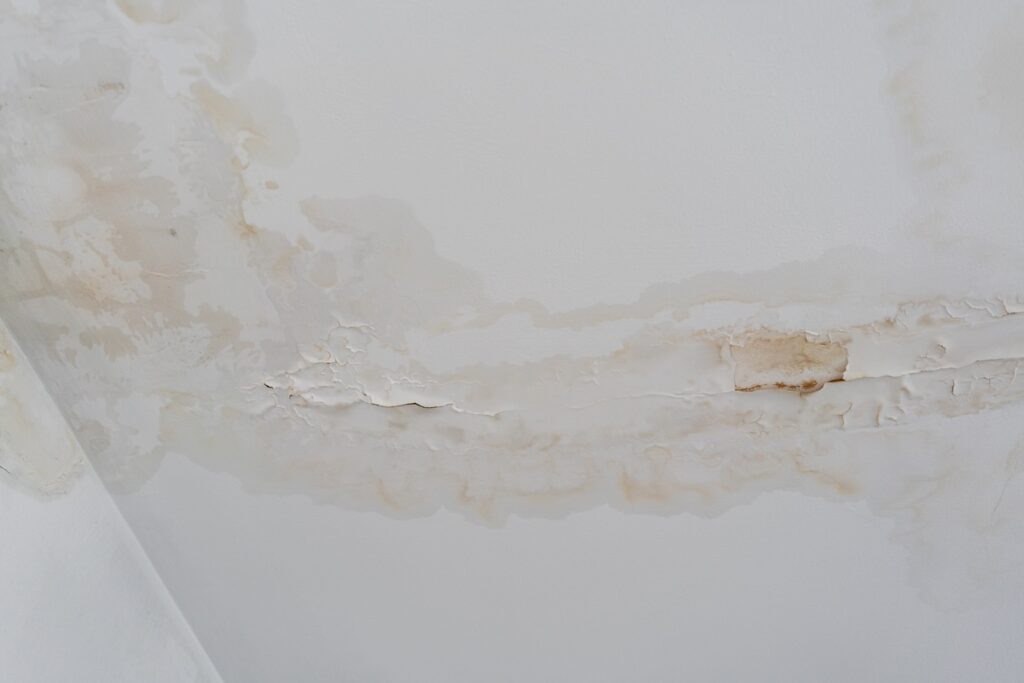
Spotting a water stain calls for a specific sequence of actions to limit damage, identify the cause, and get the right repair done. Following these steps in order keeps small problems from becoming big ones.
1. Contain the Water Right Away
Containing the water right away means placing a bucket or container under any active drip and protecting furniture or electronics nearby. If the drywall is bulging from trapped water, carefully poking a small hole with a screwdriver in the lowest point of the bulge lets the water drain into a bucket and prevents the ceiling from collapsing. Move any valuable items out of the affected area and lay down towels or plastic sheeting to catch additional drips. Don’t try to wipe up water actively dripping from the ceiling because more is likely on the way. Containment buys you time to figure out the source and arrange a professional inspection.
- Place a bucket: Catch active drips with a wide container.
- Drain bulging drywall: Small hole at the lowest point releases trapped water safely.
- Move valuables: Furniture and electronics moved out of the affected area.
- Protect flooring: Towels or plastic sheeting to catch overflow.
2. Photograph and Document Everything
You should photograph and document everything because this evidence supports any insurance claim and helps the professional you eventually call understand what’s happened. Take wide-angle photos showing the room and the location of the stain, mid-range photos showing the stain in context, and close-ups showing color, shape, and any sagging or bubbling. Note the date you first noticed it, any recent storms or weather events, and any changes you’ve observed since. Check the attic if you can safely access it, and photograph any wet insulation, water stains on rafters, or visible drips. This documentation can be the difference between a covered claim and a denied one.
- Wide shots: Show the room and location of the stain.
- Close-ups: Detail of color, size, and any sagging or bubbling.
- Attic photos: Wet insulation, water tracks on rafters, or visible drips above.
- Timeline notes: When you first noticed it and any changes since.
3. Narrow Down the Likely Cause
You narrow down the likely cause by considering where the stain is, what’s directly above it, and when it appeared. A stain directly under a bathroom usually points to plumbing, while a stain near an exterior wall or under a roof valley usually points to a roof leak. A stain that appeared during or right after a rainstorm strongly suggests a roof problem, while a stain that showed up on a dry summer day during heavy AC use points to HVAC condensation. Walking through these questions before calling anyone helps you reach the right professional first and avoid paying for unnecessary inspections. The most common sources are roof leaks, plumbing issues, and HVAC condensation, in that order for ceiling stains.
- What’s above? Plumbing, roof, or HVAC equipment all give different answers.
- When did it appear? Storm timing points to roofing, dry weather to plumbing or HVAC.
- Has it grown? Spreading stains mean an active, ongoing leak.
- Pattern of return: Stains that come back after rain confirm a roof issue.
The U.S. Environmental Protection Agency recommends drying any wet or damp materials within 24 to 48 hours of a water event because mold can begin growing in that window, which is why quickly identifying and addressing the source of a ceiling stain is critical for protecting indoor air quality.
4. Call the Right Professional Promptly
You should call a professional as soon as you see a ceiling stain, even if the room above looks fine. Most ceiling stains have a hidden cause that takes a trained eye to find, and waiting often turns a minor leak into a major repair. Roofers, plumbers, and HVAC technicians each handle different sources, so the type of professional you call depends on what you suspect. If you’re not sure, calling a reputable local roofer first is often a good move because they can identify whether the source is on the roof or somewhere else and direct you to the right specialist. Reputable roofing contractors in Alexandria, Arlington, and surrounding areas typically offer free inspections for ceiling stains tied to roof issues.
- Roofer: First call for stains under roof features or after storms.
- Plumber: First call for stains under bathrooms or near plumbing fixtures.
- HVAC technician: First call for stains under attic-mounted equipment.
- Free inspections: Many local contractors offer no-cost assessments.
5. Plan for the Full Scope of Repairs
Planning for repairs involves both fixing the source of the water and addressing the damage the water has already caused. Stopping the leak is the first priority, but the ceiling drywall, insulation, and possibly framing above may also need repair or replacement depending on how long the leak has been active. Mold remediation may be required if the leak has been ongoing long enough for visible growth. Painting over a water stain without fixing the underlying cause is a temporary cover-up that almost always comes back. A reputable contractor will explain what needs fixing now, what can wait, and what insurance might cover.
- Source fix: Stopping the water from coming in is the first priority.
- Drywall repair: Stained or damaged drywall typically needs replacement.
- Insulation check: Wet insulation should be removed and replaced.
- Mold remediation: Required if growth has started above the ceiling.
Frequently Asked Questions
Will a water stain on the ceiling go away on its own?
A water stain on the ceiling will not go away on its own, even if the leak above has stopped. The stain is a deposit of minerals and tannins that the water carried as it dried, and they bond with the paint and drywall. Painting over a stain without fixing the source is also a temporary fix because the stain will bleed through new paint within weeks.
How can I tell if a ceiling stain is fresh or old?
A fresh ceiling stain is typically still damp to the touch and may have a darker outer ring with a lighter center where the water spread. An old, dry stain has fully cured color throughout and feels dry. Wetting your finger and touching the stain carefully can tell you whether the source is still active.
How much does it cost to fix a ceiling stain?
The cost to fix a ceiling stain depends entirely on the source and how much damage has been done. Stopping a simple roof leak might run $300 to $1,500, while repairing the affected drywall, insulation, and ceiling typically adds another $500 to $2,000. Larger problems involving structural damage or mold remediation can run much higher.
Does homeowners insurance cover water stain repairs?
Homeowners insurance may cover water stain repairs when the damage is caused by a sudden event like a storm or burst pipe, but it typically does not cover damage from gradual leaks or lack of maintenance. The policy may pay for interior damage repair while excluding the roof or plumbing source. Check your policy or call your agent to confirm your coverage.
Can a ceiling stain mean there’s mold?
A ceiling stain can mean there’s mold, especially if the stain is dark, has a musty smell, or has been there for more than a few days. The EPA notes that mold can start growing within 24 to 48 hours of water exposure, so any stain that has been wet for that long may have mold growing above. A professional inspection can confirm whether mold remediation is needed.
Should I be worried about a small ceiling stain?
You should take any ceiling stain seriously, even a small one. Small stains often indicate larger problems hidden in the attic or ceiling cavity, and waiting almost always makes the repair more expensive. The cheapest, easiest time to fix a roof or plumbing leak is the moment you first notice the stain.
Choose Springfield Roofing & Sheet Metal to Find the Source of Your Ceiling Stain
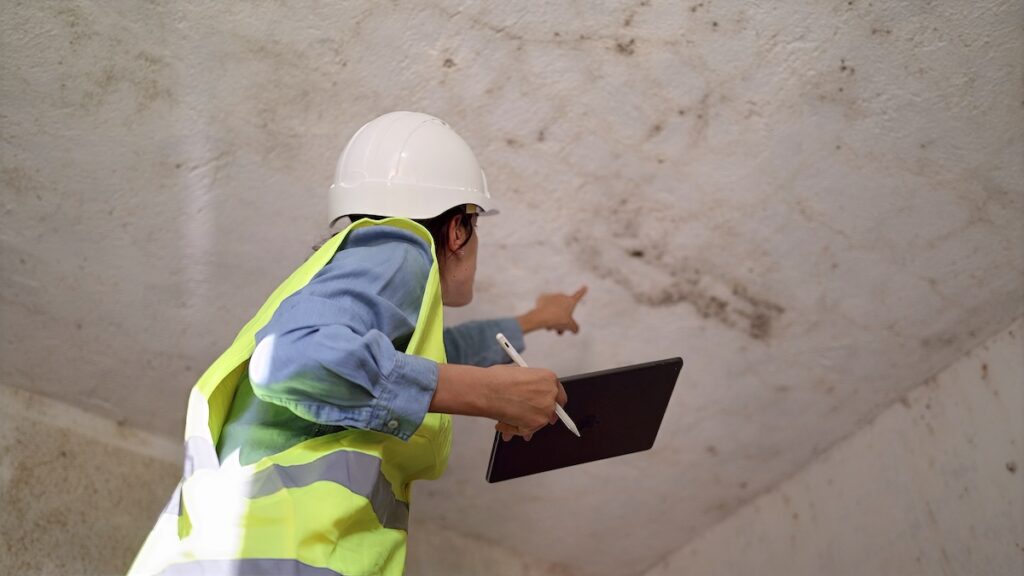
When water stains on ceiling drywall point to a roof problem, homeowners deserve a contractor who’ll find the actual source and explain what’s really going on, not just sell a quick patch. Springfield Roofing & Sheet Metal is a 1st and 2nd generation family-owned and operated company serving Alexandria and surrounding areas with a dedicated in-house crew, full labor and material warranties, and CertainTeed 5-Star Select Shingle Master certification, which is held by only a small percentage of roofing contractors nationwide. We provide free estimates with honest assessments of what’s causing the leak and what it’ll take to fix it, and we’ll let you know if the source is something we don’t handle so you can call the right specialist. Contact Springfield Roofing & Sheet Metal today for a free estimate and find out what’s really behind that water stain on your ceiling.