A roof replacement estimate from one contractor can look very different from the next, even when both companies are quoting the same house on the same street. Homeowners in Fairfax and surrounding areas often see proposals that span thousands of dollars, and that gap is rarely about one company padding the bill. It usually comes down to differences in materials, labor approach, roof complexity, and what each contractor actually includes in the price. Understanding the factors behind those numbers helps you compare quotes fairly and avoid surprises mid-installation.
- Why prices swing: Six core factors drive nearly every dollar of difference between roofing quotes.
- What to compare: Knowing what to look for line by line helps you spot lowball bids and overcharges.
- How to choose: Confidence in your contractor matters as much as the bottom-line number.
What Goes Into a Roof Replacement Estimate?
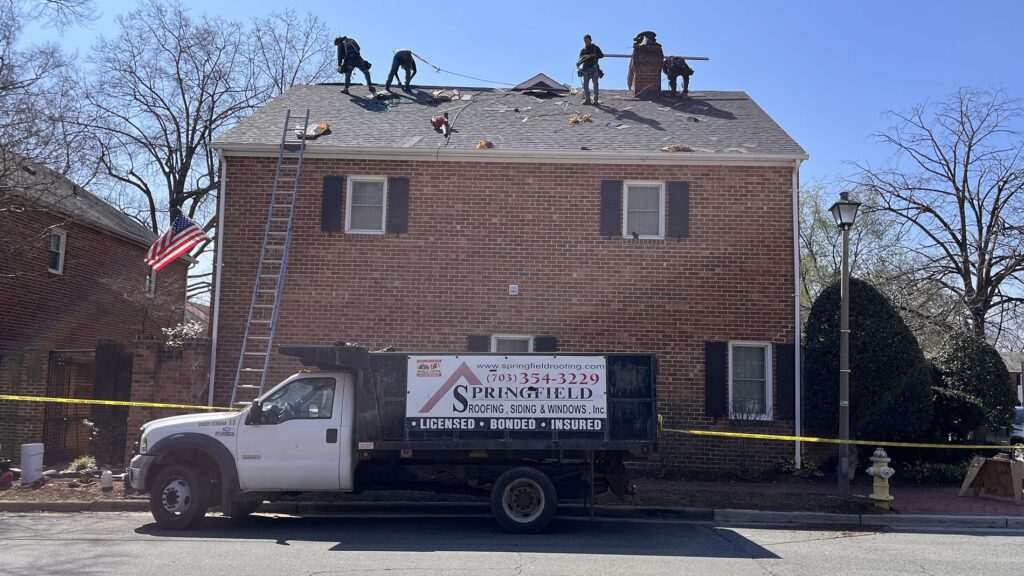
A roofing quote is more than a single price tag. It is a breakdown of labor, materials, disposal, permits, and any extras unique to your home.
What Is Included in a Standard Quote?
A standard roof replacement quote typically covers tear-off of the existing roof, new underlayment, shingles or panels, flashing, drip edge, ridge vents, ice and water shield in valleys, cleanup, and disposal of old materials. Reputable contractors itemize these elements so homeowners can see exactly what they are paying for. In Fairfax and surrounding areas, quotes should also include the cost of pulling a building permit and any required inspections under Fairfax County code, and you should review the manufacturer’s warranty because some top-tier coverage requires certified installers. When a quote looks suspiciously cheap, it is often because one or more of these line items has been left out, which leads to change orders later in the installation. Some bids also assume new shingles can be installed over the existing roofing material to cut removal costs, but that can raise future expenses and affect warranty coverage.
- Tear-off and disposal: Removing old shingles down to the deck and hauling debris usually runs $1,000 to $3,000.
- Underlayment and accessories: Synthetic underlayment, ice and water shield, drip edge, and starter strips can add $1.50 to $3.00 per square foot.
- Permits and inspections: Local permit fees in Northern Virginia generally range from $100 to $500.
- Workmanship warranty: A clear labor warranty should be spelled out in writing, not implied verbally, and it commonly ranges from 5 to 10 years.
Why Two Quotes Can Differ by Thousands
Two estimates for the same home can vary by $5,000 or more because contractors use different materials, crew sizes, and installation methods. A bid using basic three-tab shingles and a small subcontracted crew will look very different from one using architectural shingles installed by an in-house team with a full manufacturer warranty. Some companies build in the cost of replacing rotted decking up front, while others quote that as a per-sheet add-on, which can inflate the final bill. Reviewing the scope of work line by line is the only reliable way to compare two roofing quotes side by side.
- Material grade: Asphalt three-tab, architectural, and designer shingles can vary by $2 to $5 per square foot.
- Crew structure: In-house crews typically cost more up front but produce more consistent quality.
- Decking allowance: Some quotes include a set number of replacement plywood sheets; others charge $70 to $100 per sheet as an add-on.
- Warranty coverage: Extended manufacturer warranties may add cost but protect the homeowner for decades.
6 Cost Factors That Drive Roof Replacement Pricing
Six specific variables explain almost every dollar of difference between roofing bids. Each factor influences both materials and labor in ways that are easy to miss when you only look at the bottom line.
1. How Does Roof Size and Square Footage Affect Cost?
Roof size is the single biggest driver of cost because roofing is priced by the square, with one square equal to 100 square feet of surface area. A 2,000 square foot home does not have a 2,000 square foot roof; pitch, overhangs, and dormers add surface area that increases material and labor needs. Larger roofs require more shingles, more underlayment, more nails, more disposal, and more crew hours, so price scales almost directly with total surface area. Accurate measurements taken on site, not estimated from satellite imagery alone, give the most reliable cost figures for homes in Fairfax and surrounding areas.
- Cost per square: Most asphalt shingle installations run $400 to $700 per square installed.
- Surface vs. footprint: A steep roof can have 30% to 40% more surface area than the home’s footprint.
- Material waste: Complex roofs require 10% to 15% extra material to account for cuts and overlaps.
- Labor scaling: Larger roofs take more crew days, which increases overall labor costs.
2. Why Does Roofing Material Choice Matter So Much?
Roofing material is the second largest cost factor and can swing a quote by tens of thousands of dollars. Your roof type and material selection both affect lifespan and price, which is why two homes of similar size can have very different estimates. Asphalt architectural shingles are the most common roofing material in the U.S. and often the most affordable roofing material for homeowners, typically costing $4 to $7 per square foot installed, while metal roofing can run $10 to $18 per square foot, a tile roof can exceed that range, and slate or tile can exceed $20 per square foot. Material choice also affects lifespan, energy performance, wind ratings, and resale value, so the cheapest option is not always the best long-term investment. CertainTeed, GAF, and Owens Corning shingles all carry different warranty structures, which is one reason quotes from different contractors using different brands can look so unalike.
- Three-tab asphalt: Roughly $3.50 to $4.50 per square foot, with a 20 to 25 year lifespan; standard asphalt shingles are the cheapest roofing material and a typical replacement often falls around $5,840 to $10,100.
- Architectural asphalt: Roughly $4.50 to $7 per square foot, with a 25 to 30 year warranty; as a common roofing material, asphalt remains a durable, budget-friendly choice.
- Standing seam metal: Roughly $10 to $18 per square foot, with a 40 to 70 year lifespan; this is a premium category, and options like metal shingles can push a full replacement to about $10,245 to $41,640, with copper roofing at the higher end.
- Designer or luxury shingles: Often $8 to $12 per square foot, with enhanced curb appeal and impact resistance.
- Clay and concrete tile: Usually one of the pricier choices at about $10,665 to $20,900, but these systems are durable and provide strong noise isolation.
- Natural stone: Premium slate tiles are among the most expensive roofing material options and can last up to 150 years, with replacement costs often ranging from $39,925 to $54,020.
- Cedar products: Wood shingles offer a premium look at roughly $10,230 to $15,500 for replacement, but they need regular maintenance to help prevent rot and algae growth.
According to the 2024 Cost vs. Value Report, the national average cost of a midrange asphalt shingle roof replacement is approximately $30,680, based on tearing off and installing 30 squares of fiberglass asphalt shingles with new underlayment, drip edge, and aluminum flashing on a rectangular hip roof, making it one of the most consistent benchmarks for residential roofing costs.
3. How Does Roof Pitch and Complexity Change the Price?
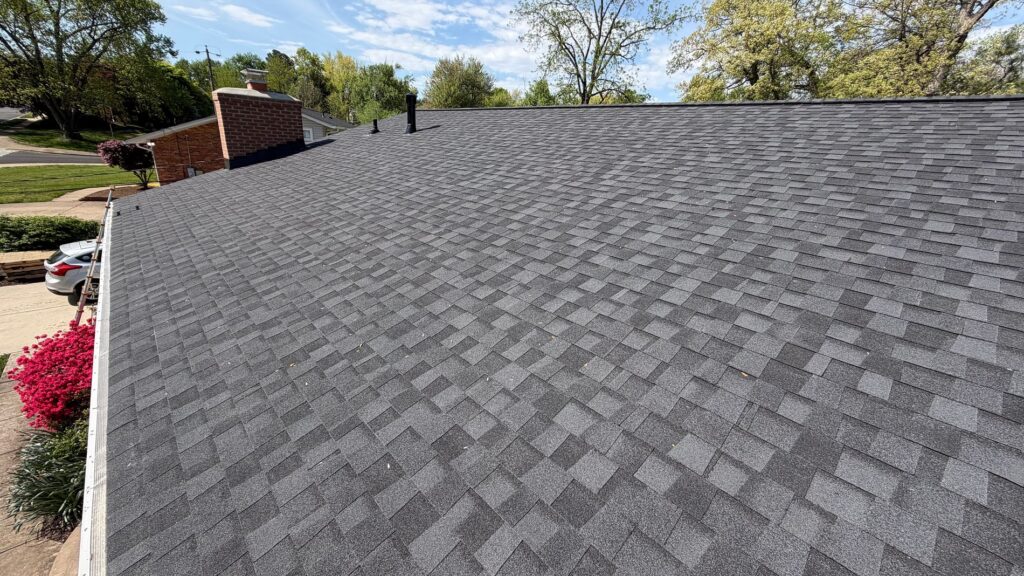
Roof pitch, roof slope, and roof style drive labor costs because steeper, more intricate roofs take longer to install safely. A simple gable roof with a 4/12 pitch can be walked on without harnesses, while a 10/12 or steeper roof requires roof jacks, harnesses, and slower work; the steeper the roof, the more labor, safety setup, and time the job demands. Steep roofs and greater roof steepness can also add roughly $1,000 to $3,000 to a replacement. Features like dormers, valleys, hips, skylights, chimneys, and multiple roof planes can also require repairs to the underlying roof structure, plus additional flashing, careful cuts, and detailed sealing, so simpler designs usually cost less to install than more complex ones. Homes in older Fairfax and surrounding areas neighborhoods often have these complex roof lines, which is one reason local estimates can run higher than national averages.
- Pitch surcharge: Steep slopes can add $1 to $3 per square foot to labor.
- Valleys and hips: Each valley requires ice and water shield and careful shingle weaving.
- Penetrations: Chimneys, skylights, and vent pipes each need flashing kits that add $100 to $500 apiece.
- Multi-plane roofs: Cape Cods, Victorians, and custom builds may add 15% to 25% to total labor.
4. What Role Do Labor Rates and Crew Quality Play?
Labor accounts for 50% to 60% of a typical roof replacement, so differences in crew structure show up clearly in pricing. Contractors who employ a dedicated in-house crew generally charge more than companies that subcontract out the actual installation, but they tend to deliver more consistent workmanship and stand behind labor warranties without finger-pointing. Skilled labor shortages across the Northern Virginia market have pushed labor rates up in recent years, particularly for certified installers qualified to maintain manufacturer warranties. When comparing roofing quotes, ask whether the people on the proposal are the same people who will be on your roof.
- Labor share: 50% to 60% of total roof replacement cost goes to labor.
- In-house vs. subcontracted: In-house crews offer better continuity but typically cost 10% to 20% more.
- Certifications: Manufacturer certifications like CertainTeed Shingle Master require ongoing training and quality audits.
- Warranty backing: Strong labor warranties are only as good as the crew that performed the work.
5. Why Do Tear-Off, Decking, and Disposal Costs Add Up?
Tear-off, decking repair, and disposal are often the line items that quietly separate honest quotes from lowball ones. A full tear-off down to the decking allows the crew to inspect the substrate for rot, mold, and damaged plywood, which is critical in a humid mid-Atlantic climate like Fairfax and surrounding areas. Layovers, where new shingles are installed over old ones, are cheaper up front but can void manufacturer warranties and trap moisture against the deck. Disposal fees for old shingles and underlayment also vary by landfill and dumpster size, and code-required upgrades to ventilation or ice barriers can add hundreds more.
- Full tear-off: Typically $1 to $5 per square foot, depending on roof access and number of layers.
- Decking replacement: Damaged plywood sheets average $70 to $100 each, installed.
- Disposal fees: Dumpster rental and landfill tipping fees can add $400 to $1,200.
- Code upgrades: Ventilation, drip edge, and ice and water shield requirements may add $500 to $1,500.
6. How Do Location, Permits, and Code Requirements Affect Cost?
Local building codes, permit fees, and regional labor markets all influence the final number on your roof replacement estimate. Nationally, roof replacement costs typically range from $5,800 to over $47,000, with most homeowners spending about $9,500. The average roof replacement cost for a standard asphalt shingle installation often falls around $6 to $12 per square foot nationally. For a typical 1,700 square foot asphalt shingle roof, that often works out to about $6,000 to $9,000 before local code, permit, and market adjustments. Fairfax County requires permits for residential reroofing, and inspections may be required depending on the scope of work, which adds time and administrative cost to the job. Material delivery distances, dump fees, and local insurance requirements for contractors also vary across the Washington, D.C. metro area. Homeowners associations in some Fairfax and surrounding areas neighborhoods may require specific shingle colors or styles, which can limit material choices and affect pricing.
- Permit fees: Residential reroof permits in Northern Virginia commonly run $100 to $500.
- Insurance requirements: Licensed and insured contractors carry general liability and workers’ compensation, which factors into overhead.
- HOA rules: Color, style, or material restrictions may force upgrades to designer shingles.
- Code compliance: Virginia Residential Code requires specific underlayment, ventilation, and fastening standards.
How to Compare Roof Replacement Estimates the Right Way
Comparing roofers and roofing quotes is not about finding the lowest number; it is about finding the best value at a fair price. A side by side review of scope, materials, and warranties will tell you far more than the bottom line alone.
What Should You Look For in a Detailed Quote?
A detailed roofing quote should support a fair roof replacement estimate by clearly listing all major line items, including materials by brand and product line, labor scope, tear-off allowance, decking replacement terms, permit responsibility, and warranty coverage. If a quote is one page with a single lump sum, that is a red flag. Reputable contractors in Fairfax and surrounding areas itemize their estimates so homeowners understand exactly what is included and what would trigger a change order. Most roofing contractors present measurements in squares, and those totals should match between bids. Ask each contractor to break out tear-off, materials, labor, permits, and disposal as separate line items so you can compare the actual cost line by line.
- Brand and product specifics: Look for named shingle lines, underlayment types, and flashing materials.
- Decking allowance: Confirm how many sheets are included before extra charges kick in.
- Permit responsibility: The contractor should pull and pay for the permit, not the homeowner.
- Warranty terms: Both manufacturer and workmanship warranties should be in writing.
Why Is the Lowest Bid Often the Most Expensive?
The lowest roofing bid is often the most expensive because it may come in below the average roof repair cost and replacement pricing by ignoring needed roof repairs or other roof repairs that only show up after tear-off. Contractors who lowball quotes frequently issue change orders for decking, ventilation, or flashing once the tear-off begins, leaving homeowners with little choice but to pay, and roofing companies charge more later when that scope was excluded up front. A bid that is 20% or more below the others is a signal to ask hard questions, not a deal worth grabbing. Compare it against what roofing companies charge locally for similar work. Investing in proper installation up front almost always costs less than repairing a bad roof later.
- Hidden change orders: Mid-installation upcharges can add 20% or more to a lowball bid.
- Material substitutions: Cheap underlayment, fewer nails, and inferior flashing reduce roof lifespan.
- Voided warranties: Improper installation can void manufacturer coverage, leaving you exposed.
- Callback risk: Leaks, blow-offs, and ventilation issues are common with rushed installations.
Frequently Asked Questions
How much does a roof replacement cost in Fairfax?
A typical asphalt shingle roof replacement in Fairfax and surrounding areas costs between $12,000 and $30,000, with the average landing around $18,000 to $22,000 for a mid-sized home. Premium materials like metal or designer shingles can push that figure to $40,000 or more. The exact price depends on roof size, pitch, material, and complexity, which is why an on-site inspection produces a far more accurate number than any online calculator.
How long does a full roof replacement take?
Most asphalt shingle roof replacements take one to three days from tear-off to cleanup, weather permitting. Larger or more complex roofs, including flat roofs, steep roofs, and more involved roof style choices with multiple penetrations, may take four to five days. Replacing an entire roof also usually takes longer than smaller repair work because it includes tear-off, inspection, and full installation. Metal roofs and tile installations typically take longer due to the precision required at panels, fasteners, and flashing details.
Can I replace my own roof to save money?
Roof replacement is not a recommended DIY task because of safety risk, code requirements, and warranty issues. Manufacturer warranties on shingles from brands like CertainTeed and GAF generally require installation by a certified contractor to remain valid. Falls from roofs are also one of the leading causes of construction injuries, and most homeowners are not insured for that level of risk.
How often should a roof be replaced?
Most asphalt shingle roofs last 20 to 30 years, while metal roofs can last 40 to 70 years and slate can last over 100 years. Replacement timing depends on material, ventilation, sun exposure, and storm history. Annual inspections after age 15 help homeowners plan ahead rather than react to a sudden leak.
Do I need a permit to replace my roof in Fairfax County?
Yes, Fairfax County requires a building permit for residential reroofing in most cases. Reputable contractors handle the permit application and inspection process as part of their service, so homeowners should not be asked to pull their own permit. Permit fees are typically included in the contractor’s estimate.
Is financing available for roof replacement?
Yes, many reputable roofing contractors offer financing options that let homeowners spread payments over months or years rather than paying in a lump sum. Financing is particularly helpful for unexpected storm damage or for upgrading to longer-lasting materials. Ask any contractor you are considering about approved lending partners and the terms available.
Choose Springfield Roofing & Sheet Metal for an Honest Roof Replacement Estimate
When the numbers vary this much from one bid to the next, homeowners deserve a contractor who explains every line item and stands behind the work. Springfield Roofing & Sheet Metal is a 1st and 2nd generation family-owned and operated company serving Fairfax and surrounding areas with a dedicated in-house crew, comprehensive labor and material warranties, and CertainTeed 5-Star Select Shingle Master certification, which is held by only a small percentage of roofing contractors nationwide.
We provide free, itemized roof replacement estimates so you can see exactly where your dollars are going, and we offer financing to make a quality roof accessible without compromise. Contact Springfield Roofing & Sheet Metal today to schedule your free, no-pressure estimate and find out what an honest, detailed roofing quote actually looks like.