Autumn is beautiful, but once the leaves begin to drop, many of them end up in your gutters. Left alone, those leaves turn into heavy, soggy clogs just as winter rain, ice, and snow arrive. That is why fall gutter cleaning is one of the most important maintenance tasks on your seasonal checklist. Clearing out leaves and other debris now keeps rainwater moving away from your home and helps protect your roofline, siding, and foundation through the colder months ahead.
A quick preview of what this guide covers:
- Why waiting until spring puts your home at risk
- Four problems that start with clogged fall gutters
- A practical checklist for a thorough cleaning
- How DIY cleaning compares to hiring a pro
What Makes Fall the Most Important Time to Clean
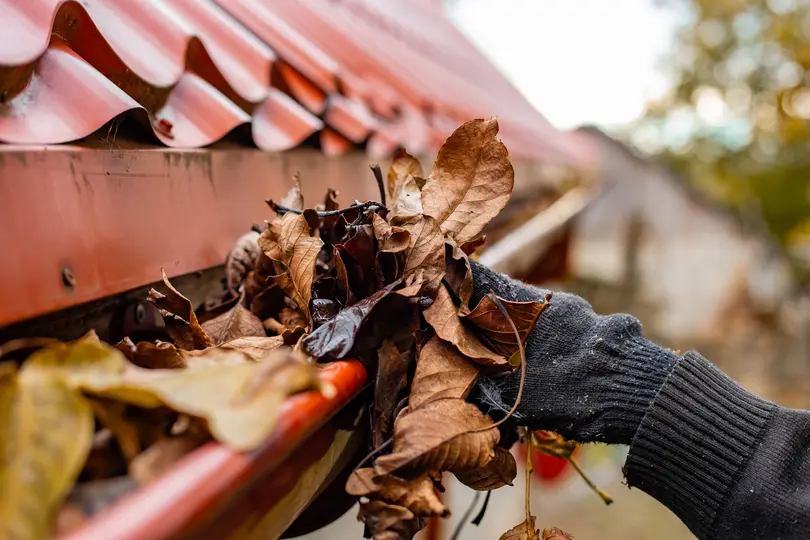
Most experts agree that gutters should be cleaned once or twice a year, and fall is the cleaning you should never skip. Trees shed most of their leaves between October and December, and that debris settles into gutters right before the wettest and coldest stretch of the year.
Gutters play a critical role in protecting your home, and when they stay clogged through winter, small problems have months to grow. Here is what a timely fall cleaning does for your home:
- Prevents overflow: Clear gutters maintain proper water flow, carrying rain and snowmelt to the downspouts instead of spilling over and leaving siding stains.
- Reduces ice dam risk: Standing water and wet debris freeze in cold weather, which can block drainage and force water back under the roof edge.
- Protects your foundation: Proper drainage directs water away from your home’s foundation, lowering the risk of basement flooding and soil erosion.
- Extends gutter life: Removing heavy, wet leaves takes strain off hangers and fasteners, so your gutters stay straight and secure.
Homeowners in Fairfax and surrounding areas are surrounded by mature oaks, maples, and other leafy trees. That beautiful canopy is a big part of the area’s charm, but it also means gutters can fill up fast every autumn.
4 Problems That Start When Fall Gutters Stay Clogged
Putting off gutter cleaning until spring may seem harmless, but a single clog can quickly lead to costly damage over the winter. These are the most common problems that begin with a gutter full of fall leaves.
1. Water Damage to the Roof Edge and Fascia
When water cannot flow through the gutter, it sits along the roof edge and soaks into the fascia boards behind it. Over a single winter, that constant moisture can cause wood to soften, rot, and pull away from the house. Left long enough, it can also lead to roof leaks along the eaves.
- Peeling paint is often an early sign of fascia damage
- Rotted fascia can loosen gutter hangers and cause sagging
2. Ice Dams and Frozen Gutters
Wet leaves hold water, and in freezing temperatures that water turns into a solid block of ice. Frozen gutters cannot drain melting snow, which allows ice dams to form along the eaves. Water trapped behind those dams can work its way under shingles and into the attic.
- Ice adds significant weight to gutters and hangers
- Leaks from ice dams often show up as ceiling stains indoors
3. Foundation and Basement Problems
Overflowing gutters dump water right next to your home instead of carrying it away through the downspouts. Over time, that water can saturate the soil around your foundation, leading to foundation issues such as cracks, basement dampness, and erosion of landscaping beds. Repeated freeze and thaw cycles make the problem worse, since saturated soil expands and contracts against foundation walls all winter long.
- After heavy rain, look for pooling water or washed-out mulch below the roofline
- Damp basement walls after rain can point back to gutter overflow
4. Pests, Mold, and Sagging Gutters
Damp, decaying leaves create an ideal home for insects, rodents, and birds. The added moisture can also encourage mold and mildew along your roofline and siding. Meanwhile, the sheer weight of soaked debris strains the gutter system until sections begin to sag or detach. Once a gutter loses its proper slope, water collects in low spots and the cycle of clogs repeats itself.
- Sagging gutters drain poorly and can trap even more debris
- Pests nesting in gutters may find their way into the attic
Each of these problems can turn into costly repairs, while a simple cleaning costs very little by comparison. Clearing your gutters before winter is one of the easiest ways to avoid expensive surprises in the spring.
Your Fall Gutter Cleaning Checklist
A good cleaning involves more than scooping out leaves. Following a consistent routine helps you catch small issues early and leaves your gutters ready for whatever winter brings.
- Time it right: Wait until most nearby trees have dropped their leaves, but clean before the first hard freeze. In Northern Virginia, late October through early December is usually the sweet spot.
- Pick a dry day: Dry leaves are lighter and easier to remove, and wet ladders and roofs can be dangerous.
- Gather your tools: A sturdy ladder, work gloves, a gutter scoop or trowel, a bucket, and a garden hose cover most jobs.
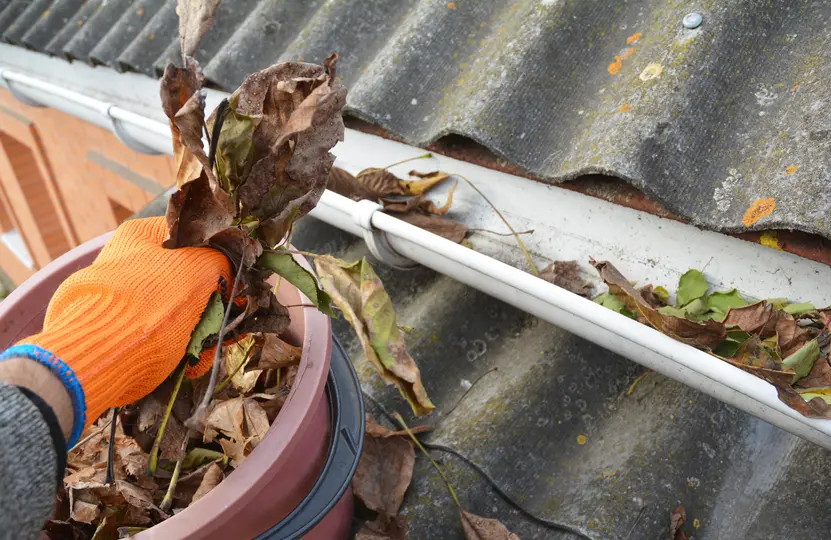
- Remove large debris first: Start near the downspout and remove leaves, twigs, dirt, and sludge by hand or with a scoop.
- Flush gutters and downspouts: Run a garden hose through each gutter to confirm everything is draining properly.
- Clear the downspouts: If water backs up, use the hose or a plumber’s snake to push the clog through until the pipes are fully cleared.
- Inspect while you work: Look for loose hangers, leaking seams, rust spots, and sections pulling away from the fascia.
- Check where water lands: Make sure downspout extensions or splash blocks carry water several feet away from the foundation.
Avoid using a pressure washer to clean your gutters, since the force can damage seams and loosen hangers. Taking photos of any trouble spots also helps you track changes the next time you clean. If you notice damage you cannot fix yourself, schedule a repair before winter rather than waiting for the first big storm to reveal it.
DIY Cleaning vs. Hiring a Professional
Some homeowners are comfortable handling gutter cleaning themselves, while others would rather hire a gutter cleaning service. The right choice depends on your home’s height, your comfort on a ladder, and how much time you have.
| Factor | DIY Cleaning | Professional Cleaning |
| Cost | Low, mostly tools and your time | Higher, but includes labor and equipment |
| Safety | Ladder risk, especially on two-story homes | Trained crews with proper safety gear |
| Time | Several hours for an average home | Usually completed in a single visit |
| Inspection | Basic visual check | Trained eye for damage and drainage issues |
| Repairs | Limited to simple fixes | Can address loose hangers, leaks, and sagging |
| Best for | Single-story homes with easy access | Tall, steep, or tree-heavy properties |
DIY cleaning works well for many single-story homes, especially if you already own a reliable ladder and do not mind the work. For taller homes or properties with heavy tree cover, professional gutter cleaning is often the safer and more thorough option.
Many homeowners in Fairfax and surrounding areas choose a combination of both. They handle quick checks themselves throughout the year and schedule a professional visit in the fall to catch damage they might miss. Whichever route you choose, what matters most is regular upkeep and getting the job done before freezing weather sets in. A clean, well-maintained gutter system is far less likely to fail during a winter storm.
Frequently Asked Questions About Fall Gutter Cleaning
Gutter maintenance comes with plenty of practical questions. Here are clear answers to the ones homeowners ask most often.
When is the best time for fall gutter cleaning?
The best time is after most nearby trees have shed their leaves but before freezing temperatures set in. For many Northern Virginia homes, that falls between late October and early December.
Do I need to clean my gutters more than once in the fall?
If your home has many overhanging trees, one cleaning may not be enough. Some homeowners clean once in early fall and again after the last leaves drop.
Can I wait until spring to clean my gutters?
Waiting is risky. Clogged gutters can freeze, overflow, and cause ice dams, fascia rot, roof damage, and foundation problems during winter.
Do gutter guards mean I never have to clean my gutters?
No. Gutter guards reduce debris, but leaves, pine needles, and grit can still collect on top of or beneath them. They still need periodic checks and cleaning.
What are signs my gutters need cleaning?
Watch for water spilling over the edges during rain, downspouts that barely drain, sagging sections, and plants or leaves visible from the ground.
Staying ahead of these signs keeps your gutter system working the way it should. A quick inspection now can save you from much bigger repairs once winter weather sets in.
Get Your Gutters Ready Before Winter Arrives
Fall gutter cleaning is a small piece of seasonal maintenance that protects some of the most expensive parts of your home, from your roof and fascia to your foundation. Clearing out leaves before the first freeze is the best way to keep water flowing and avoid costly winter damage.
Springfield Roofing helps homeowners in Fairfax and surrounding areas keep their gutters secure and ready for every season. Whether you need a quick inspection, repairs to sagging or leaking sections, or a new gutter system, our team is ready to help. Contact us today to schedule a visit and get a no-obligation estimate before winter weather arrives.