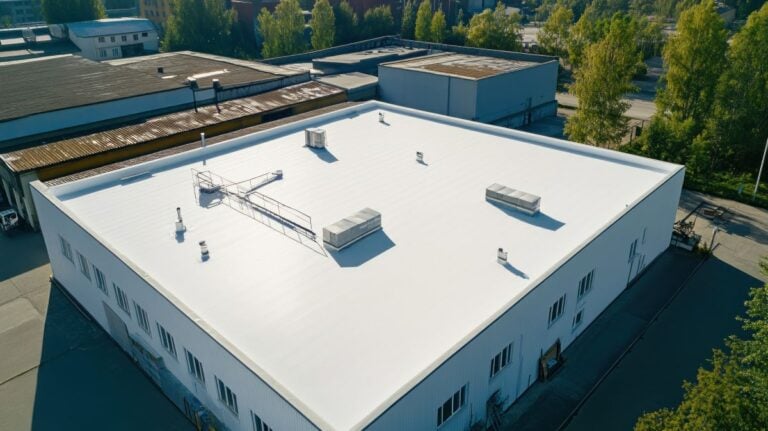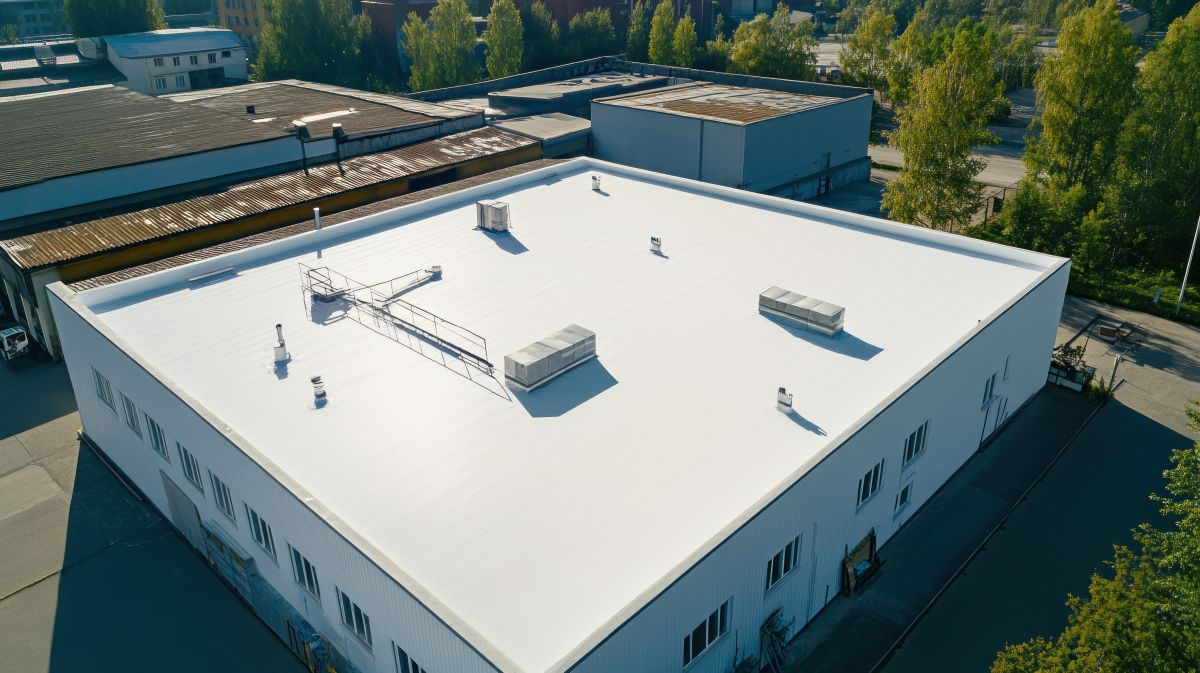
Understanding commercial roof repair cost is essential for property owners and facility managers making budget decisions, because the range of pricing depends heavily on the roofing system, damage type, and scope of work involved. Building owners in McLean and surrounding areas often see repair quotes vary by thousands of dollars for what looks like the same problem, and that variation isn’t random. TPO, EPDM, modified bitumen, PVC, and built-up roofs all repair differently, and small leaks and full section replacements sit at very different price points. This guide breaks down what commercial roof repair actually costs in 2026, what drives the numbers, and how building owners can compare quotes on an apples-to-apples basis.
- Typical cost range: $3 to $14 per square foot for most commercial roof repairs.
- Total project cost: Small repairs often $500 to $3,000; larger repairs run $5,000 to $30,000+.
- What drives price: System type, damage scope, roof access, and repair urgency all matter.

What Does Commercial Roof Repair Actually Cost?
Commercial roof repair costs vary widely, but the ranges break down predictably by roof system type and repair scope. Knowing where your building fits helps set realistic expectations before getting quotes.
What’s the Cost Range by Commercial Roof Type?
Commercial roof repair typically costs $3 to $14 per square foot in 2026, with variation by system type: TPO repairs run $6 to $10 per square foot for typical patch work, EPDM repairs $4 to $8 per square foot, PVC repairs $7 to $12 per square foot, modified bitumen $5 to $9 per square foot, and built-up roof (BUR) repairs $4 to $10 per square foot. These per-square-foot numbers apply to the actual repair area, not the whole roof. A small 20 square foot patch on a TPO roof might cost $500 to $1,000 total, while a 500 square foot section replacement on the same system could run $5,000 to $10,000. Building owners in McLean and surrounding areas should ask for detailed itemized quotes that break out the cost by scope rather than accepting lump-sum pricing.
- TPO repair: $6 to $10 per square foot, most common commercial system.
- EPDM repair: $4 to $8 per square foot, budget-friendly rubber roofing.
- PVC repair: $7 to $12 per square foot, higher-end single-ply.
- Modified bitumen: $5 to $9 per square foot, popular for larger buildings.
How Much Does a Typical Total Repair Job Cost?
A typical total commercial roof repair job costs $500 to $30,000 depending on scope, with most single-issue repairs falling in the $1,500 to $8,000 range. Small punctures or seam repairs on the low end, and multi-section membrane replacements with related flashing and drain work on the high end. Emergency repairs (evenings, weekends, or urgent leak response) typically add 25% to 50% to standard rates because of the labor premium and rushed logistics. Buildings with unusual access requirements (crane needed, tenant coordination required, or after-hours work only) also run higher. Reputable commercial contractors in McLean and surrounding areas provide detailed proposals that include labor, materials, waste disposal, and any specialized equipment needed.
- Small repair: $500 to $1,500 for a single-issue patch or seam repair.
- Medium repair: $2,000 to $8,000 for multi-point flashing or membrane work.
- Large repair: $8,000 to $30,000+ for major section replacement.
- Emergency premium: 25% to 50% added for urgent or after-hours work.
7 Factors That Drive Commercial Roof Repair Pricing
Seven specific factors account for most of the price variation between commercial roof repair quotes. Understanding each one helps building owners compare bids and know where their money actually goes.
1. Roof System Type and Age
Roof system type drives base pricing because different membranes require different repair materials, techniques, and skill levels. TPO and PVC are heat-welded, which means repairs require certified installers with hot-air welding equipment, driving labor costs higher than adhesive-bonded systems. EPDM repairs are typically simpler and cheaper because the material is more forgiving to work with. Age also matters because older systems may have brittle or degraded membranes that make patches less reliable, sometimes requiring larger repair areas than the damage would suggest. Buildings in McLean and surrounding areas with 20-plus-year-old commercial roofs often see repair costs approaching replacement costs, at which point the math changes.
- Heat-welded systems (TPO/PVC): Higher labor cost from certified welding work.
- Adhesive systems (EPDM): Lower cost per repair for typical patches.
- Older membranes: May require larger repair areas due to brittleness.
- System-specific expertise: Contractors certified for your specific system.
According to the National Roofing Contractors Association, roof repair and maintenance are essential to protect warranty coverage and extend system longevity, with proper inspection and documented repair processes forming the foundation of any effective commercial roof management strategy, which is why building owners benefit most from working with NRCA-affiliated contractors who follow industry-standard repair protocols.
2. Damage Type and Repair Scope
Damage type and repair scope determine how much material and labor the job needs. A small membrane puncture that can be patched with a 12-inch square of matching material and a heat weld runs at the low end of pricing. Multi-point flashing failures at HVAC curbs, chimneys, or drain areas require more time and more materials. Full section replacements involving membrane, insulation, and vapor barrier work sit at the higher end of the range. The scope also affects how many days the crew will be on-site and whether specialty subcontractors need to be involved. Buildings in McLean and surrounding areas with complex damage patterns should expect quotes to reflect the specific work required rather than a flat per-square-foot rate.
- Small patches: Simple membrane repair with minimal material.
- Flashing rebuilds: Multi-point work around penetrations.
- Section replacements: Full removal and replacement of failing areas.
- Waterproofing systems: Complete membrane and insulation replacement.
3. Roof Access and Building Height
Roof access and building height significantly affect labor cost because harder-to-reach roofs require more setup time, more safety equipment, and sometimes specialized lifting equipment. Single-story warehouses with ladder access are relatively cheap to work on, while multi-story office buildings requiring boom lifts or cranes can double the labor cost of the same repair. Buildings with rooftop equipment blocking access to the actual damage area also cost more to work on because the crew has to route around obstacles. Some multi-story buildings in McLean and surrounding areas add $2,000 to $5,000 to a repair quote just for access equipment. Getting on-site quotes matters because access complications aren’t always visible from photos.
- Single-story access: Ladder-based work at the lowest labor cost.
- Multi-story access: Boom lifts and safety systems add cost.
- Crane access: Required for very large or complex jobs.
- Obstacle routing: Rooftop equipment makes work slower and pricier.
4. Materials and Membrane Thickness
Materials and membrane thickness affect direct material cost as well as long-term durability. Standard 45-mil TPO or EPDM membranes are cheaper than 60-mil or 80-mil options, but the thicker membranes are more durable and typically carry longer warranties. For repairs, contractors ideally match the existing membrane thickness rather than mixing different thicknesses in one repair. Some building owners take repair opportunities to upgrade to thicker membranes in problem areas, which adds cost but extends service life. In McLean and surrounding areas, thicker membranes are increasingly popular for buildings with rooftop equipment traffic that stresses the membrane over time.
- 45-mil membrane: Standard thickness, most economical.
- 60-mil membrane: Better durability, moderate cost increase.
- 80-mil membrane: Premium thickness for high-traffic roofs.
- Membrane matching: Repairs typically match existing thickness.
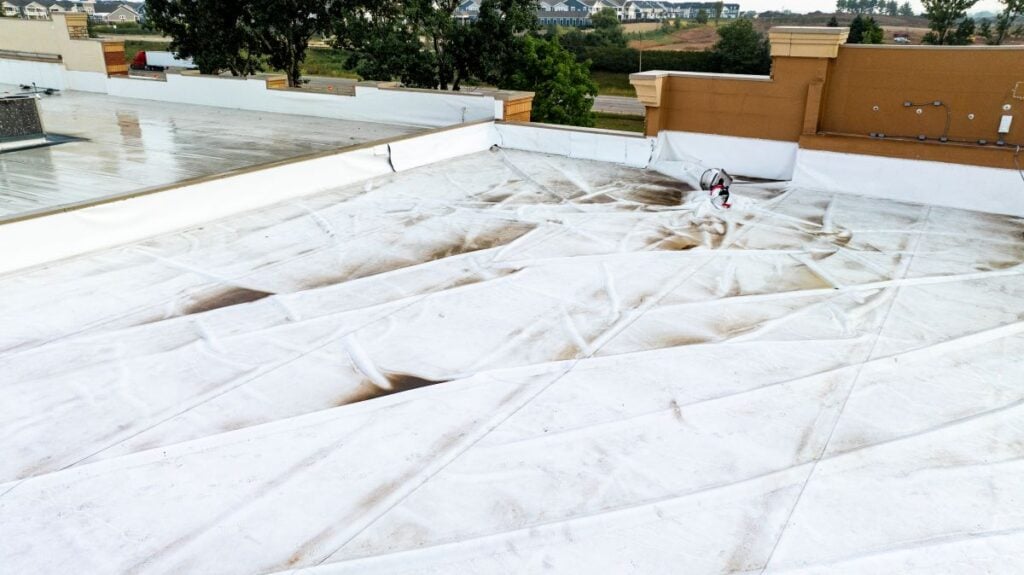
5. Emergency Response and Repair Timing
Emergency response and repair timing affect cost significantly because urgent work commands premium pricing. Standard business-hours repairs on a scheduled timeline sit at the base rate, while after-hours emergency calls typically add 25% to 50% to labor costs. Weekend and holiday work runs even higher, sometimes doubling the labor rate. Rushed material delivery (expedited shipping for materials to arrive same-day) also adds real cost, especially for specialty membrane types. Buildings with tenant-critical operations or valuable contents may find the emergency premium worthwhile to minimize downtime, while others can wait for standard scheduling. Preventive maintenance programs help avoid most emergency situations entirely.
- Standard business hours: Base labor rate applies.
- After-hours calls: 25% to 50% labor premium.
- Weekend and holiday: Potentially doubled labor rate.
- Expedited materials: Rush shipping adds real cost.
6. Insurance and Documentation Requirements
Insurance and documentation requirements can add cost to commercial roof repairs, particularly when insurance claims or warranty compliance are involved. Storm damage claims typically require detailed documentation including photos, damage measurements, cause identification, and repair proposals matching insurance adjuster expectations. Manufacturer warranty compliance requires specific materials and installation procedures, and documentation proving compliance can add administrative cost to a repair job. Buildings with high-end warranties on newer roofs often benefit from strict warranty compliance, even if it means paying more upfront for documentation and certified materials. Reputable contractors in McLean and surrounding areas typically handle this documentation as part of their standard service.
- Insurance documentation: Photos, measurements, and adjuster-ready reports.
- Warranty compliance: Specific materials and installation procedures.
- Certified materials: Higher cost but required for warranty coverage.
- Administrative time: Documentation adds real hours to the job.
7. Contractor Selection and Certifications
Contractor selection matters as much as materials because manufacturer certifications, insurance requirements, and skilled labor all affect pricing. Certified contractors (Firestone, Carlisle, GAF, Johns Manville, and similar) typically charge more than general roofers but deliver work that maintains warranty compliance and higher quality. Fully insured contractors with proper workers’ compensation and general liability coverage cost more to hire than uninsured contractors, but they protect the building owner from massive liability if something goes wrong. Union labor in some markets adds cost above non-union labor. Building owners should verify certifications, insurance, and references before making the selection based on price alone. The cheapest quote almost always excludes something meaningful.
- Manufacturer certifications: Firestone, Carlisle, GAF, Johns Manville, and similar.
- Insurance verification: General liability and workers’ comp are essential.
- Reference checks: Recent commercial work on similar buildings.
- Value not price: Cheapest quote usually excludes something meaningful.
When Should Building Owners Consider Replacement Instead of Repair?
At some point, ongoing repairs stop making financial sense, and replacement becomes the smarter capital decision. Knowing where that line sits helps building owners avoid throwing good money after bad.
What’s the Rule of Thumb for Repair vs. Replacement?
The standard rule of thumb for repair versus replacement on commercial roofs is that when the roof reaches 75% to 80% of its expected lifespan, or when damage covers more than 25% to 30% of the total surface, replacement typically delivers better long-term value than continued repairs. Roofs beyond that threshold often need patches every year or two, with each repair costing thousands and delaying inevitable replacement. Building owners in McLean and surrounding areas with roofs at that age point should compare annual repair costs against the amortized cost of a new roof. If repairs consistently run more than 10% of what replacement would cost, replacement is usually the smarter move. A reputable contractor will give honest guidance rather than continuing to sell repairs indefinitely.
- 75% of expected lifespan: Standard threshold for replacement consideration.
- 25% to 30% damaged area: Point where patchwork becomes uneconomical.
- Annual repair cost: Over 10% of replacement cost signals replacement time.
- Honest guidance: Reputable contractors advise against endless patching.
Frequently Asked Questions
How much does a small commercial roof leak repair cost?
A small commercial roof leak repair typically costs $500 to $2,500 depending on the roof system type, location of the leak, and accessibility. Simple membrane punctures on the low end, and flashing repairs around chimneys or HVAC curbs on the higher end. Emergency response can push costs significantly higher.
Do I need to shut down operations for a commercial roof repair?
Most commercial roof repairs can be completed without disrupting normal building operations, though noise, odors from adhesives, or debris may affect tenants during work. Larger repairs involving section replacement or full membrane work may require staging that impacts specific areas. Reputable contractors coordinate timing with property managers to minimize disruption.
Will insurance cover my commercial roof repair?
Commercial property insurance may cover roof repair when damage results from a covered event like wind, hail, or fire, but typically doesn’t cover normal wear and tear or maintenance-related issues. Coverage varies significantly by policy, so review specifics with your insurance carrier. Contractors can help document storm damage for claims.
How long does a commercial roof repair take?
Small commercial roof repairs typically take one to two days on-site, while larger repairs involving multiple sections or complex flashing work can take a week or more. Weather also affects timing, since most repairs require dry conditions and moderate temperatures for proper adhesion. Emergency repairs can often be stabilized quickly with permanent repairs following once conditions allow.
Can I get a commercial roof repair quote without inspection?
You can get rough estimates without inspection, but accurate commercial roof repair quotes require on-site inspection to assess the actual damage, roof system, access requirements, and other factors that affect pricing. Any contractor providing firm pricing without seeing the roof is likely to add change orders later.
Should I choose the cheapest commercial roof repair quote?
The cheapest commercial roof repair quote is often the most expensive in the long run because it usually excludes materials, uses lower-grade products, or skips important scope items. Quotes 20% or more below competing bids deserve careful scrutiny to understand what’s being left out. Value, not price, should drive contractor selection.
Does commercial roof repair void manufacturer warranties?
Commercial roof repairs performed by non-certified contractors can void manufacturer warranties on newer roofs. Manufacturers typically require certified installers using approved materials and methods for warranty compliance. Building owners with active warranties should always use manufacturer-certified contractors for repair work.
Choose Springfield Roofing & Sheet Metal for Honest Commercial Roof Repair Pricing
When commercial roof repair cost is spelled out clearly and honestly, property owners can make smart budget decisions without worrying about surprise change orders or excluded scope. Springfield Roofing & Sheet Metal is a 1st and 2nd generation family-owned and operated company serving McLean and surrounding areas with a dedicated in-house crew, full labor and material warranties, and CertainTeed 5-Star Select Shingle Master certification. We provide free, itemized estimates for commercial roof repairs that spell out labor, materials, scope, and any additional considerations so building owners can compare bids on an apples-to-apples basis. Contact Springfield Roofing & Sheet Metal today for a free estimate and clear guidance on commercial roof repair for your building.