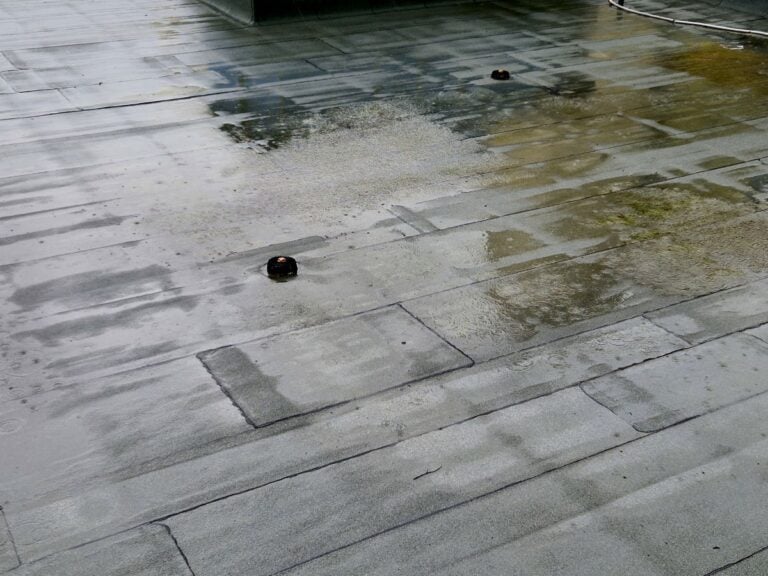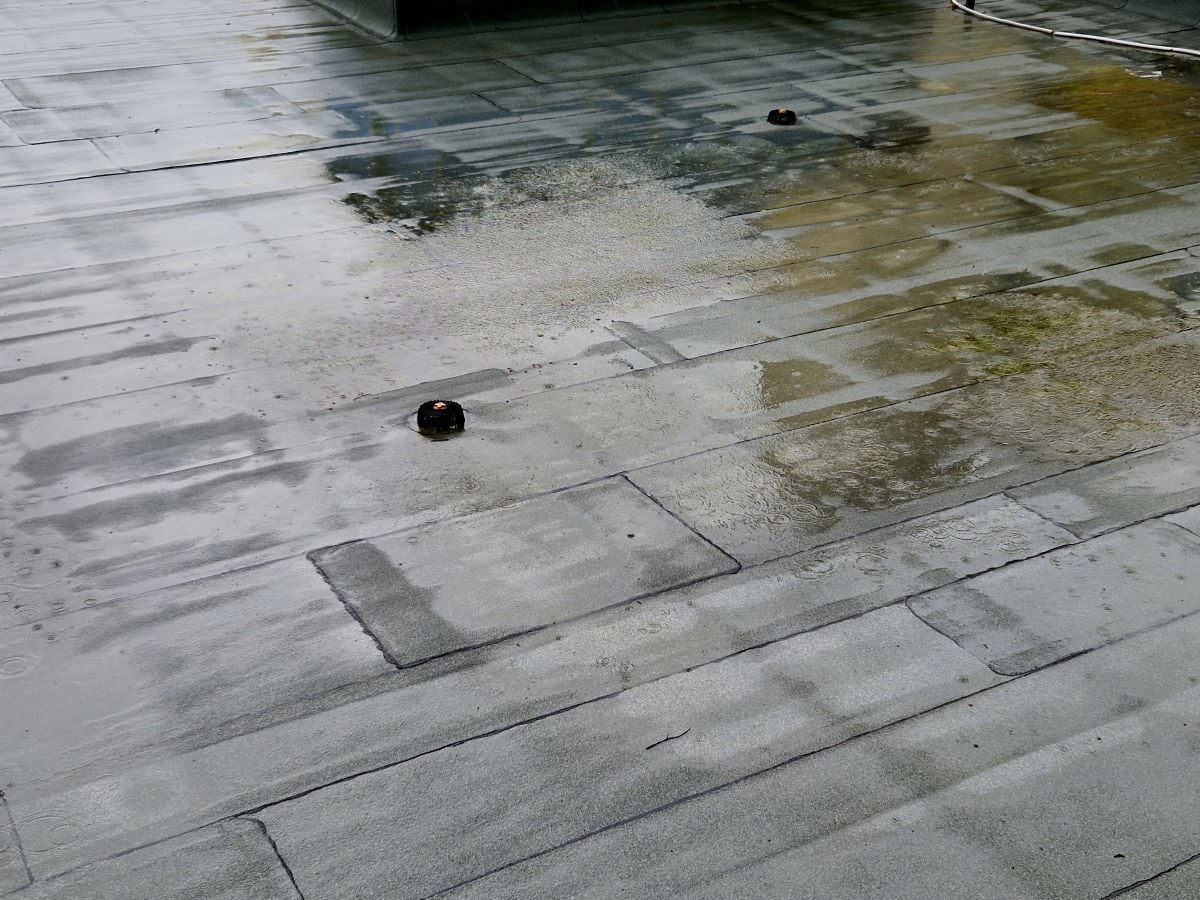
Standing water on a flat roof is more than an eyesore. It’s often the first sign that a roof drainage system isn’t keeping pace, and it can shorten your roof’s lifespan and lead to costly interior leaks if it goes unaddressed. Understanding practical flat roof drainage solutions can help owners of commercial buildings catch these issues early and protect their investment for years to come. Many businesses turn to a dedicated team that specializes in low-slope roofing systems once they notice water pooling after every storm. This guide walks through why drainage matters and what you can do to fix it for good.
Here’s what you’ll take away from this guide:
- Why proper drainage is essential for flat roof performance
- The most common causes of water buildup on flat roofs
- Modern solutions that improve drainage and extend roof life
- How to decide between a simple repair and a bigger upgrade
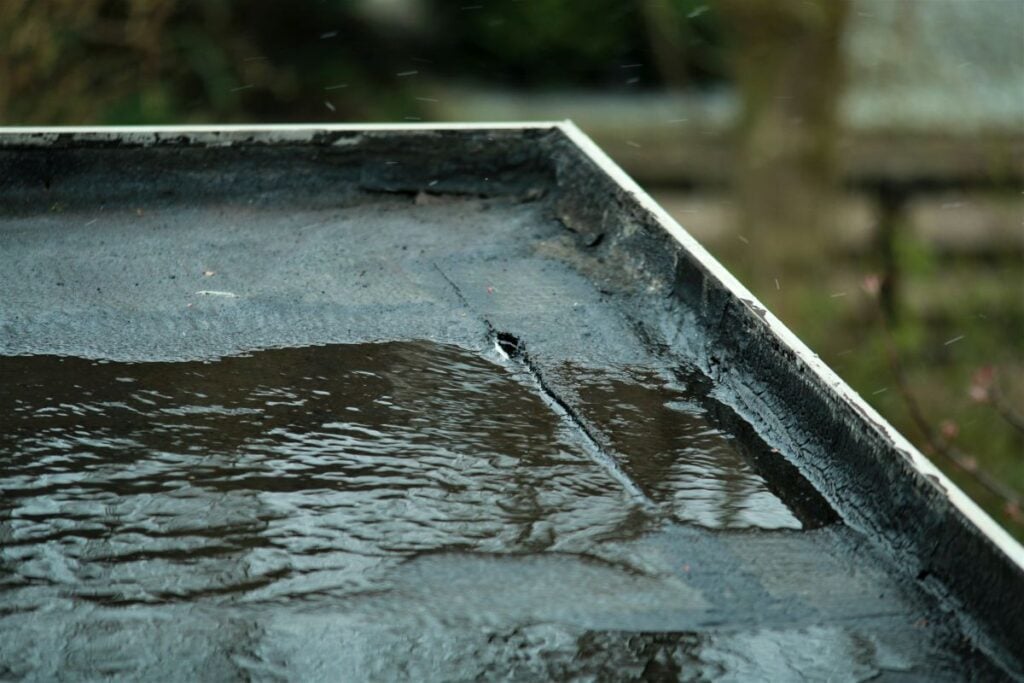
Why Proper Drainage Is Critical for Flat Roofs
Flat roofs, sometimes called low slope roofs, rely almost entirely on a well-designed drainage system to move water off the surface. Unlike sloped roofing systems or pitched roofs, a flat roof is rarely completely flat by design, but the minimal pitch means water naturally collects in low spots instead of running off on its own. When that system fails, water has nowhere to go, and the consequences can affect far more than just the roof itself. Property owners in Alexandria and surrounding areas often discover drainage problems only after noticing stains, odors, or higher utility bills inside the building, whether they own residential flat roofs or larger commercial properties.
- Preserves structural integrity: Standing water adds significant weight that can stress the roof deck and supporting structure over time.
- Protects indoor air quality: Trapped moisture creates ideal conditions for mold and mildew growth, which can spread into occupied spaces.
- Extends roof lifespan: Water that drains properly reduces membrane wear and helps the roofing system reach its full expected life.
- Reduces repair costs: Addressing drainage issues early is almost always less expensive than fixing the water damage they eventually cause.
Ignoring drainage problems rarely makes them go away. Instead, small pooling issues tend to grow into larger structural and interior concerns that cost significantly more to resolve than the original fix would have. Business owners who address drainage concerns proactively often find that a modest investment upfront prevents a much larger disruption to daily operations down the line, especially on commercial flat roofs that already carry significant roof stress from HVAC equipment and foot traffic.
6 Common Causes of Flat Roof Water Buildup
Flat roof drainage issues usually stem from a handful of recurring problems, such as poor drainage design or inadequate drainage capacity, and identifying the specific cause is the first step toward a lasting fix. Below are the most frequent culprits property owners throughout Alexandria and surrounding areas run into with their flat roofing systems.
1. Clogged or Undersized Drains
Internal drains typically serve as the primary drainage system on a flat roof, and they’re designed to handle a certain volume of water. When they become clogged with debris or were undersized to begin with, water has nowhere to escape. Blocked drains are one of the most common and easiest issues to overlook until they cause a bigger problem, especially on roofs surrounded by trees or in areas with frequent seasonal debris. Routine debris removal and correct drain placement during installation go a long way toward preventing this issue.
- Leaves, dirt, and debris accumulating around drain openings
- Drains that were never sized correctly for the roof’s total roof area
- Standing water pooling directly around drain locations
2. Poor Roof Slope or Tapered Insulation
Even flat roofs need a proper slope to guide water toward drains through gravity drainage, and this is typically achieved through tapered insulation installed beneath the roofing material. When that slope settles unevenly or was installed incorrectly, gravity systems can’t do their job, and low spots form where water collects instead of flowing away.
3. Deteriorated or Damaged Membrane
A roofing membrane that has cracked, blistered, or separated at the seams can trap water instead of letting it flow toward the drainage system. Once the membrane is compromised, ponding water finds new paths to seep beneath the surface rather than draining as intended.
- Visible cracking or splitting near seams
- Soft or spongy sections where water has pooled repeatedly
- Membrane that has pulled away from flashing or edges
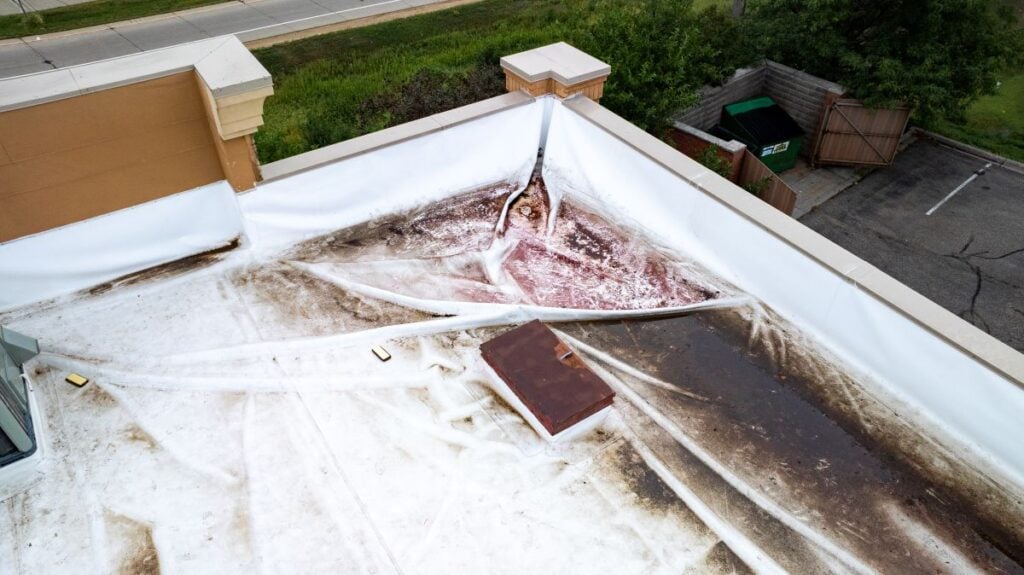
4. Structural Settling
Buildings settle over time, and even a small shift in the roof deck can create unexpected low points where water gathers. This kind of structural settling is often gradual, which means the resulting drainage issue can go unnoticed for a long time before it becomes obvious, particularly in older buildings that have gone through several seasons of freeze and thaw cycles. Large flat roofs are especially prone to this problem, since larger roofs collect water across a wider surface whenever even a minor low point develops.
5. Blocked or Failing Scuppers and Gutters
Scuppers and gutters work alongside internal drains to move water off the roof, and when they become blocked or start to fail, water backs up along the roof perimeter instead of draining properly. Scuppers are typically built into parapet walls at the roof edges, giving water an overflow system to escape when primary drains can’t keep up. Regular maintenance can keep these secondary drainage paths, including external gutters, clear and functioning as intended.
- Debris buildup inside scupper openings
- Rusted or disconnected gutter sections
- Overflow patterns visible on the building’s exterior walls
6. Rooftop Equipment Interfering with Water Flow
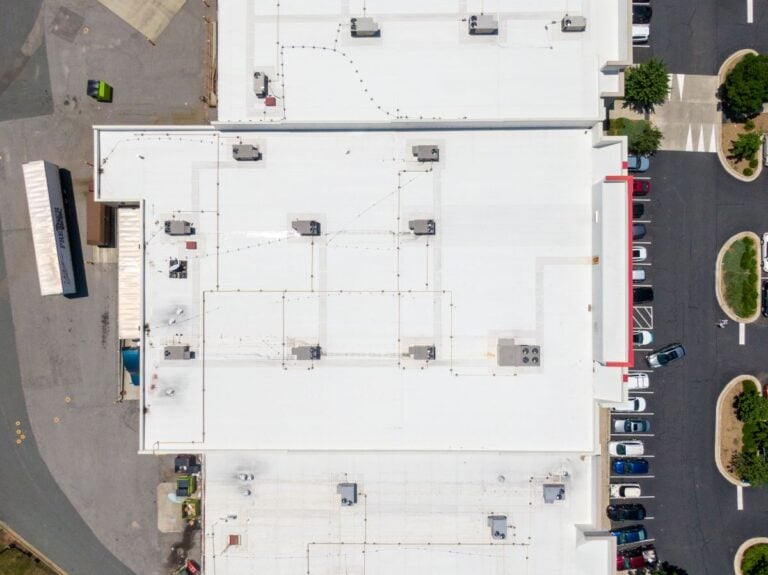
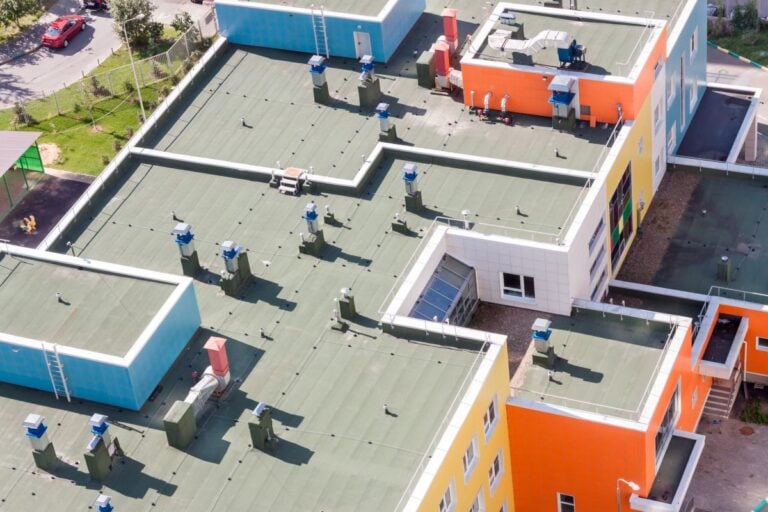
HVAC units, solar panels, and other rooftop equipment can unintentionally block the natural path water takes toward drains. If equipment was added after the original roof design, it may be sitting in a location that disrupts proper drainage.
Recognizing these causes early gives property owners a real chance to fix the problem before it leads to interior damage. A thorough inspection from a qualified roofing professional remains the most reliable way to pinpoint exactly which of these issues is affecting your building, and it often reveals more than one contributing factor at once, particularly after heavy rainfall reveals areas of water accumulation that stay dry the rest of the year.
Modern Drainage Solutions Worth Considering
Fixing a drainage problem often means more than just clearing debris from a drain. Today’s flat roof drainage systems offer several upgraded solutions that address the root cause of water buildup rather than just the symptoms, giving property owners a more permanent fix and better drainage efficiency overall.
- Tapered insulation systems: Custom-fitted insulation boards create a gradual slope across the entire roof surface, directing water toward drains more effectively than a flat plane ever could.
- Additional roof drains: Adding drains in strategic low-lying areas reduces the burden on existing drainage points and shortens the time water sits on the roof.
- Siphonic drainage systems: Unlike traditional gravity drainage, a siphonic roof drain uses negative pressure to pull water through smaller pipes at a faster rate, making it a strong option for large roofs where standard systems struggle to keep up.
- Overflow scuppers: These act as a backup drainage path, releasing water before it can build to a level that stresses the roof structure.
- Drainage mats and channels: Installed beneath ballast, pavers, or green roofs, these systems create pathways that guide water efficiently toward drains even on roofs used for rooftop amenities.
- Reflective and waterproof coatings: Beyond improving energy efficiency, many coatings also help water shed more easily off the membrane surface.
Choosing the right combination of these solutions depends on your roof’s specific layout, age, and the severity of the drainage issue you’re dealing with. A knowledgeable contractor can evaluate your building and recommend the upgrades that will make the biggest difference for your specific situation, often combining two or more of these solutions with upgraded roofing material for the most reliable long-term results.
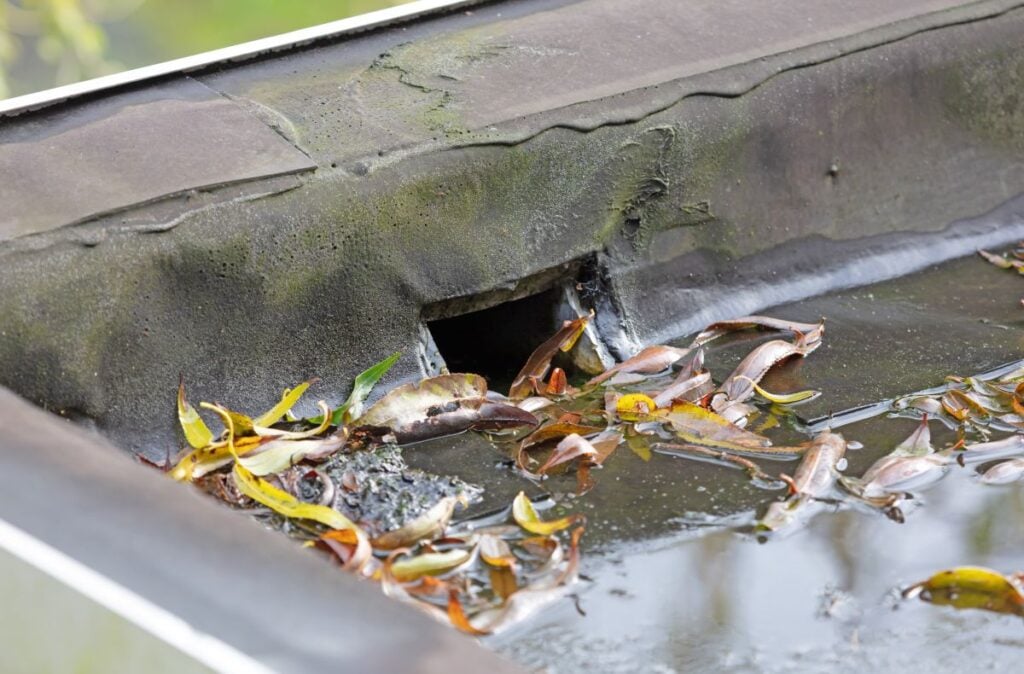
Repair or Upgrade: Choosing the Right Drainage Fix
Not every drainage issue calls for a full roof replacement, and understanding when a smaller fix will do the job can save you both time and money. The right approach usually depends on how widespread the problem is and how much of the roofing system has already been affected.
When a Simple Fix Works
If the issue is isolated to a single clogged drain or a small section of damaged membrane, a targeted repair is often enough to resolve it. These fixes are typically quick, affordable, and effective when caught early before water has had a chance to spread beneath the surface.
- A single drain that needs clearing or minor repair
- Localized membrane damage near one seam or penetration
- Recently developed ponding that hasn’t caused visible interior effects or roof leaks
When It’s Time for a Bigger Upgrade
If ponding water is a recurring issue across multiple areas of the roof, or if repairs keep addressing the same problem without lasting results, it’s usually a sign that improper drainage design needs to change. At this point, tapered insulation, additional drains, or a full roof replacement often provide better long-term value than continued patchwork repairs.
Working with an experienced roofing contractor can help you avoid guessing which path is right for your building, especially when inadequate drainage capacity is contributing to the problem. A proper inspection takes into account your roof’s age, drainage layout, and repair history to recommend a solution that actually solves the problem instead of delaying it.
Protect Your Building With Better Drainage
Standing water on a flat roof is rarely just a cosmetic issue, and addressing this water accumulation early protects both your building and your budget. Springfield Roofing has helped property owners throughout Alexandria and surrounding areas with commercial roofs and residential flat roofs alike identify and resolve drainage problems before they turn into major repairs.
Whether you’re dealing with a single stubborn drain or a roof that pools water after every storm, our team can help you find a solution built to last. We’ll walk you through an inspection, explain what’s causing the buildup, and recommend the right fix for your budget and timeline, whether that means a targeted repair or a complete drainage upgrade.
Don’t let water damage creep up on your building. Contact us today to schedule an inspection and get your flat roof draining the way it should.