A solid commercial roof maintenance checklist is what separates buildings that quietly hit their 20-year roof life from buildings hit with $50,000 emergency repairs at year 12, and most of the difference comes down to a handful of specific tasks done on schedule. Property owners and facility managers in Great Falls and surrounding areas often assume maintenance is just a walk-around inspection, but the real work involves clearing drains, sealing penetrations, checking flashings, managing rooftop equipment, and documenting everything in writing. Done consistently, these tasks catch problems while they’re cheap to fix. Skipped, they turn into water damage, voided warranties, and commercial roof replacement timelines that arrive years early.
- What’s in the checklist: Eight specific maintenance tasks that catch the most common failure points.
- What it costs: Most programs run $0.05 to $0.20 per square foot per year.
- What it saves: Emergency repairs and premature replacements that often cost 10x more.
Why a Structured Maintenance Checklist Matters
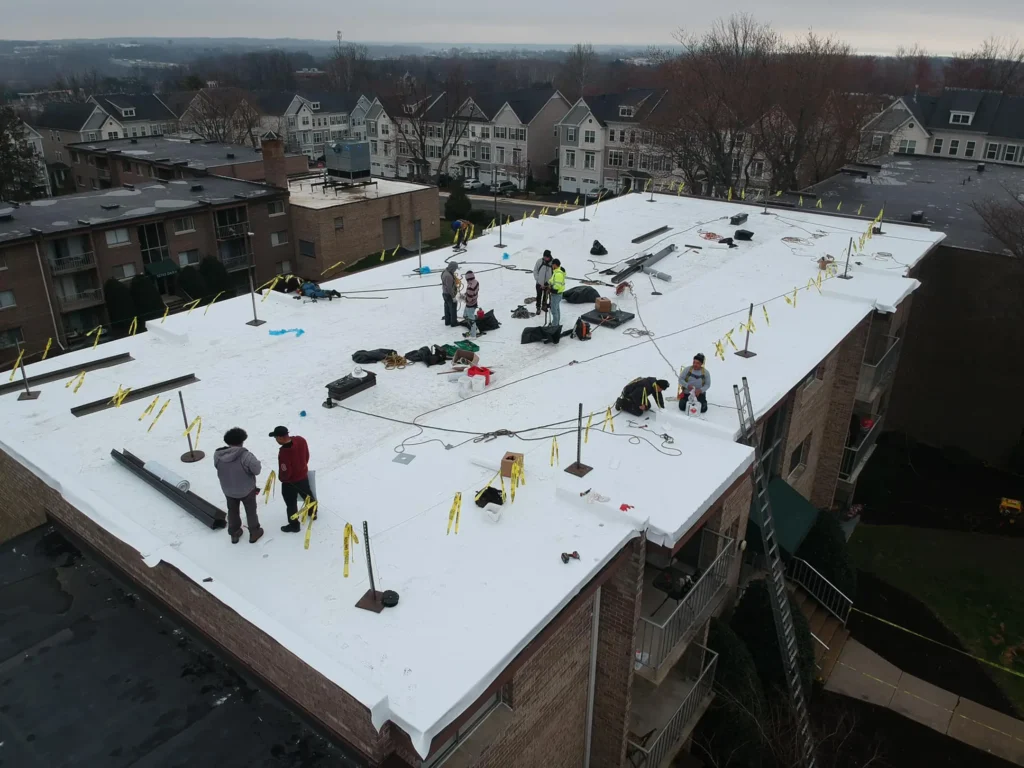
Random “we’ll keep an eye on it” maintenance doesn’t catch the slow-developing problems that cause most commercial roof failures. A structured checklist makes sure nothing gets missed.
What’s the Difference Between Reactive and Preventive Maintenance?
Reactive maintenance means waiting until something fails and then fixing it, while preventive maintenance means catching problems before they cause damage. A reactive approach feels cheaper in the short term because you’re not paying for inspections that don’t find anything, but the math falls apart the first time a small unaddressed crack turns into a flooded warehouse. Preventive maintenance typically costs a few thousand dollars per year for a mid-sized commercial building, while a single emergency leak repair can run $5,000 to $20,000 once interior damage is factored in. Buildings in Great Falls and surrounding areas with structured maintenance programs almost always outlast their reactive-maintenance neighbors.
- Reactive cost: Emergency repairs typically run 3 to 4 times more than planned repairs.
- Preventive cost: Structured maintenance runs a few cents per square foot per year.
- Damage prevention: Interior water damage often exceeds the roof repair itself.
- Operational impact: Emergency repairs disrupt tenant operations and business hours.
8 Maintenance Tasks Every Commercial Roof Needs
These eight tasks form the core of any reliable commercial roof maintenance program. Done together, on schedule, they catch the great majority of problems before they turn into emergencies.
1. Why Are Bi-Annual Inspections the Foundation of Maintenance?
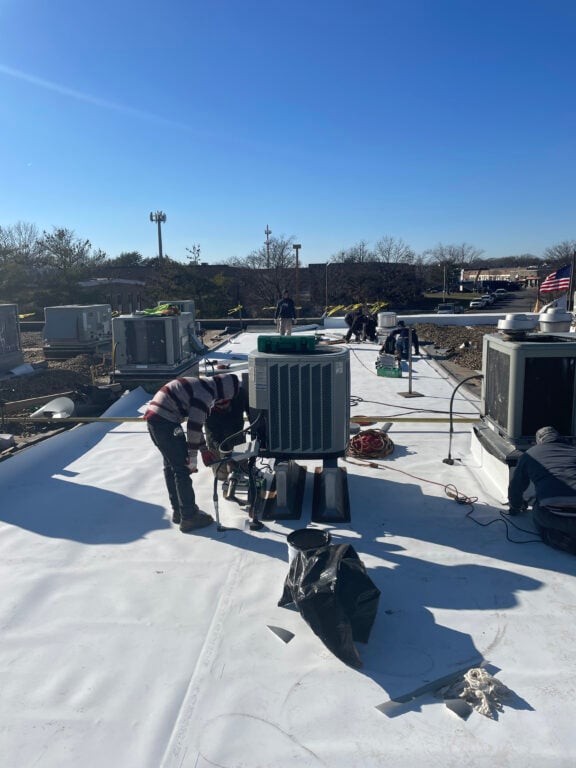
Bi-annual inspections in spring and fall are the foundation of commercial roof maintenance because they catch problems aligned with the seasons that cause them. Spring inspections find winter damage from snow load, ice dams, and freeze-thaw cycles, while fall inspections clear summer debris and check seals after months of heat and UV exposure. A trained inspector walks the entire roof, looking at the membrane, seams, flashings, and penetrations, and documents everything with photos and a written report. Buildings in Great Falls and surrounding areas typically follow this twice-yearly schedule, with additional inspections after major storms. Roofs older than 15 years benefit from quarterly inspections.
- Spring inspection: Catches winter damage and prepares the roof for rain season.
- Fall inspection: Clears summer debris and checks seals before winter.
- Post-storm inspection: Extra visit after wind, hail, or heavy snow events.
- Written report: Photos, notes, and recommendations after every visit.
2. How Does Drain and Gutter Clearing Prevent Major Damage?
Drain and gutter clearing prevents the single most common cause of commercial roof failure, which is standing water from blocked drainage. Leaves, sticks, dirt, and roof debris collect around drain strainers and clog them within months, especially on roofs surrounded by trees. Once a drain is blocked, water can pool inches deep, adding hundreds or thousands of pounds of weight to the structure and accelerating membrane breakdown. Clear drains at every maintenance visit, plus more often during fall leaf drop and after storms. Properties in Great Falls and surrounding areas with heavy tree cover may need monthly drain checks during peak debris seasons.
- Drain strainer cleaning: Pulled and cleaned at every visit.
- Scupper inspection: Wall openings checked for free flow.
- Gutter clearing: Edge gutters cleared of leaves and debris.
- Internal drain testing: Water flow verified through the drain line.
3. What Does Sealant and Caulk Maintenance Involve?
Sealant and caulk maintenance involves inspecting every sealed joint on the roof and replacing material that’s cracked, dried out, or pulling away. Polyurethane and silicone sealants break down from sun, heat, and movement over 5 to 10 years, and they fail at the spots where water is most likely to get in. Common sealant locations include around HVAC curbs, vent pipes, drain bowls, termination bars along walls, and pitch pockets around equipment supports. A maintenance crew touches up minor sealant work during regular visits and flags bigger areas for separate repair quotes. Skipping sealant maintenance is one of the most common ways commercial roofs leak years before they should.
- Pitch pocket refill: Topped off as the sealant shrinks over time.
- HVAC curb sealing: Inspected and resealed where needed.
- Termination bar caulk: Wall-mounted bars resealed to prevent water intrusion.
- Vent pipe collars: Boots and collars checked for cracks or separation.
4. Why Are Flashing Inspections So Important?
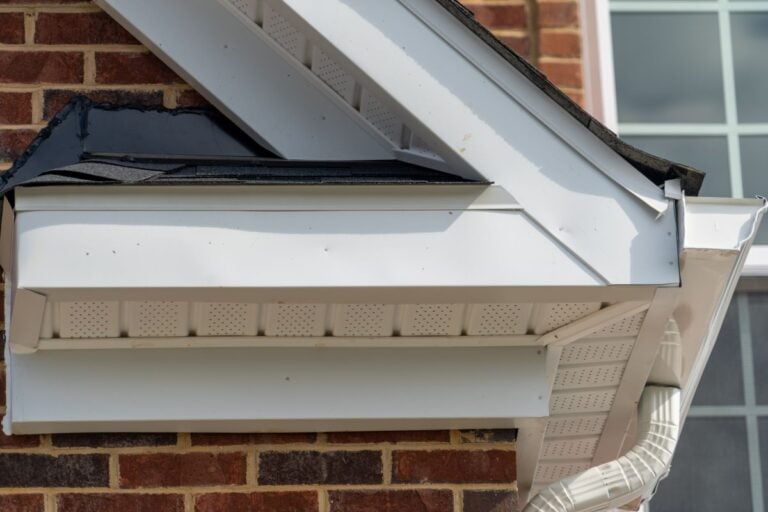
Flashing inspections are critical because flashings, not the field of the roof, are where the great majority of commercial leaks actually start. Flashings are the metal or membrane pieces that seal the transitions between the roof and walls, chimneys, HVAC curbs, skylights, and edge details. They take more thermal stress than the rest of the roof and pull or lift over years of expansion and contraction. A maintenance crew checks every flashing for lifting, separation, cracking, or rust, and either repairs or notes it for follow-up work. Reputable contractors in Great Falls and surrounding areas know that careful flashing inspection is the single highest-value activity on a maintenance visit.
- Edge flashing: Coping and edge metal checked for tight fastening.
- Wall flashing: Transitions to walls inspected for separation.
- Penetration flashing: Boots around pipes and equipment checked for seal.
- Counter-flashing: Brick-set flashings checked for separation from masonry.
5. How Should Rooftop Equipment Be Managed During Maintenance?
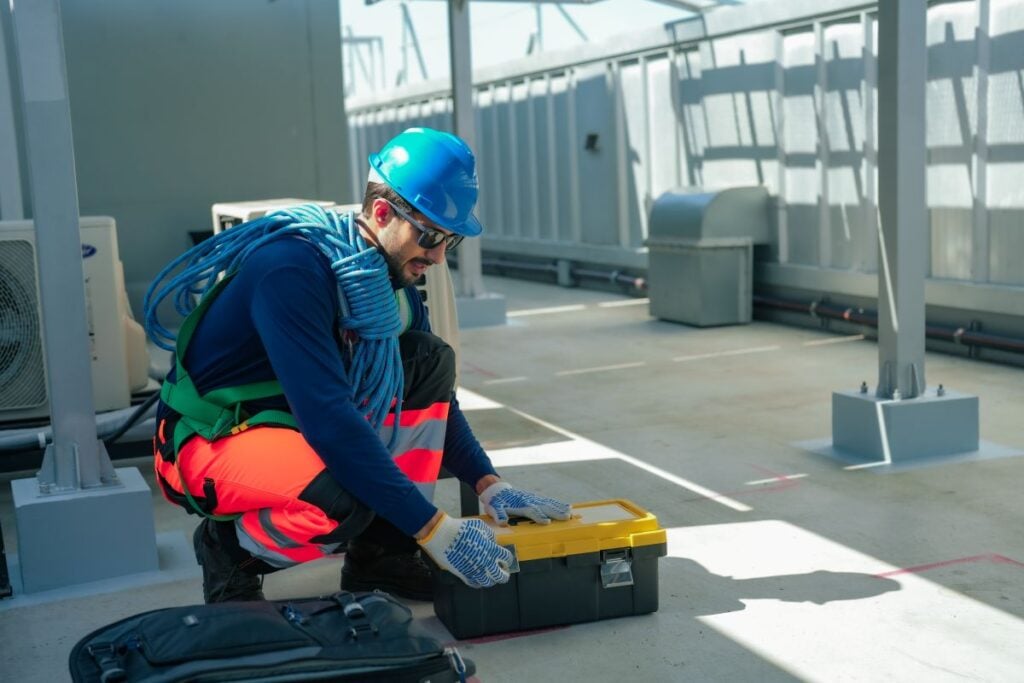
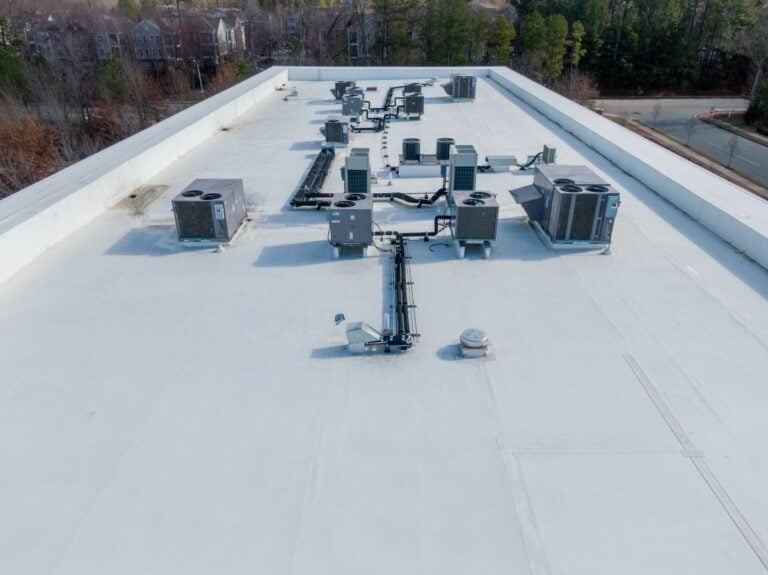
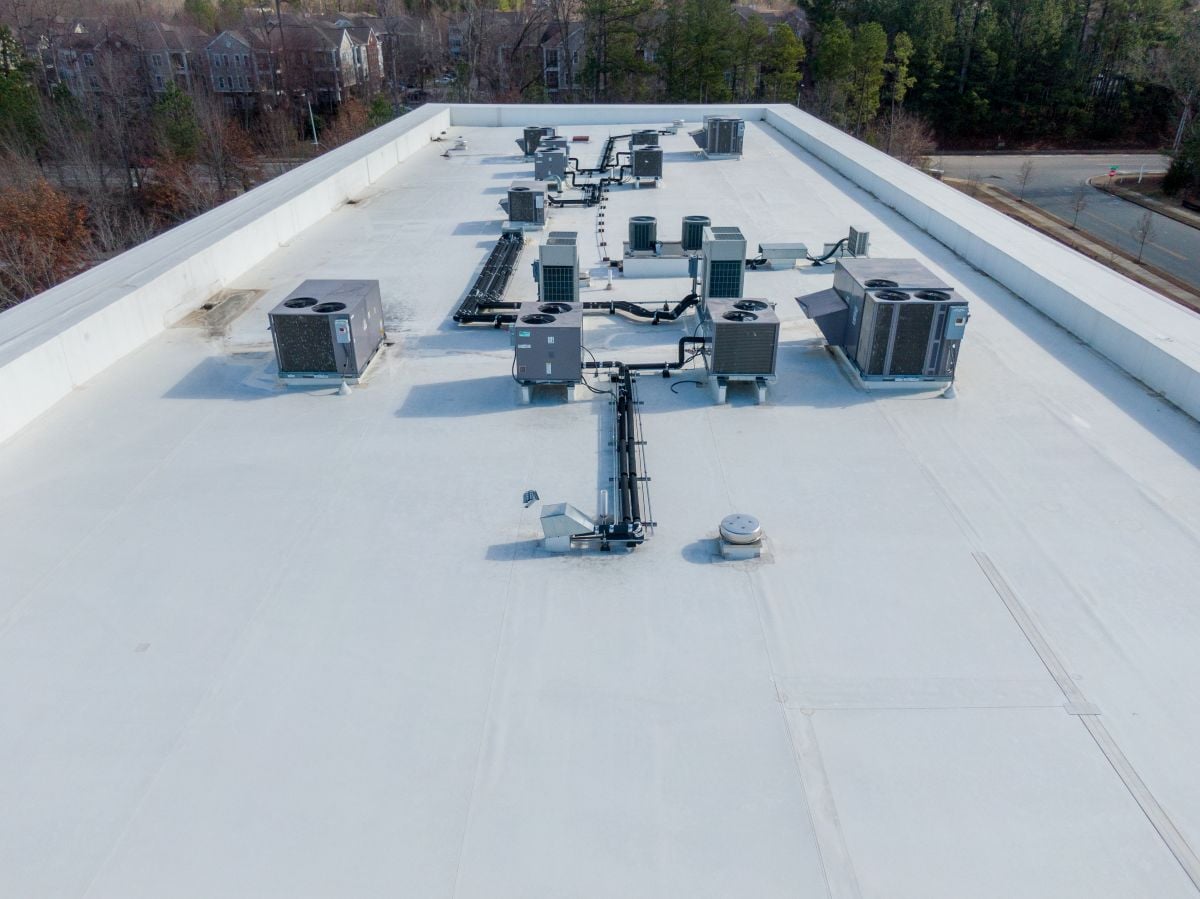
Rooftop equipment management means inspecting around every HVAC unit, exhaust fan, satellite dish, and solar mount for damage to the roof underneath. Every piece of rooftop equipment creates penetrations through the membrane, and each one is a potential leak source. Vibration from HVAC compressors wears down membrane over years, and refrigerant or condensate leaks from equipment can chemically damage the roof surface. A maintenance crew also looks at walk pads and condensate drain lines around HVAC units. Buildings with extensive rooftop equipment in Great Falls and surrounding areas benefit most from this part of the checklist.
- Around-equipment inspection: Membrane around every unit checked for damage.
- Condensate line check: HVAC condensate routed correctly and not staining the roof.
- Walk pad inspection: Service paths covered with pads to protect membrane.
- Refrigerant or oil staining: Cleaned and noted before it eats into membrane.
6. What Does Membrane Surface Inspection Catch?
Membrane surface inspection catches splits, blisters, cracks, alligatoring, and granule loss that point to membrane aging or installation defects. Splits in single-ply membranes like TPO or EPDM let water straight to the insulation underneath, while blisters indicate trapped air or moisture that will fail eventually. Alligatoring, a dried-out cracking pattern on built-up roofs, signals that the surface is losing its weatherproof quality. An experienced inspector spots all of these by walking the entire roof carefully, sometimes using infrared scans to find wet insulation invisible from the surface. Catching membrane issues early often allows for spot repairs rather than full sections of replacement.
- Splits and cracks: Membrane defects that need patching or panel replacement.
- Blisters: Air or moisture pockets that compromise the surface.
- Alligatoring: Dried-out built-up roof surfaces that may need recoating.
- Wet insulation: Detected with moisture scans before it spreads.
7. Why Is Debris and Vegetation Removal a Standard Task?
Debris and vegetation removal is a standard maintenance task because anything sitting on a roof traps moisture and accelerates wear. Leaves, branches, plastic bags, lost tools, and even bird nests all hold water against the membrane and shorten its life. Vegetation is even worse because root systems can puncture membranes outright, and seeds that land on a roof can sprout in trapped soil and debris within a season. A maintenance crew clears the entire surface of debris at every visit, paying particular attention to corners and around equipment where wind piles things up. Buildings near trees in Great Falls and surrounding areas often need this done quarterly rather than just twice a year.
- Full surface sweep: All debris removed from the entire roof.
- Corner and edge clearing: Areas where wind piles up debris checked carefully.
- Vegetation removal: Any growth pulled out at the root.
- Hauling and disposal: Debris removed from the building, not piled at the edge.
8. What Documentation Should Every Maintenance Visit Produce?
Every maintenance visit should produce a written report with photos, notes on conditions found, repairs performed, and recommendations for follow-up work. This documentation is what proves the maintenance program existed if you ever need to file a warranty claim, work with insurance, or sell the building. Manufacturer warranties from Carlisle, Firestone, GAF, and Johns Manville typically require documented maintenance records to remain valid, and missing records can void coverage on legitimate failures. Reputable contractors in Great Falls and surrounding areas keep digital records and provide copies to the building owner after every visit. This paperwork is one of the most valuable parts of a maintenance program.
- Visit report: Written summary of every scheduled inspection.
- Photo documentation: Time-stamped images of conditions and work performed.
- Repair invoices: Itemized invoices for any work beyond the base contract.
- Master maintenance log: Cumulative file tracking the roof’s history.
How to Set Up a Maintenance Program That Actually Works
Choosing a contractor and a maintenance contract structure matters as much as the checklist itself. Knowing what to look for protects the building and the budget.
What Should Be in a Commercial Maintenance Contract?
A commercial maintenance contract should spell out inspection frequency, scope of work, emergency response time, included repairs versus billable repairs, and reporting standards. Vague contracts that promise “regular maintenance” without specifics leave both sides exposed. The contract should also reference manufacturer warranty requirements so the program keeps coverage valid. Reputable commercial roofers in Great Falls and surrounding areas provide sample reports, references, and proof of insurance and certifications before signing. Many also offer tiered programs, with basic plans covering inspections and drain clearing, and premium plans adding infrared scans, repair allowances, and faster emergency response.
- Defined scope: Each visit’s tasks listed clearly.
- Emergency response: Guaranteed response time in writing.
- Repair allowance: Some programs include minor repairs in the base fee.
- Warranty compliance: Program built to meet manufacturer requirements.
How Do You Know if Maintenance Is Working?
You know maintenance is working when emergency repair calls drop, warranty inspections pass without issues, and the roof hits its full expected service life. Other signs include consistent documentation files growing over time, predictable annual budget for roofing, and no surprise capital expenses for premature replacement. If maintenance is in place but emergency calls keep happening, that’s a sign the program isn’t catching the right issues, often because the inspections are surface-level or the documentation isn’t tracking trends. A good maintenance partner will adjust the program based on what they’re finding on the roof.
- Fewer emergency calls: Trend line drops year over year.
- Warranty in good standing: Manufacturer inspections pass smoothly.
- Predictable budget: Annual roofing costs stay in a tight range.
- Roof hits full service life: No premature replacement needed.
Frequently Asked Questions
How much does a commercial roof maintenance plan cost?
Most commercial roof maintenance plans cost $0.05 to $0.20 per square foot per year, depending on roof size, complexity, and what’s included. For a 20,000 square foot building, that’s roughly $1,000 to $4,000 per year for a structured program with bi-annual inspections, drain clearing, and minor repairs. Premium programs with infrared scans and faster emergency response run higher.
How often should commercial roof maintenance be done?
Commercial roof maintenance should be done at least twice per year, in spring and fall, plus after any major storm. Roofs older than 15 years, buildings with heavy rooftop equipment, or those near significant tree cover may need quarterly visits. Annual minimum maintenance is sometimes acceptable for newer roofs with low risk factors.
What’s included in a typical commercial roof inspection?
A typical commercial roof inspection includes a full surface walk-through, drain and gutter clearing, sealant and flashing review, rooftop equipment check, debris removal, and a written report with photos. Most inspections take one to three hours depending on roof size and complexity. Findings are documented for warranty and capital planning purposes.
Does roof maintenance keep my manufacturer warranty valid?
Yes, manufacturer warranties on commercial roofs typically require documented preventive maintenance to remain valid. Most manufacturers like Carlisle, Firestone, GAF, and Johns Manville have specific maintenance language in their warranty terms. Skipping maintenance is one of the most common reasons warranty claims get denied years after a roof is installed.
Can in-house facility staff handle commercial roof maintenance?
In-house facility staff can handle minor day-to-day tasks like spotting visible debris from the ground, but full roof maintenance should be done by qualified roofing contractors. Most manufacturer warranties specifically require maintenance by certified contractors, and untrained inspections miss the technical details that matter most. Safety risk on commercial roofs also argues for professional service.
What’s the difference between commercial roof maintenance and repair?
Commercial roof maintenance is the scheduled preventive program that includes inspections, cleaning, and minor work, while repair is the response to specific identified problems. Most maintenance programs include a small repair allowance for minor sealant or flashing work, with bigger repairs quoted separately. Repair only programs without maintenance miss the early signs that prevent emergencies.
Choose Springfield Roofing & Sheet Metal for Commercial Maintenance That Prevents Surprises
A real commercial roof maintenance checklist takes more than promises, it takes a contractor who shows up on schedule, documents the work, and catches problems before they cost real money. Springfield Roofing & Sheet Metal is a 1st and 2nd generation family-owned and operated company serving Great Falls and surrounding areas with a dedicated in-house crew, full labor and material warranties, and CertainTeed 5-Star Select Shingle Master certification, which is held by only a small percentage of roofing contractors nationwide. We provide structured commercial maintenance programs with bi-annual inspections, written reports, drain and flashing service, and clear pricing so building owners know exactly what’s being protected. Contact Springfield Roofing & Sheet Metal today for a free commercial roof assessment and find out what a real maintenance program does for your building.