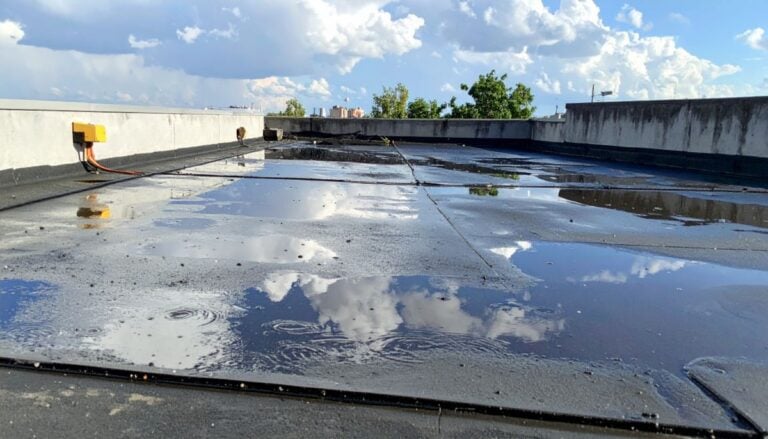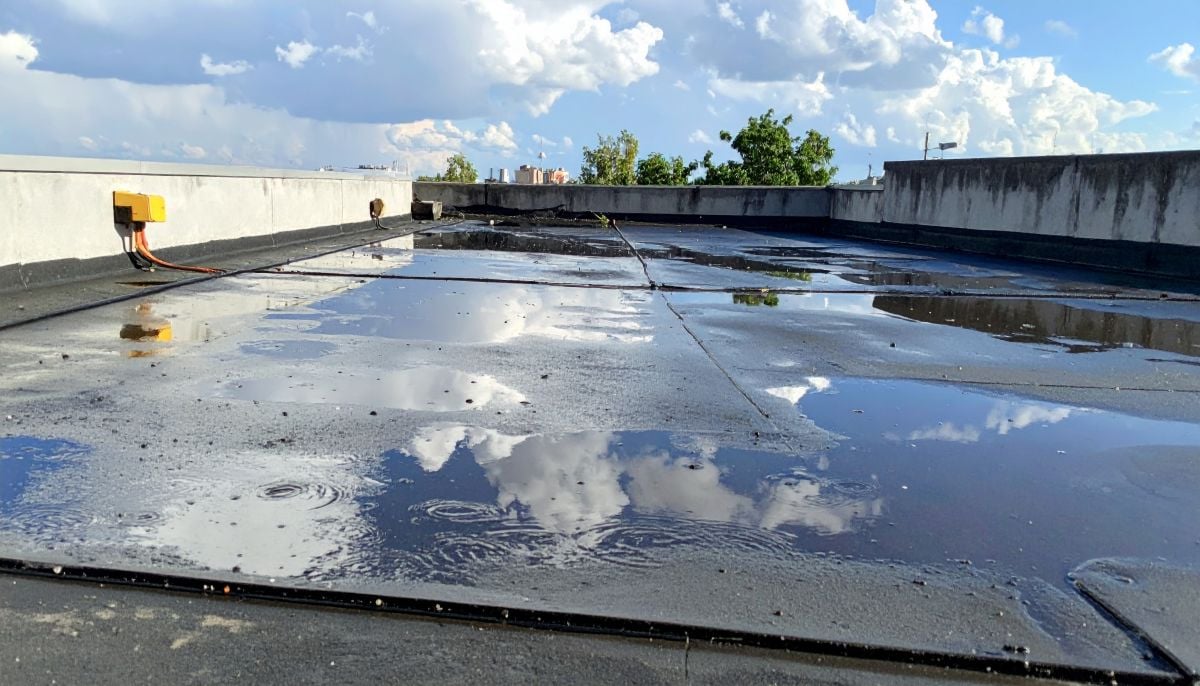
Commercial property owners often deal with roof ponding, a common issue on flat or low-slope roofs where water collects and fails to drain properly. While a small amount of standing water may seem harmless, prolonged ponding can lead to leaks, membrane damage, and even structural issues over time.
Understanding what causes roof ponding and how to address it is essential for protecting your investment and maintaining a watertight, long-lasting commercial roof.
- Roof ponding adds unnecessary weight that can strain structural supports.
- Standing water accelerates membrane deterioration and leak formation.
- Prompt correction prevents costly repairs and extends roof lifespan.
Why Roof Ponding Should Never Be Ignored
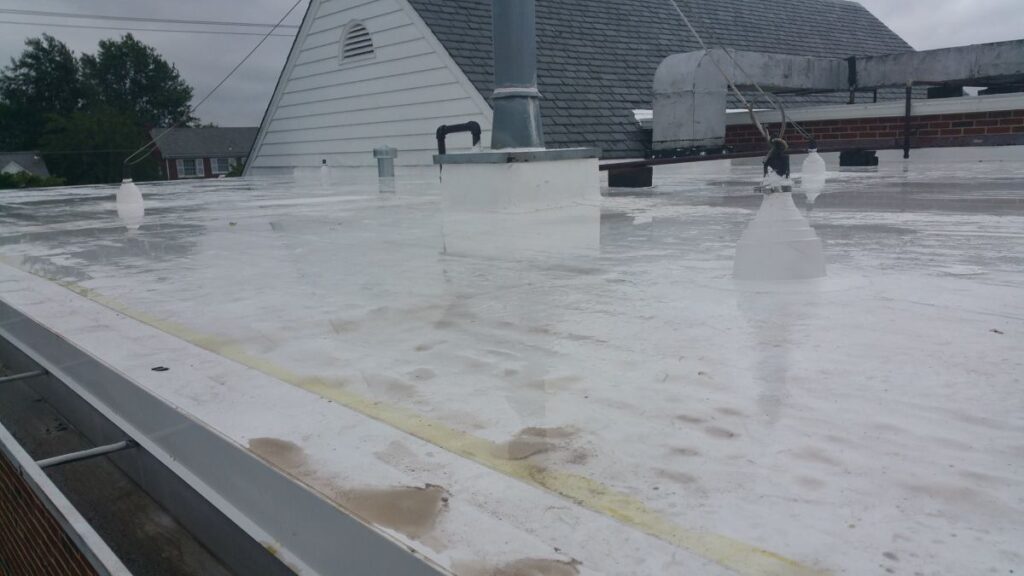
Flat and low-slope commercial roofs rely on precise design and drainage to move water efficiently after rain or snow. When water remains on the surface for more than 48 hours, it begins to degrade roofing materials, weaken seams, and encourage algae or vegetation growth.
In Virginia’s climate, where heavy rain and humidity are common, roof ponding can quickly escalate into leaks and insulation damage if not properly corrected.
7 Common Causes of Roof Ponding and How to Fix Them
Ponding water can result from a combination of design, age, and maintenance issues. Below are the seven most frequent causes, along with effective solutions to restore proper drainage and prevent recurrence.
1. Poor Roof Design or Insufficient Slope
When a roof lacks adequate pitch, water cannot drain effectively toward outlets or scuppers. Even a minimal slope error can cause persistent water accumulation.
- Problem: The roof was built or modified with inadequate drainage angles.
- Solution: Re-pitch low areas with tapered insulation or lightweight fill materials to improve water flow.
2. Blocked Drains, Gutters, or Scuppers
Debris such as leaves, dirt, and roofing material fragments often clog drainage systems, especially after storms. Blocked drains prevent water from escaping, leading to standing pools.
- Problem: Obstructions prevent proper water flow from the roof surface.
- Solution: Clean drains and gutters regularly, and install protective strainers or screens to prevent buildup.
3. Structural Settlement or Building Movement
Over time, commercial buildings may shift slightly due to soil settling or foundation movement. This can create new low spots that trap water.
- Problem: Uneven roof surfaces develop from gradual structural shifts.
- Solution: Level affected areas using lightweight concrete or tapered insulation to restore slope.
4. Compressed or Damaged Insulation
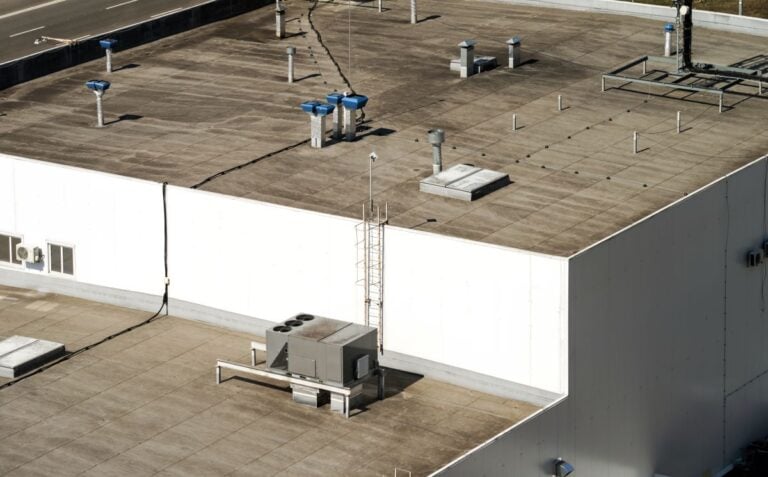
Insulation beneath the roof membrane can compress over time under heavy loads such as HVAC units or foot traffic. These depressions hold water long after rainfall ends.
- Problem: Sunken insulation creates shallow depressions across the surface.
- Solution: Replace compressed sections with high-density insulation and install protective walkway pads around equipment.
5. Deteriorated Roof Membrane
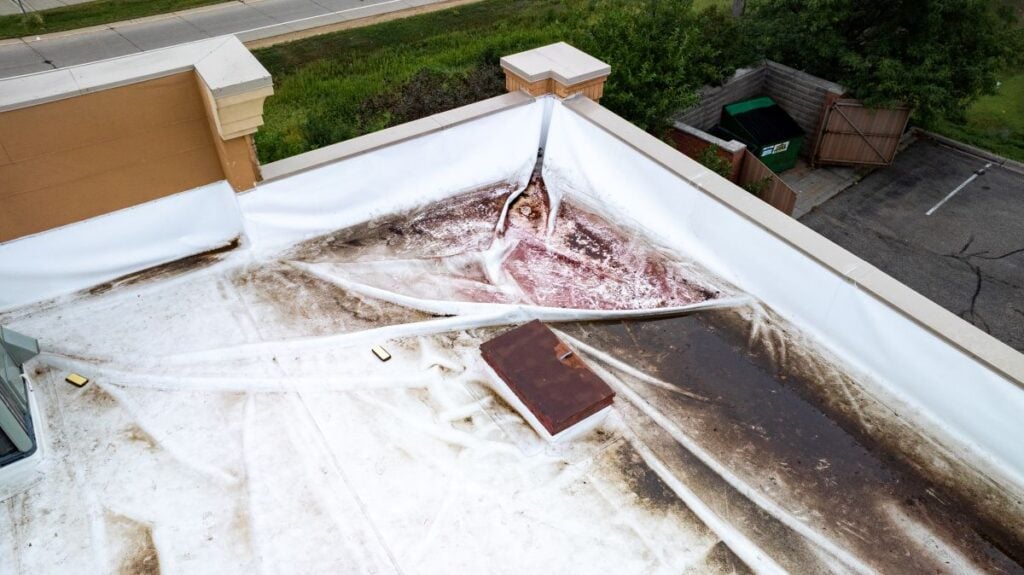
Aging or damaged roofing membranes can lose flexibility and allow water to penetrate underlying layers, weakening them further. As materials break down, dips or uneven areas form where water collects.
- Problem: Weathering or UV exposure causes the membrane to lose elasticity and form soft spots.
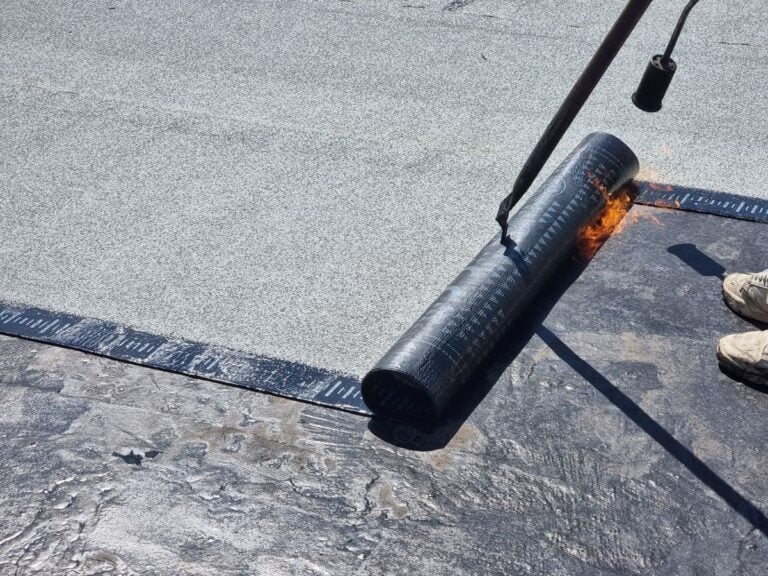
- Solution: Patch or overlay the affected sections using compatible materials, or consider a new coating system for extended protection.
6. Inadequate Drainage Placement
Even well-designed roofs can suffer ponding if drains and scuppers are not placed in optimal locations. Large roofs often require multiple drainage points to ensure even water flow.
- Problem: Too few drains or poorly positioned outlets leave some areas without effective water removal.
- Solution: Install additional drains or secondary scuppers in low-lying zones to improve performance.
7. Poor Maintenance Practices
Neglecting regular roof maintenance allows minor problems to worsen over time. Unnoticed debris, small leaks, or clogged drains can all lead to long-term ponding issues.
- Problem: Infrequent inspections fail to catch early drainage or structural problems.
- Solution: Implement a professional maintenance schedule that includes biannual inspections and after-storm checkups.
Summary of Common Roof Ponding Causes and Fixes
| Cause | Problem Description | Recommended Fix |
| Poor Roof Design | Roof lacks proper slope | Re-pitch low areas with tapered insulation |
| Blocked Drains | Debris prevents water flow | Clean and maintain drainage systems |
| Structural Settlement | Uneven roof surfaces form over time | Level and reinforce affected areas |
| Compressed Insulation | Weight or traffic causes depressions | Replace damaged insulation |
| Deteriorated Membrane | Aged material creates low spots | Repair or recoat damaged sections |
| Drainage Placement | Drains not positioned correctly | Add secondary outlets or scuppers |
| Poor Maintenance | Debris or small leaks go unchecked | Schedule routine inspections |
This table highlights the importance of identifying the source of ponding before determining a repair plan.
Preventing Future Roof Ponding
Once repairs are complete, prevention is key. Taking proactive steps ensures your commercial roof continues to drain efficiently.
- Inspect twice per year: Check for pooling, debris buildup, and drain blockages.
- Keep roof surfaces clear: Remove leaves and dirt to maintain proper water flow.
- Monitor equipment areas: Ensure supports and platforms do not compress insulation.
- Apply protective coatings: Waterproof coatings improve slope performance and surface durability.
- Document maintenance: Keep records of all inspections and repairs for warranty and insurance purposes.
When to Seek Professional Help
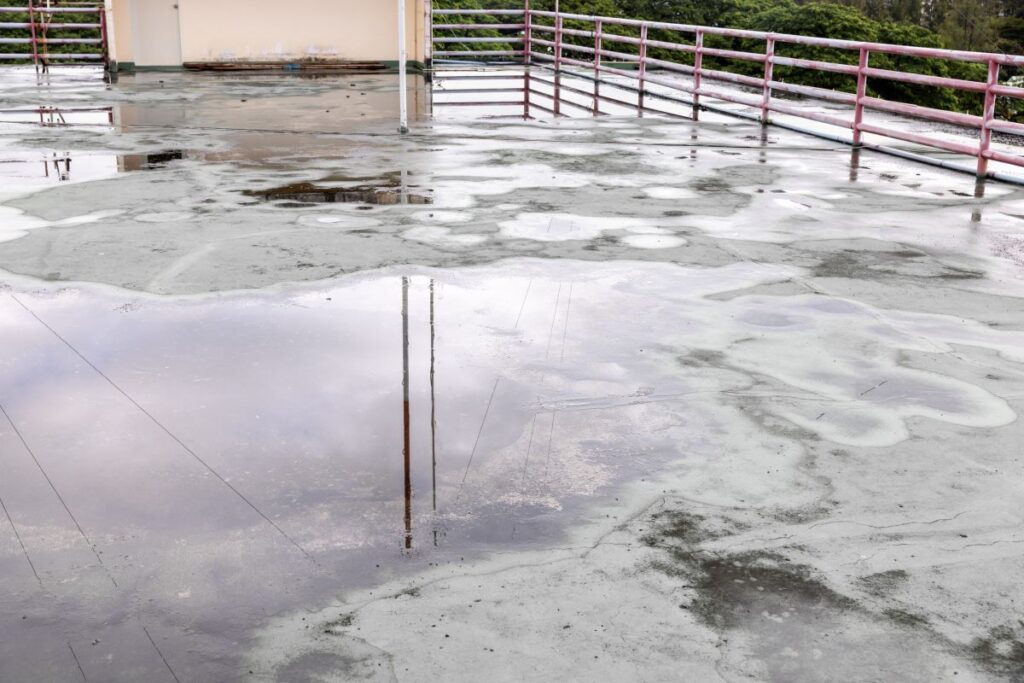
While small puddles may appear manageable, persistent ponding water can indicate deeper structural or design issues that require professional evaluation. Commercial roofing experts use precision tools to assess slope, drainage, and insulation conditions before recommending targeted solutions.
Early intervention not only preserves the roof’s integrity but also prevents water damage that can affect electrical systems, ceilings, and insulation.
Cost of Roof Ponding Repairs in Virginia
In Virginia, the average cost to repair roof ponding ranges from $1,500 to $7,000, depending on roof size, material type, and extent of damage. Adding new drainage points or re-sloping the roof can increase costs but provides long-term savings by eliminating chronic water retention issues.
Addressing ponding early reduces the likelihood of full roof replacement, saving commercial property owners thousands over time.
Protecting Your Commercial Roof from Ponding
Persistent roof ponding is more than a cosmetic concern—it can signal underlying design or drainage issues that shorten roof life and increase maintenance costs. Understanding the causes and addressing them promptly is the best way to preserve structural integrity and avoid water-related damage.
If your property in Great Falls or surrounding areas shows signs of ponding or drainage issues, contact Springfield Roofing & Sheet Metal for professional guidance. Our experienced commercial team can identify the root cause, recommend effective solutions, and help ensure your roof performs reliably through every Virginia season.