Dealing with roof mold can be more than just a cosmetic issue, it’s a sign that moisture is trapped where it shouldn’t be. Mold growth weakens shingles, damages insulation, and can even affect indoor air quality if ignored. Understanding what causes it, how to recognize it early, and what steps to take next can save you time, money, and stress.
- Damage prevention: Addressing roof mold quickly keeps it from spreading into your attic or walls.
- Health protection: Mold spores can contribute to poor air quality inside your home.
- Long-term savings: Early repairs reduce the risk of expensive replacements later.
Why Roof Mold Develops
Mold thrives in damp, shaded environments, feeding on organic material and moisture trapped under shingles. In Springfield and surrounding areas, humid summers and seasonal storms create ideal conditions for mold to form, especially if ventilation or drainage is lacking.
Roof mold typically starts small, often appearing as dark patches or fuzzy growth on shingles or under eaves. If left untreated, it can spread across the roof’s surface, leading to wood rot, structural deterioration, and persistent leaks.
4 Common Causes Of Roof Mold
Below are the four most frequent reasons homeowners find mold on their roofs, along with what you can do to address each one.
- Poor Ventilation
Inadequate attic ventilation is one of the main culprits behind roof mold. When hot, humid air becomes trapped in the attic, it condenses on cooler surfaces like decking or insulation. This lingering moisture becomes a breeding ground for mold and mildew.
Fix: Make sure your attic vents are clear of insulation, debris, or nests. Adding ridge and soffit vents can greatly improve airflow and reduce humidity buildup. - Clogged Gutters
Blocked gutters prevent water from draining off your roof, causing it to pool along the edges or seep beneath shingles. The trapped moisture encourages mold and algae growth on both the roof and fascia boards.
Fix: Clean gutters at least twice a year—once in spring and once in fall. Consider installing gutter guards to reduce debris buildup and improve drainage. - Roof Leaks Or Damaged Shingles
Even small leaks allow moisture to collect under the roof surface, creating dark, damp pockets perfect for mold growth. Missing, cracked, or curling shingles accelerate the problem by exposing underlayment and wood decking.
Fix: Regularly inspect your roof for damaged shingles, especially after storms. Promptly patch or replace them to prevent water from penetrating deeper layers. - Overhanging Trees And Debris
Shaded areas stay damp longer, allowing mold spores to thrive. Falling leaves and branches trap moisture against the roof, feeding organic growth and blocking sunlight that would normally dry the surface.
Fix: Trim back overhanging branches to improve sunlight and airflow. Keep the roof surface clear of leaves, pine needles, and other debris to minimize moisture retention.
How To Identify Roof Mold
Early detection makes all the difference. Mold can be mistaken for dirt, algae, or general discoloration, so it’s important to know what you’re looking for.
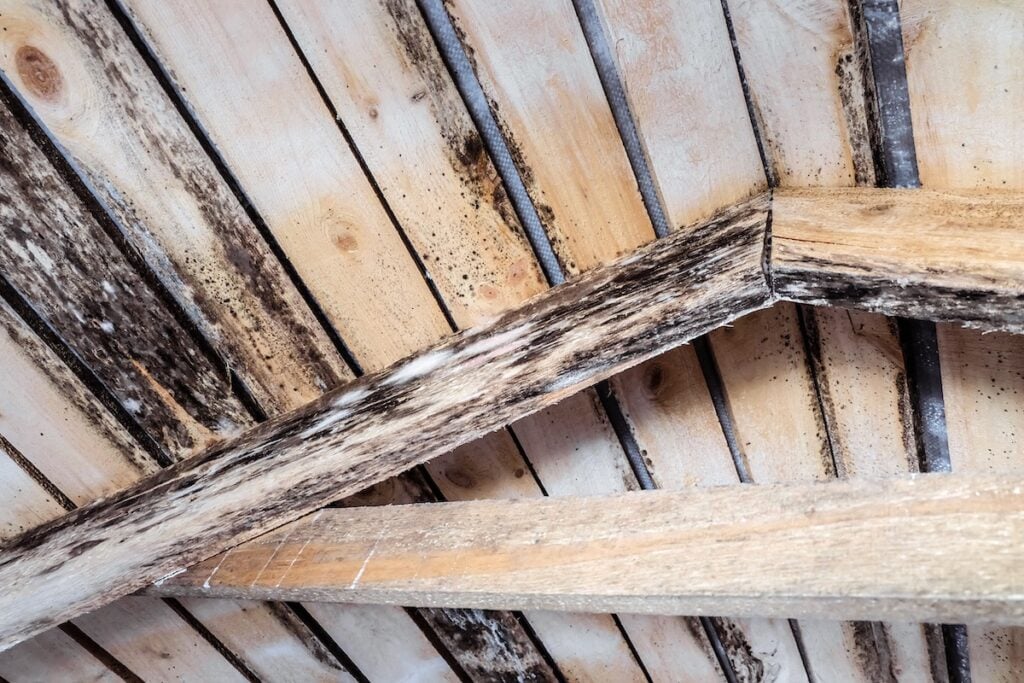
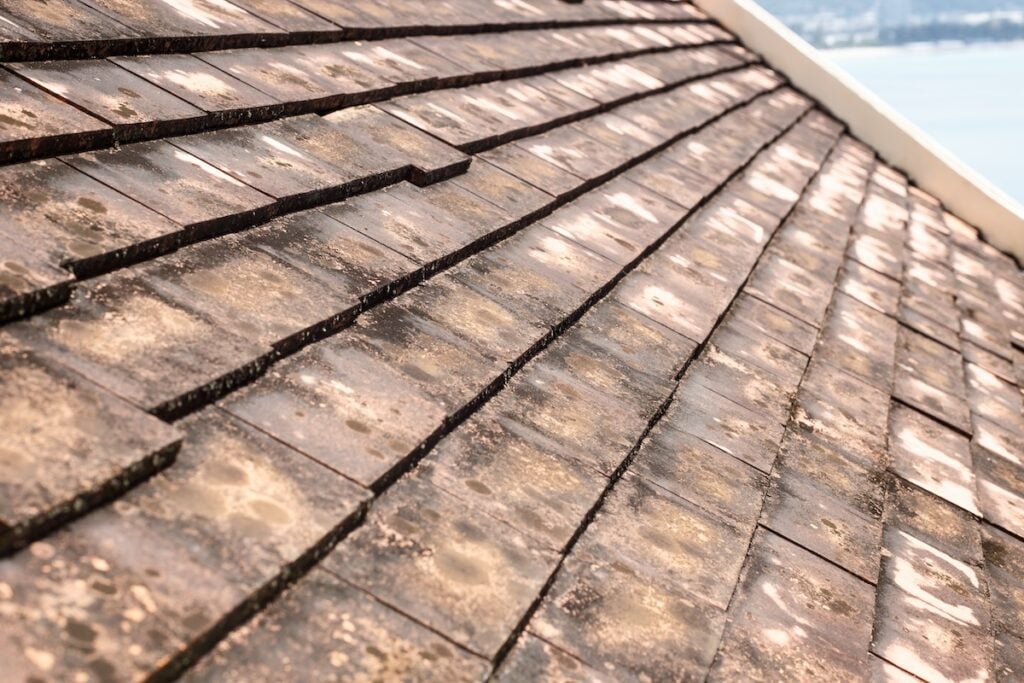
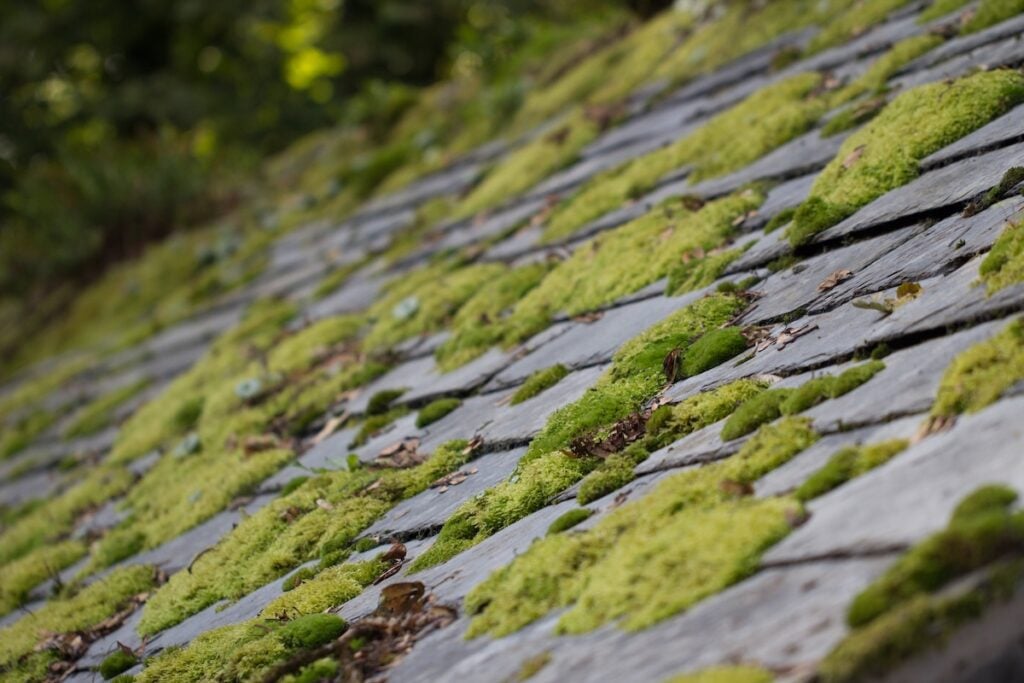
- Visible Signs: Mold typically appears as dark streaks or fuzzy patches in shades of black, green, or brown. You might notice these along shaded areas, under vents, or near valleys where water tends to pool.
- Musty Odor: A musty smell inside the attic or upper rooms can indicate mold is present on the roof decking or insulation. If the odor persists, the mold may already be spreading.
- Interior Clues: Ceiling stains or peeling paint can be signs that roof mold has begun seeping inward through moisture infiltration. Check your attic for visible growth on rafters or plywood sheathing.
Why Roof Mold Shouldn’t Be Ignored
It’s tempting to treat mold as just an appearance problem, but ignoring it can have serious consequences.
- Roof Structure Damage: As mold spreads, it deteriorates wood components, making them soft and weak. Left unchecked, this can compromise the roof’s structural integrity and lead to sagging or leaks.
- Insulation Damage: Mold absorbs into attic insulation, reducing its effectiveness and increasing energy costs. Once contaminated, insulation often needs to be replaced entirely.
- Health Risks: Mold spores can enter your living space through HVAC systems or attic vents, triggering respiratory issues, allergies, and other health problems.
Safe Ways To Remove Roof Mold
While homeowners can address minor mold spots, extensive infestations are best left to professionals. The key is to remove mold safely without damaging shingles or spreading spores.
- Use a mild cleaning solution: Mix water with oxygen bleach or a specialized roof cleaner designed for mold removal. Avoid chlorine bleach—it can discolor shingles and harm plants below.
- Apply gently: Spray the solution evenly, let it sit for 15–20 minutes, then rinse with low-pressure water. Avoid using a pressure washer, as it can strip shingle granules.
- Wear protective gear: Gloves, goggles, and a respirator help protect you from airborne spores.
- Clean gutters and downspouts: Finish by flushing your drainage system to remove mold-contaminated debris.
Preventing Mold From Returning
Once your roof is clean, a few preventive steps will keep mold from making a comeback.
- Improve Attic Ventilation: Proper ventilation is the best long-term defense. Balanced airflow from soffit to ridge vents keeps humidity low and prevents condensation from forming on roof decking.
- Install Zinc Or Copper Strips: When rainwater runs over zinc or copper strips installed near the roof ridge, it releases metal ions that naturally inhibit mold and algae growth.
- Regular Roof Inspections: Scheduling annual inspections ensures your roof stays in good shape. In Springfield and surrounding areas, seasonal temperature swings can cause flashing or shingles to shift slightly, opening paths for moisture.
- Keep Roofs And Gutters Clean: Clearing debris from your roof and gutters every few months helps prevent moisture accumulation. A clean, dry roof is far less likely to host mold spores.
When To Call A Professional
If mold covers large portions of your roof, keeps returning after cleaning, or has spread into your attic insulation, it’s time to bring in an expert. Professionals use specialized treatments and safety equipment to remove mold completely and inspect for underlying damage like wood rot or leaks.
They can also recommend long-term solutions—such as replacing old shingles with algae-resistant materials or improving attic airflow—to help prevent future growth.
The Role Of Roofing Material In Mold Resistance
Not all roofing materials are equally prone to mold. Asphalt shingles, especially those containing limestone filler, are more susceptible. Metal, tile, or slate roofs resist mold more effectively because they shed moisture and dry faster.
If you’re planning a roof replacement soon, consider mold-resistant shingles or coatings designed for humid climates like Springfield and surrounding areas. Investing in higher-quality materials can reduce cleaning frequency and extend your roof’s life.
Stop Roof Mold Before It Spreads
Even small patches of roof mold can signal hidden moisture problems that will only get worse over time. By addressing ventilation, drainage, and maintenance habits early, you can protect both your home and your health.
If you suspect mold growth or notice recurring dark spots on your roof,contact Springfield Roofing & Sheet Metal for expert guidance and a free estimate. Our experienced team proudly serves Springfield and surrounding areas, helping homeowners identify causes, restore roof integrity, and maintain clean, healthy roofing systems year-round.