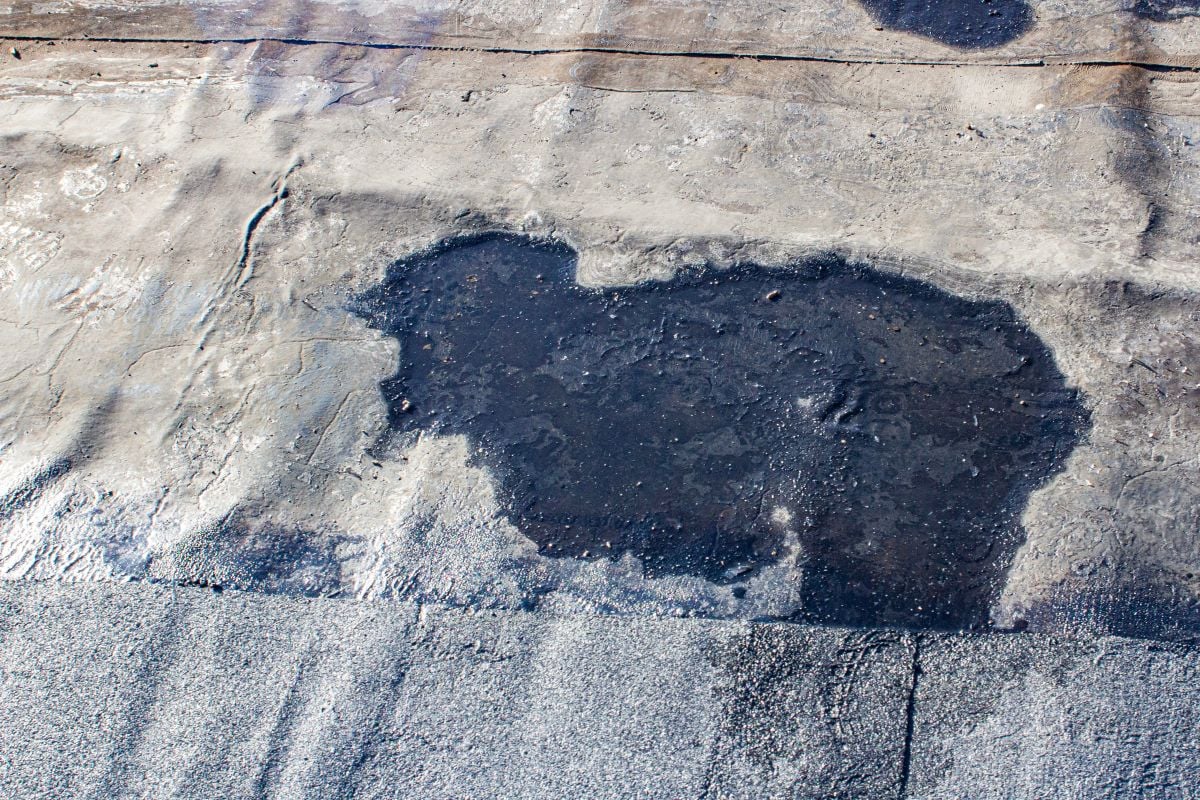
If you’ve noticed puddles sitting on your commercial roof long after it rains, you may be dealing with ponding water on flat roof surfaces. While it’s common for flat or low-slope roofs to hold a small amount of water temporarily, standing water that lingers more than 48 hours can lead to leaks, membrane damage, and costly structural issues.
For business owners in Alexandria and surrounding areas, ponding water is more than an eyesore, it’s a red flag that your roof may not be draining properly. Addressing the cause quickly can extend your roof’s lifespan and help protect your property investment.
- Prevent leaks: Standing water weakens seams, coatings, and insulation over time.
- Protect structure: Excess weight can stress roof decking and framing.
- Save money: Early repairs cost far less than major roof replacements later.
Why Ponding Water Occurs on Commercial Flat Roofs
Flat roofs aren’t truly flat, they’re designed with a subtle slope (usually ¼ inch per foot) to direct water toward drains or scuppers. When water doesn’t flow off properly, it collects in depressions, creating pools that strain the roof membrane.
In Alexandria and surrounding areas, freeze-thaw cycles, heavy summer rain, and aging roofing systems can all make ponding water a recurring issue.
Understanding the root cause helps determine the right remedy, so let’s look at the six most common reasons—and how to fix them.
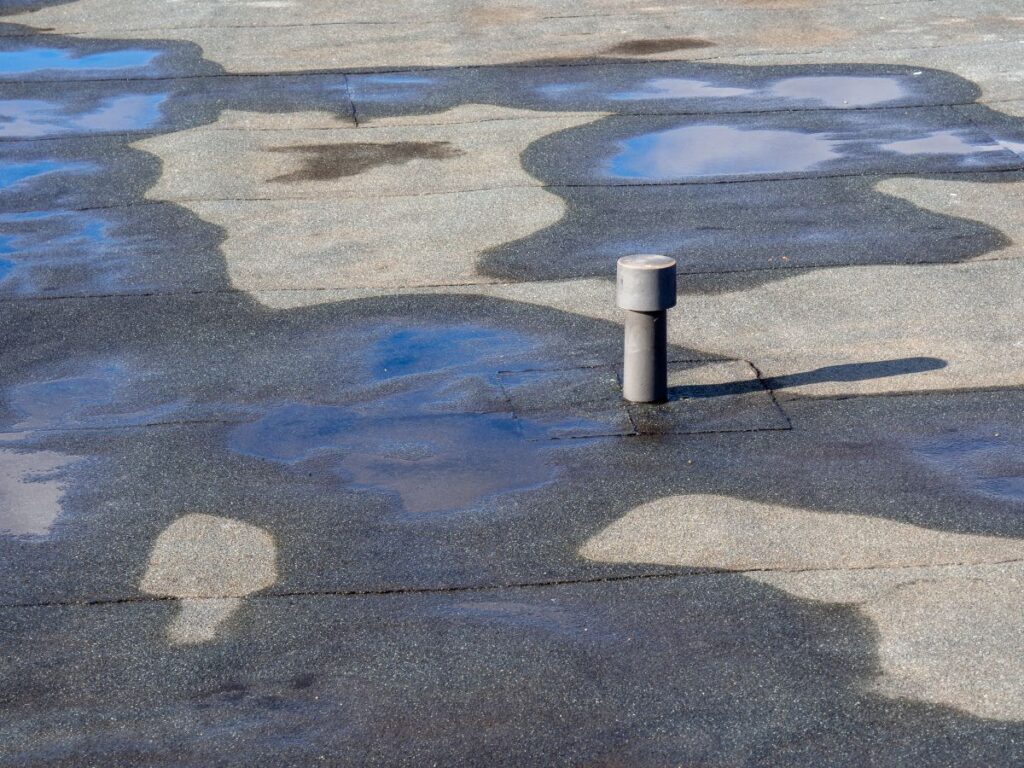
6 Reasons + Remedies
Flat roofs on commercial buildings are designed with a slight slope to help water drain efficiently. However, when that drainage fails, standing water, or ponding, can develop after heavy rain. Prolonged ponding water leads to leaks, roof deterioration, and structural strain, making early detection and correction essential for building owners in Alexandria and surrounding areas.
1. Poor Roof Design or Insufficient Slope
Many flat roofs develop ponding issues due to improper design or insufficient slope. Over time, minor construction errors can worsen as materials settle or compress.
- Problem: Water collects in low areas instead of draining toward outlets.
- Solution: Re-pitching sections with tapered insulation or lightweight concrete can restore proper slope and drainage.
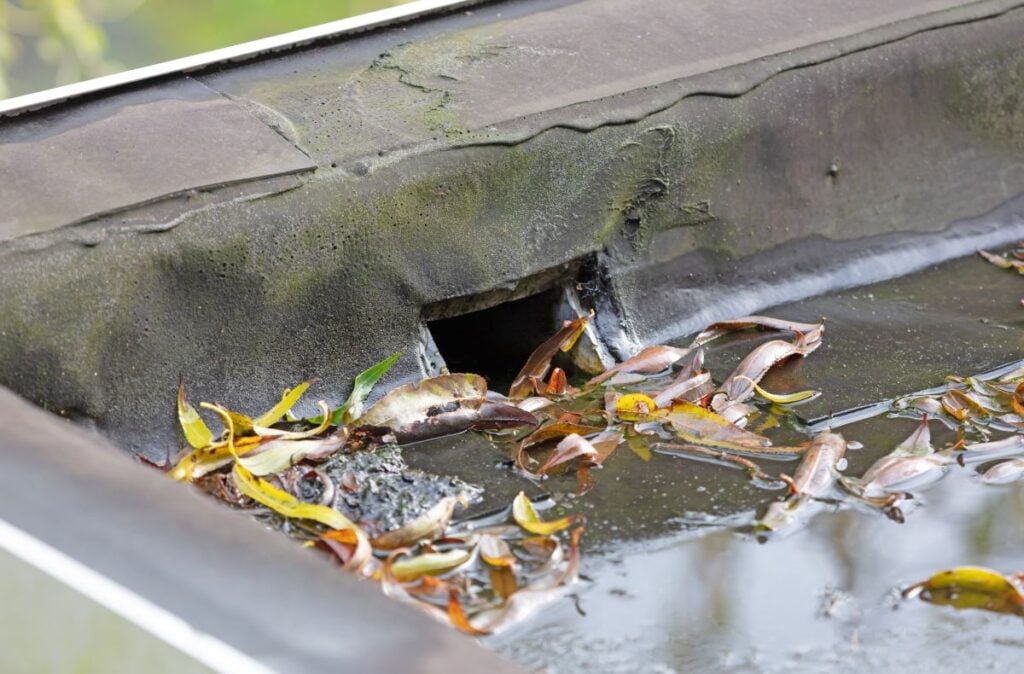
2. Clogged Roof Drains or Scuppers
Roof drains and scuppers are designed to channel water away quickly. When they’re clogged with debris, water has nowhere to go—and ponds begin to form.
- Problem: Leaves, dirt, and debris block water flow, causing backups.
- Solution: Schedule routine drain cleaning and install strainers to prevent clogs.
3. Compressed Insulation or Roof Deck Deformation
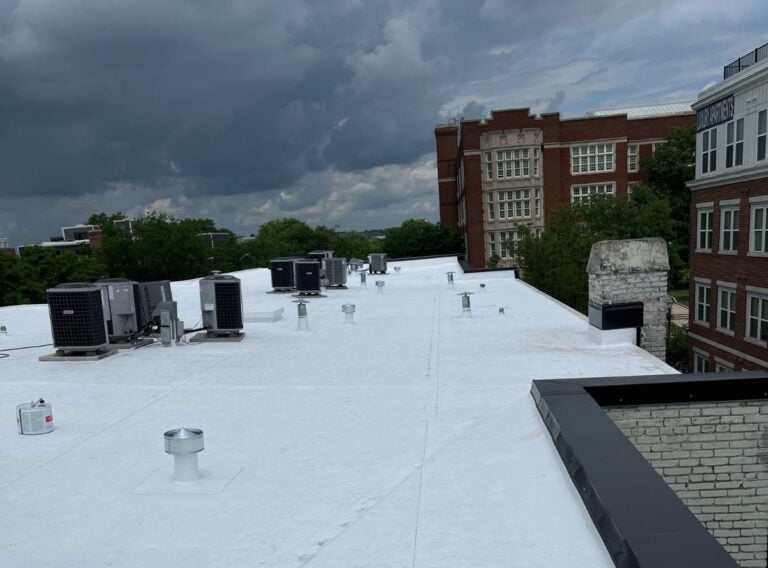
Over time, heavy equipment like HVAC units or even foot traffic can compress insulation or cause sections of the roof deck to sag slightly. These depressions become collection points for water.
- Problem: Uneven roof surfaces trap water around low spots.
- Solution: Replace damaged insulation and reinforce the deck to restore structural integrity.
4. Deteriorating Roof Membrane
Ponding water doesn’t always cause the problem—it can also be a symptom of one. Older roofs with cracks, blisters, or seam separations may allow water intrusion that weakens the membrane and insulation below, creating dips.
- Problem: Aging or damaged membranes lose flexibility and allow water infiltration.
- Solution: Repair small cracks with compatible sealants, or install a new overlay membrane system if damage is extensive.
5. Inadequate Drain Placement
Sometimes, the issue lies in where drains were installed—or how many exist. Large roof areas with only one or two drains can easily experience ponding in sections farthest from those outlets.
- Problem: Water pools in areas without adequate drainage access.
- Solution: Add secondary drains or scuppers in low points to improve flow.
6. Structural Settlement or Building Movement
As buildings age, they naturally settle. Even slight movement in the foundation or roof framing can change the slope enough to create low spots where water accumulates.
- Problem: Long-term structural shifting alters roof drainage patterns.
- Solution: Conduct a structural evaluation and consider re-leveling or re-sloping affected areas.
Comparison Table: Short-Term vs. Long-Term Fixes
| Type of Solution | Examples | Average Cost Range | Expected Benefit |
| Short-Term | Cleaning drains, sealing seams, applying patch coatings | $300–$1,200 | Quick relief but temporary |
| Long-Term | Tapered insulation, re-sloping, new drainage installation | $3,000–$15,000+ | Lasting performance and leak prevention |
Quick fixes can buy time, but permanent solutions protect your commercial property for the long run.
Risks of Ignoring Ponding Water on Flat Roofs
Delaying repairs may seem harmless at first, but ponding water accelerates wear and tear across your entire roof system.
- Membrane damage: Prolonged exposure to standing water causes cracks, blisters, and seam failure.
- Structural stress: A single inch of water adds roughly 5 pounds per square foot of load.
- Mold and mildew: Moisture infiltration promotes growth that degrades insulation and air quality.
- Roof leaks: Persistent ponding eventually finds its way through seams and fasteners.
- Warranty voids: Many manufacturer warranties exclude coverage for roofs with ongoing ponding issues.
For commercial buildings, even minor roof leaks can lead to costly equipment damage and downtime, making proactive repair the most cost-effective strategy.
Preventive Maintenance for Flat Roof Drainage
Proactive maintenance helps prevent ponding water before it becomes a recurring issue.
- Schedule semiannual roof inspections: Have a professional assess drainage conditions every spring and fall.
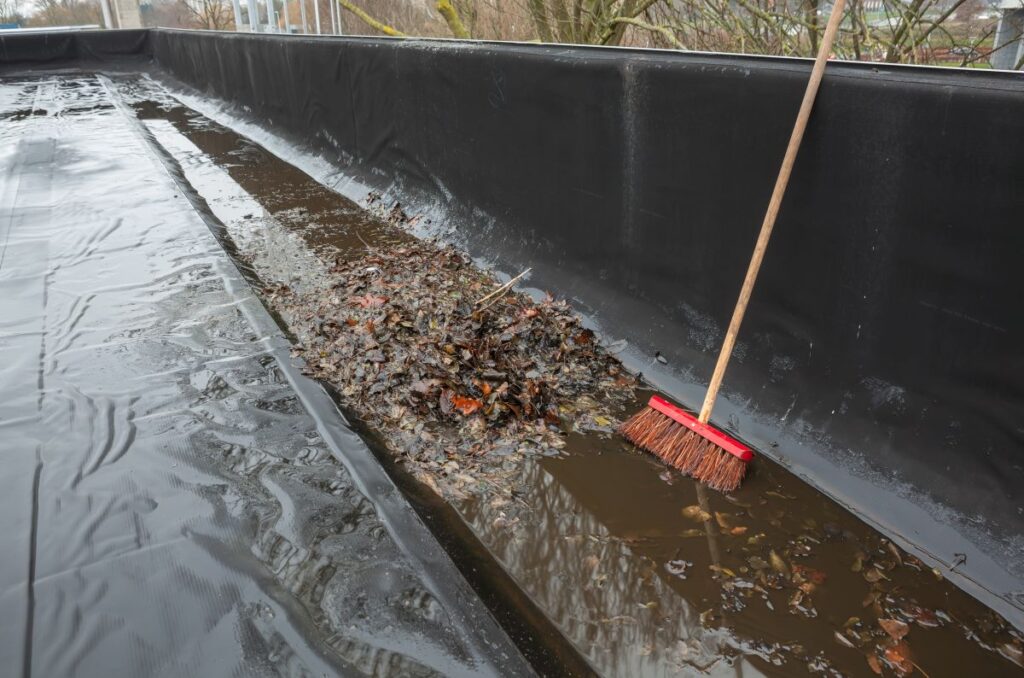
- Clear debris regularly: Remove leaves, dirt, and branches after storms.
- Maintain HVAC units and penetrations: Ensure condensation lines drain properly and seals remain watertight.
- Check insulation thickness: Compressed or uneven insulation can create new low spots.
- Document roof conditions: Keep records to track developing areas of ponding over time.
Establishing a maintenance plan can save commercial property owners in Alexandria and surrounding areas significant repair costs over the lifespan of the roof.
Choosing the Right Solution for Your Building
Selecting the right remedy depends on your roof’s age, material, and condition.
- Newer roofs (under 10 years old): Address ponding with targeted fixes like drain cleaning, sealing, or minor slope corrections.
- Older roofs (10–20 years): Consider membrane overlays or re-sloping systems for long-term performance.
- End-of-life roofs: If ponding is widespread and recurring, a full replacement may be the most cost-effective solution.
Professional evaluation is key, what looks like surface-level ponding may reveal deeper structural or design issues beneath.
Material Options for Flat Roof Repairs
When addressing ponding issues, selecting the right repair material ensures longevity and compatibility with your existing system.
- TPO (Thermoplastic Polyolefin): Heat-welded seams resist standing water and UV exposure.
- PVC (Polyvinyl Chloride): Excellent chemical and water resistance for commercial applications.
- EPDM (Rubber): Flexible, durable, and well-suited for low-slope buildings.
- Modified Bitumen: Layered asphalt system ideal for durability and easy patching.
- Silicone Coatings: Provides reflective, waterproof protection over aging membranes.
Each option offers specific advantages based on climate, building use, and maintenance requirements.
When to Call a Professional
If ponding water remains after 48 hours of dry weather, it’s time for professional assessment. A roofing expert can:
- Identify structural depressions or hidden damage.
- Measure roof slope and drainage performance.
- Recommend targeted or long-term solutions.
- Evaluate whether your roof’s warranty may cover certain repairs.
Ignoring ponding can turn a manageable issue into a costly replacement, so prompt attention is always best.
Protect Your Investment With Proper Flat Roof Drainage
Persistent ponding water on flat roof surfaces is one of the most common and preventable problems in commercial roofing. Whether caused by poor drainage, structural settling, or membrane wear, early intervention prevents leaks and extends roof lifespan.
If your commercial property in Alexandria or surrounding areas shows signs of ponding water, reach out to Springfield Roofing & Sheet Metal for professional guidance. Our experienced team helps business owners identify the cause, select the right repair method, and protect their roofs for years of reliable service.