Metal roof screw replacement is one of the most important maintenance tasks on exposed-fastener metal roofs, and it’s the difference between a metal roof that lasts its full 30 to 40 years and one that starts leaking in year 10. Homeowners in Great Falls and surrounding areas with exposed-fastener systems (also called screw-down or corrugated panel systems) typically have thousands of individual screws holding their roof down, each with a rubber gasket that seals against water. When those gaskets fail (usually 10 to 15 years after installation), water starts sneaking in around the screw heads, and leaks follow. This guide walks through when to replace screws, why gaskets fail, what replacement actually involves, and how to know if the whole roof is signaling a bigger conversation.
- When to replace: Signs include visible gasket cracking, backed-out screws, and leaks around fasteners.
- What it costs: Screw replacement typically runs $2 to $6 per screw installed for professional work.
- What it prevents: Water damage to insulation, decking, and interior finishes.
Why Metal Roof Screws Need Replacement in the First Place
Metal roof screws aren’t a lifetime fastener, even though the roof panels themselves may last 40+ years. Understanding why they fail helps homeowners plan for replacement instead of reacting to leaks.
What Actually Fails on a Metal Roof Screw?
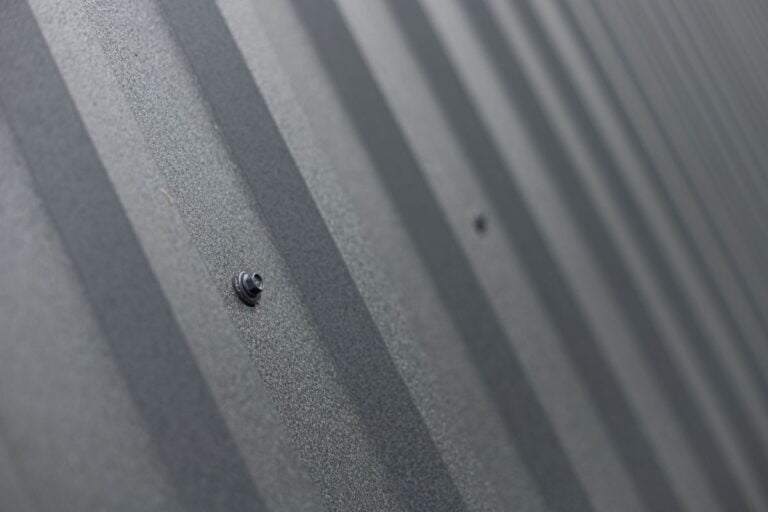
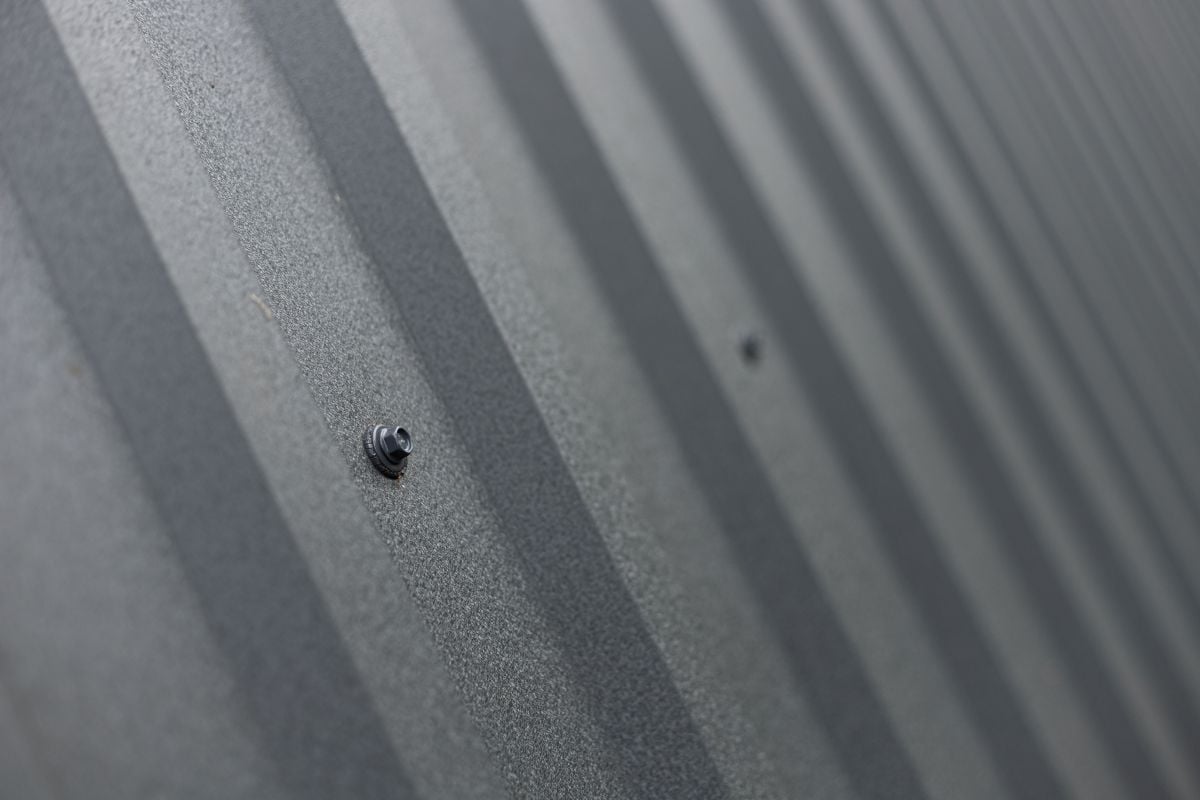
The failure point on a metal roof screw is almost always the EPDM rubber gasket (also called a washer) sitting under the screw head, not the metal screw itself. This gasket compresses when the screw is tightened, creating a watertight seal against the roof panel. Over 10 to 15 years, the rubber ages from UV exposure, temperature cycling, and repeated thermal expansion of the metal underneath. Once the gasket cracks, dries out, or loses its elasticity, water can seep down along the screw shank and into the substrate below. Homeowners in Great Falls and surrounding areas often notice the first signs of gasket failure as small rust rings forming around screw heads, followed by drips inside the attic. The screw itself may still look fine even when the gasket has failed.
- EPDM gasket: Rubber washer that creates the water seal.
- UV degradation: Sunlight breaks down rubber over years.
- Thermal cycling: Panel expansion and contraction stresses the gasket.
- Failure timeline: Typically 10 to 15 years for standard installations.
Why Do Some Metal Roof Screws Back Out Over Time?
Some metal roof screws back out over time because of a combination of thermal expansion, vibration, and improper installation. Metal panels expand and contract with temperature swings, and every heat-cool cycle puts stress on the fastener holding the panel to the substrate. Screws installed too tight can strip the wood underneath and gradually loosen. Screws installed at an angle rather than straight in never seat properly and are more likely to back out. Wind vibration also plays a role, especially on roofs facing strong prevailing winds. Backed-out screws leave the panel loose and create gaps where water can enter, so they need to be replaced or re-tightened when spotted.
- Thermal expansion: Constant panel movement stresses fasteners.
- Overdriven screws: Stripped wood underneath won’t hold.
- Angled installation: Never seats properly, backs out over time.
- Wind vibration: Repeated flexing loosens fasteners.
5 Signs Your Metal Roof Screws Need Replacement
Five specific signs indicate that some or all of your metal roof screws are due for replacement. Catching them early makes the repair much simpler than waiting for a full leak.
1. Visible Cracking or Deterioration of the Rubber Gaskets
Visible cracking or deterioration of the rubber gaskets is the clearest early warning sign that screw replacement is needed. From the ground or a ladder, homeowners can sometimes see cracks radiating out from the screw head or notice the rubber looking brittle and grayish rather than smooth and black. This kind of damage happens across the whole roof at roughly the same time since all the screws were installed together and exposed to the same conditions. Finding a few cracked gaskets usually means most of them are close behind. Reputable contractors in Great Falls and surrounding areas can do a full screw inspection during an annual roof visit and flag which fasteners need attention.
- Cracking rubber: Visible fractures around the screw head.
- Gray or brittle appearance: Rubber that has lost elasticity.
- Roof-wide timing: All gaskets typically age together.
- Annual inspection: Best way to catch gasket issues early.
2. Rust Rings Forming Around Screw Heads
Rust rings forming around screw heads point to water getting past the gasket and touching the metal underneath. Even if the rust hasn’t yet caused a visible leak inside the house, the discoloration signals that the seal has failed and moisture is entering. Rust can also indicate that the fastener itself is corroding, especially if the wrong type of screw was originally used or if the coating on the fastener has worn. Once you spot rust rings, the screws should be replaced before the rust spreads to the panel or reaches the wood substrate. Homeowners in Great Falls and surrounding areas often notice these rings on south-facing slopes first, since those get the most sun and heat exposure.
- Discoloration around fastener: Small brown or orange stain circles.
- Coating breakdown: Corrosion protection on the screw has failed.
- Progression to panel: Rust can eventually damage the metal panel.
- Sun exposure: South and west slopes typically age first.
The Metal Construction Association’s technical bulletin on fastener compatibility explains that mechanical fasteners used externally on metal roof and wall panels “must provide a weather-tight seal under all load conditions,” which is why choosing the correct fastener type and gasket material at installation, and replacing them when they show signs of aging, is critical to maintaining the roof’s weather-tight integrity.
3. Screws That Have Backed Out or Sit Above the Panel
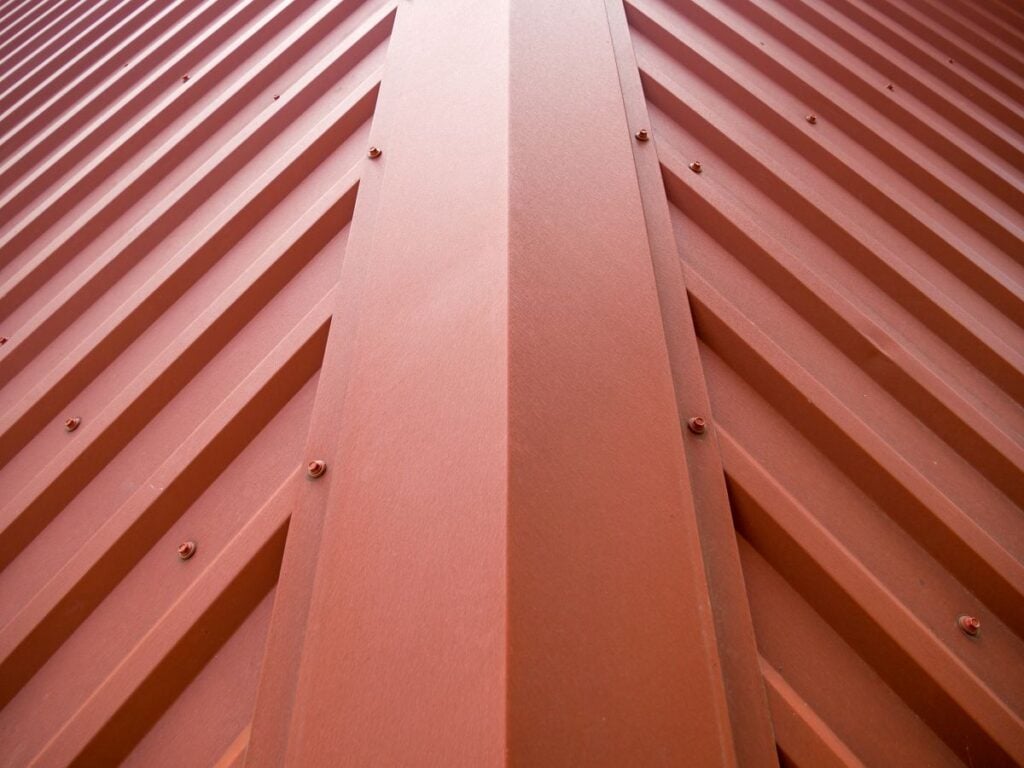
Screws that have backed out or sit above the panel surface indicate that either the screw itself has loosened or the wood substrate below has stripped out. Backed-out screws are easy to spot because they stick up visibly above the panel, sometimes with the gasket also lifted off the panel surface. This creates an immediate gap where water can enter. Occasionally, one or two backed-out screws can be re-tightened, but if the wood underneath has stripped, the screw won’t hold and needs to be replaced with a larger-diameter screw that grips fresh wood fibers. Multiple backed-out screws across the roof point to widespread installation or aging issues that call for a full assessment.
- Visible screw head: Sticks up above the panel surface.
- Lifted gasket: Rubber washer no longer pressed against the panel.
- Re-tightening: Sometimes works for individual screws.
- Larger-diameter replacement: Needed when wood underneath has stripped.
4. Leaks Coming From Around Fastener Locations
Leaks coming from around fastener locations are one of the most direct signs that screw replacement is needed, though the water often shows up somewhere else in the attic or ceiling before it’s traced back to the screw. A pattern of leaks in different areas of the roof, all correlating to screw locations rather than seams or penetrations, points strongly to gasket failure. Sometimes the leak is small enough to just cause dampness in insulation before it ever becomes a visible ceiling stain. Homeowners in Great Falls and surrounding areas who notice moisture in the attic around fastener locations should schedule an inspection right away. The longer these leaks continue, the more damage they do to insulation, decking, and framing.
- Attic moisture: Damp insulation around fastener locations.
- Ceiling stains: May appear away from the actual leak source.
- Pattern of failure: Multiple screws leaking suggests systemic gasket aging.
- Fast response: Small leaks compound into big damage quickly.
5. Age of the Roof Reaching the Gasket Replacement Window
Age of the roof reaching the gasket replacement window is a strong signal to do a preventive screw replacement even without visible problems. Standard EPDM gaskets on exposed-fastener metal roofs typically fail between years 10 and 20, with variation based on climate, screw quality, and installation. Roofs approaching that age benefit from a professional inspection to check the condition of a sample of screws across different roof slopes and orientations. If a majority of the gaskets are showing early failure signs, replacing all the screws at once can be more efficient and cost-effective than chasing individual failures over the next several years. Being proactive here often saves money over the life of the roof.
- 10 to 20 year window: Typical timing for widespread gasket failure.
- Preventive replacement: Doing all screws at once can be more efficient.
- Sample inspection: Contractors check a representative set of screws.
- Cost efficiency: Batch replacement often cheaper than individual failures.
What Metal Roof Screw Replacement Actually Involves
Screw replacement can range from a quick fix on a few loose fasteners to a full-roof job with thousands of new screws. Knowing what’s involved helps homeowners set realistic expectations.
What’s the Process for Replacing Metal Roof Screws?
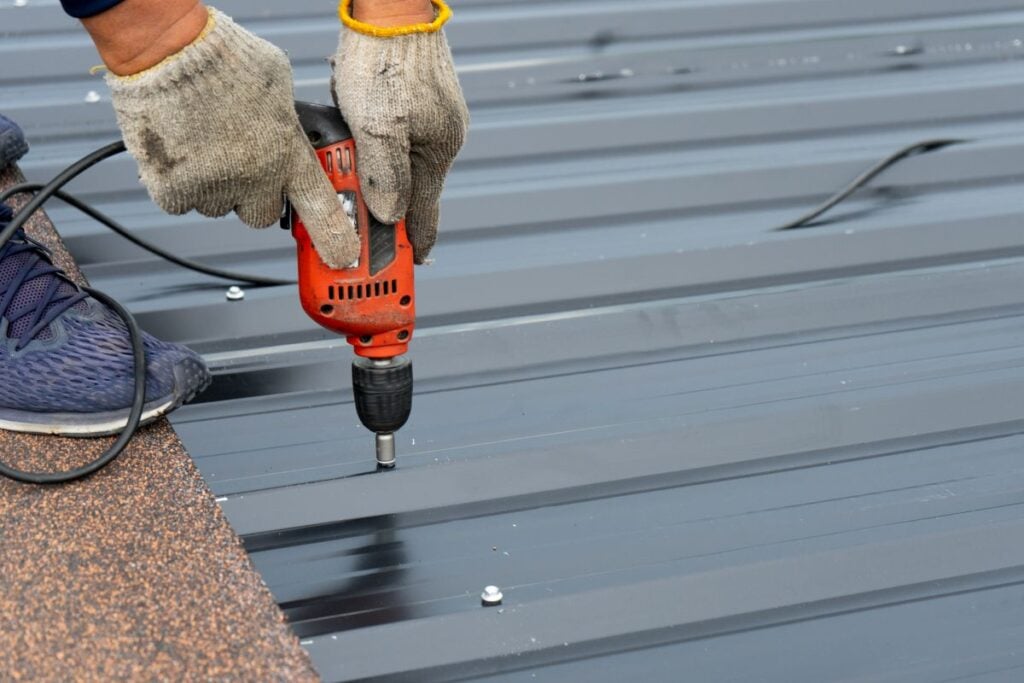
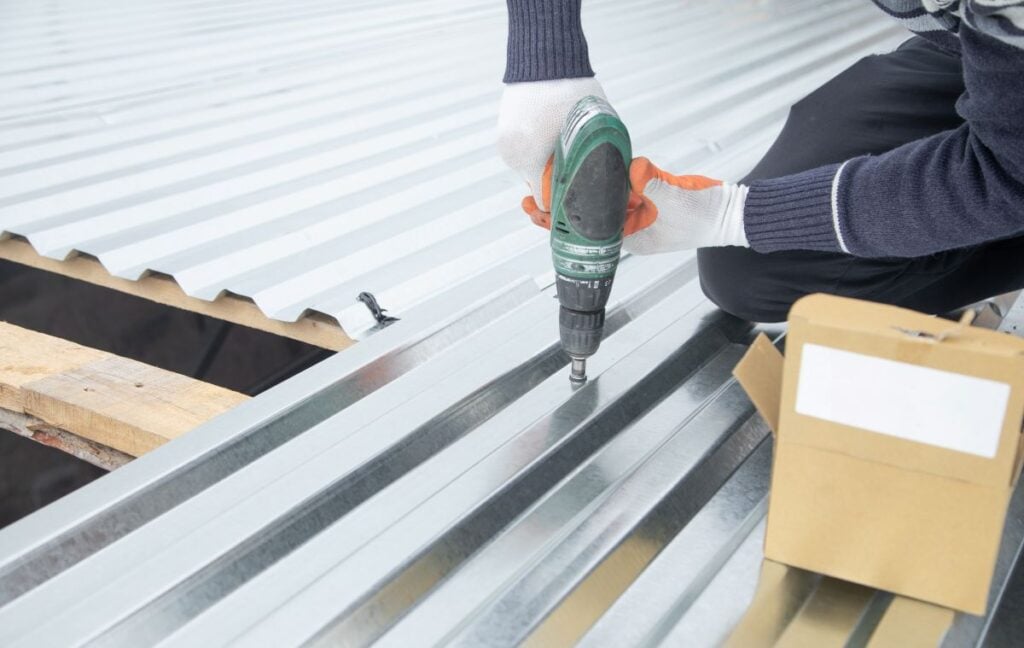
The process for replacing metal roof screws involves inspecting the roof, removing each old screw, installing a new one with a fresh gasket, and confirming the new screw seats properly with a tight seal. For a single screw or small area, the work is straightforward and takes minutes per screw. For a full-roof replacement, contractors work systematically across each slope, often replacing thousands of screws. The most common replacement approach is to use a larger-diameter screw (a #14 instead of the original #10 or #12) that can bite into fresh wood next to the old hole. Some contractors also use dome-cap screws where the metal cap covers the entire EPDM washer, extending the gasket’s life by shielding it from UV exposure. In Great Falls and surrounding areas, this systematic approach typically takes one to three days for an average home.
- Old screw removal: Backed out carefully with a driver.
- Replacement screw: Usually larger-diameter to grip fresh wood.
- New gasket: Fresh EPDM seal on every fastener.
- Dome-cap options: Cover the gasket to extend life significantly.
How Much Does Metal Roof Screw Replacement Cost?
Metal roof screw replacement typically costs $2 to $6 per screw installed for professional work, with the total depending on how many screws need replacement and how accessible the roof is. For a full-roof replacement on a typical 2,000 square foot home with 2,000 to 3,000 screws, that translates to $4,000 to $18,000 for the complete job. Partial replacement of a few problem areas is much less, often $500 to $2,000. The math becomes important because full replacement approaches the cost of considering full re-roofing at a certain point. Reputable contractors will give homeowners an honest assessment of whether preventive screw replacement or a broader roof replacement makes more financial sense given the roof’s age and condition.
- Per-screw cost: $2 to $6 installed for professional work.
- Full-roof cost: $4,000 to $18,000 for typical residential homes.
- Partial replacement: $500 to $2,000 for smaller repair areas.
- Cost comparison: Full screw replacement approaches partial re-roof pricing.
Frequently Asked Questions
How long do metal roof screws last?
Metal roof screws with standard EPDM gaskets typically last 10 to 20 years before the gasket fails and replacement becomes necessary. Screws with dome-cap heads that shield the gasket from UV can last significantly longer, sometimes 30 years or more. The metal screw itself usually outlasts the gasket by decades.
Can I replace metal roof screws myself?
Replacing metal roof screws is not typically recommended as a DIY project because of safety risk, the need for proper replacement screw selection, and the technical care required to get a proper seal. A single mismatched or improperly driven screw can create a new leak. Professional contractors have the right equipment and experience for the job.
How do I know if my metal roof has exposed-fastener screws or a standing seam system?
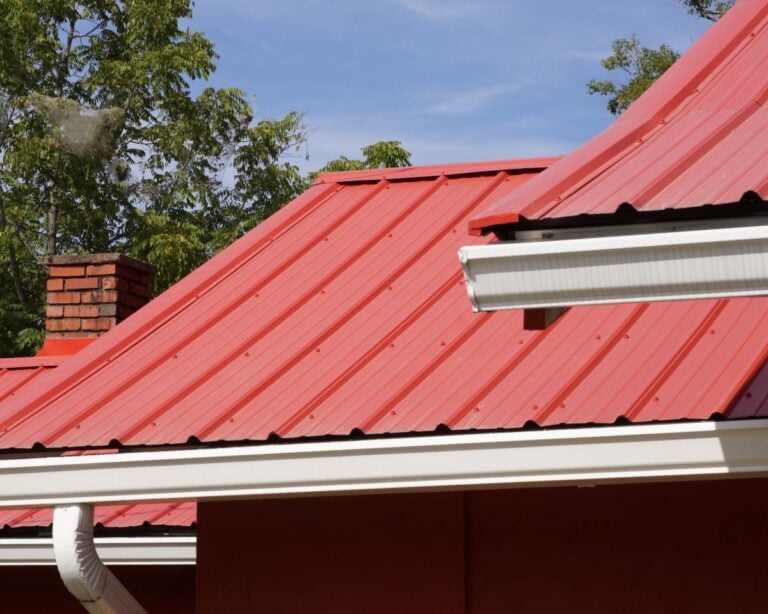
You can identify your metal roof type by looking at the panel surface. Exposed-fastener systems have visible screws in rows across the panel surface, often with rubber gaskets visible around each head. Standing seam systems have raised vertical seams and no visible screws in the field of the roof. Only exposed-fastener systems need periodic screw replacement.
What happens if I ignore failing metal roof screws?
Ignoring failing metal roof screws leads to water intrusion, damaged insulation, rotted decking, and eventually interior ceiling damage. What starts as small drips can compromise the entire roof system within a few years. The cost of ignoring the problem almost always exceeds the cost of preventive replacement.
Can I use bigger screws to replace old ones?
Yes, larger-diameter screws (like #14 replacing #10 or #12 originals) are commonly used for replacement because they can grip fresh wood next to the original hole. This is a standard practice when the original hole has become worn or stripped. Contractors familiar with metal roof repair will know when this approach is needed.
Should I replace all my metal roof screws at once or just the failing ones?
The right approach depends on the age of your roof and how many screws are showing failure. Roofs where most gaskets are aging together typically benefit from a full replacement rather than chasing individual failures over the next several years. A professional inspection can determine which approach makes the most sense.
Choose Springfield Roofing & Sheet Metal for Metal Roof Screw Replacement
When metal roof screw replacement is done right, homeowners get another 15 to 20 years of trouble-free service from their metal roof, and honest professional guidance makes the difference between a smart preventive investment and a costly reaction to leaks. Springfield Roofing & Sheet Metal is a 1st and 2nd generation family-owned and operated company serving Great Falls and surrounding areas with a dedicated in-house crew, full labor and material warranties, and CertainTeed 5-Star Select Shingle Master certification. Our sheet metal expertise runs deep, and we provide free inspections of exposed-fastener metal roofs to assess screw condition, recommend the right replacement approach, and give homeowners a clear picture of what the work will involve. Contact Springfield Roofing & Sheet Metal today for a free estimate and honest guidance on metal roof screw replacement for your home.