Roofing maintenance programs ask building owners to spend money on something they often can’t see, which is why so many commercial property managers in Springfield and surrounding areas hesitate to sign up for one. The honest answer to whether they’re worth it depends on the building, the roof, and how the math actually works out over a 20-year ownership horizon. In most cases, the numbers favor maintenance heavily, but only when the program is structured correctly and the contractor actually does the work. This guide breaks down the real costs, the real savings, the situations where maintenance pays off the most, and how to evaluate whether your building is a good candidate.
- The cost side: Most programs run $0.05 to $0.20 per square foot per year.
- The savings side: Emergency repairs and premature replacements typically cost many times more.
- The math: Maintenance pays back through warranty protection, extended roof life, and avoided emergencies.
What Does a Roofing Maintenance Program Actually Cost?
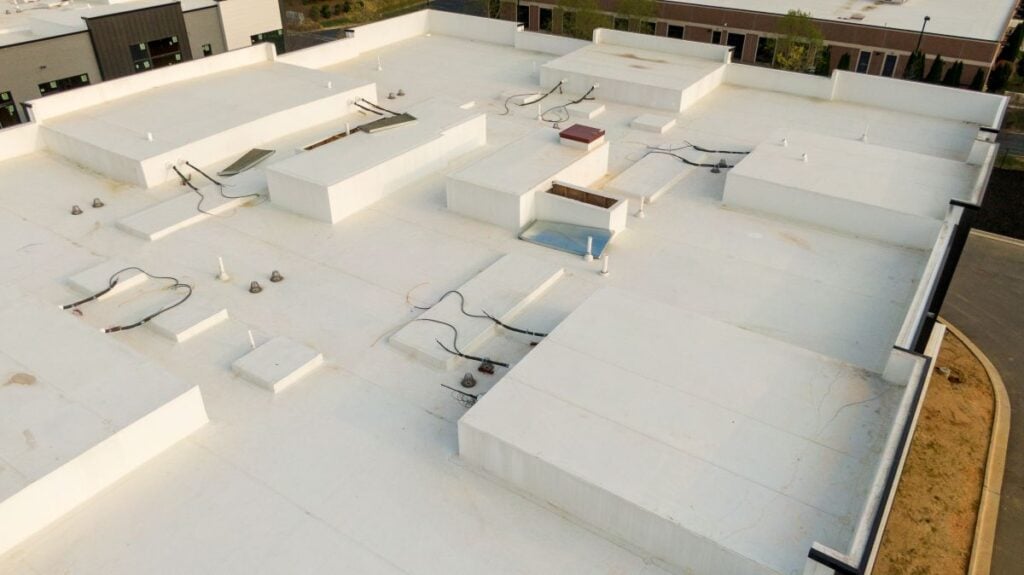
The first step in deciding whether a maintenance program is worth it is knowing what it actually costs. Pricing varies based on building size, roof condition, and what’s included.
What’s a Realistic Annual Cost for Most Commercial Roof Maintenance?
A realistic annual cost for most commercial roof maintenance runs $0.05 to $0.20 per square foot per year, depending on roof size, age, complexity, and the level of service. For a typical 20,000 square foot commercial roof in Springfield and surrounding areas, that puts annual maintenance at roughly $1,000 to $4,000. Smaller buildings often pay more per square foot because minimum service fees apply, while very large facilities benefit from economies of scale. Premium programs that include infrared moisture scanning, faster emergency response, and larger repair allowances run at the higher end. The cost is generally predictable year over year, which makes it easier to budget than reactive repair spending.
- Basic programs: $0.05 to $0.10 per square foot per year for inspections and drain clearing.
- Standard programs: $0.10 to $0.15 per square foot per year, often with minor repair allowance.
- Premium programs: $0.15 to $0.20 per square foot per year, including infrared scans and priority response.
- Minimum fees: Small buildings may pay $500 to $1,500 minimum regardless of square footage.
What’s Typically Included in That Price?
A standard roofing maintenance program typically includes two inspections per year as part of a scheduled maintenance plan, along with gutter service, debris removal, minor sealant and flashing touch-up, a written report after every visit with photos, and a guaranteed emergency response time. Some programs include a small repair allowance, meaning a few hundred dollars per year of minor work is covered before separate invoices kick in. Reputable contractors in Springfield and surrounding areas spell out exactly what’s included versus billable separately so building owners aren’t surprised mid-year. Strong preventative maintenance plans are ideally completed twice a year to catch potential leaks early and help keep the roof in good condition. Programs that promise “regular maintenance” without specifics often skip the documentation that warranty claims require.
- Two visits per year: Spring and fall inspections at minimum to prepare for seasonal weather changes.
- Drain and debris clearing: Done at every scheduled visit, including clearing gutters and valleys so water drains properly and the building is protected.
- Minor sealant work: Touch-up of pitch pockets, vent boots, and small flashings.
- Written documentation: Reports with photos filed after every visit.
What Do Maintenance Programs Actually Save?
The savings side of the math is where maintenance programs prove their value, but only when you compare them against the realistic alternative of reactive repair and premature replacement.
How Much Do Emergency Repairs Actually Cost?
Emergency commercial roof repairs typically cost three to nine times what a scheduled preventive repair would have, according to GAF’s commercial roofing guidance. A small sealant failure that costs $200 to fix during a scheduled visit can become a $2,000 to $5,000 emergency repair once water has damaged insulation, ceiling tiles, and interior equipment. After-hours and weekend emergency calls run higher still, and many contractors charge premium rates for storm response when crews are stretched thin. Springfield and surrounding areas see this most often in spring storms and winter freeze-thaw events. The math on a single avoided emergency often pays for years of maintenance.
- Scheduled repair cost: Small sealant or flashing repair runs $200 to $800.
- Emergency repair cost: The same issue caught late runs $1,500 to $10,000.
- Interior damage: Ceiling tiles, insulation, and equipment add thousands more.
- After-hours premium: Weekend and holiday calls often double the labor rate.
According to GAF, North America’s largest roofing manufacturer, emergency commercial roof repairs can cost approximately three to nine times as much as scheduled preventive repairs, which is the central reason maintenance programs deliver clear long-term savings even after factoring in their annual cost.
How Does Preventative Maintenance Extend Roof Life?
Maintenance extends roof life by catching small problems before they damage the rest of the system. A failed flashing that’s caught during a spring inspection costs a few hundred dollars to fix and protects everything underneath it, while the same flashing left for two years lets water saturate the insulation, which then needs to be replaced along with the membrane above it. Buildings with structured maintenance programs typically hit their full 20-year expected roof life, while buildings without often need replacement at 12 to 15 years. For a 20,000 square foot roof that costs $200,000 to replace, getting five extra years of service translates to $50,000 in delayed capital expense. That’s pure savings stretched over the maintenance period.
- Service life difference: Maintained roofs commonly last 5 to 8 years longer than neglected roofs.
- Delayed replacement: Pushing replacement from year 13 to year 20 saves significant capital.
- Insulation protection: Catching leaks early keeps insulation dry and effective.
- Structural protection: Avoids decking damage that compounds replacement cost.
What’s the Warranty Value of Maintenance Programs?
The warranty value of a maintenance program is one of the most overlooked savings benefits. Most commercial manufacturer warranties from Carlisle, Firestone, GAF, and Johns Manville require documented preventive maintenance to remain valid. When a leak shows up at year 10 of a 20-year warranty and the manufacturer asks for maintenance records, properties without documentation often get their claim denied. That turns a covered repair into an out-of-pocket emergency, sometimes tens of thousands of dollars. GAF specifically offers a 25% guarantee extension on commercial roofs that follow their annual inspection program. Maintaining warranty validity is one of the strongest cost cases for a structured program.
- Warranty validity: Documented maintenance is typically required to keep coverage active.
- Claim approval: Records make the difference between an approved or denied claim.
- Coverage extensions: Some manufacturers offer guarantee extensions for enrolled programs.
- Lifetime cost: Out-of-pocket claims after voided warranties can exceed $40,000.
5 Situations Where Maintenance Programs Pay Off the Most
Maintenance programs deliver value in nearly every commercial building, but five specific situations stand out where the savings math is especially strong. Knowing where you fit helps clarify whether enrolling makes sense for your building.
1. Why Are New Roof Installations the Best Candidate?
New roof installations are the best candidate for maintenance programs because the warranty period is longest and most manufacturer guarantees require documented maintenance to stay valid. A 20-year guarantee on a roof installed last year represents real money, often more than the maintenance program will cost over the entire warranty term. Starting a maintenance program in year one of a new roof also catches any installation defects early, while the contractor is still close enough to the work to address them under workmanship coverage. Buildings in Springfield and surrounding areas with new commercial roofs almost always benefit from enrolling immediately. Skipping maintenance on a new roof is the most expensive form of false economy.
- Full warranty term: Maximum coverage available over the longest period.
- Defect detection: Early issues caught while workmanship warranty still applies.
- Manufacturer requirements: Documentation needed from year one for full guarantee.
- Guarantee extensions: Available on enrolled programs for some manufacturers.
2. How Do Aging Roofs Benefit From Maintenance Programs?
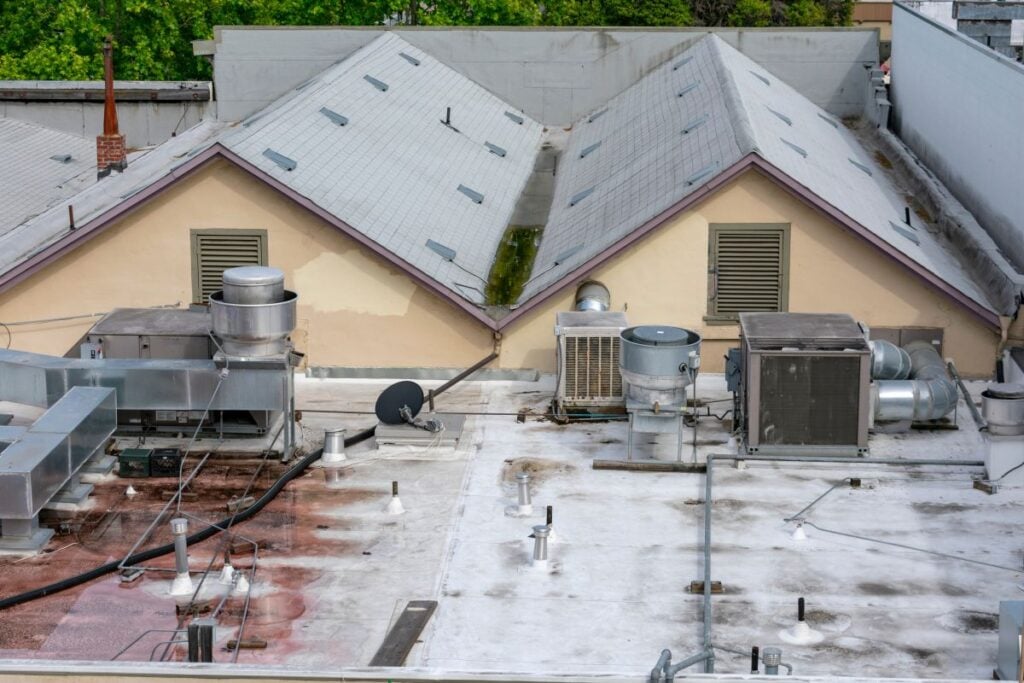
Aging roofs benefit from maintenance programs because every additional year of service life delays a large capital expense. Roofs at 12 to 18 years old are in the danger zone where small problems can quickly escalate into total system failures, and a structured maintenance program is what often prevents that. Inspections become especially valuable because experienced eyes can spot the difference between problems that warrant another repair versus signs the system as a whole is failing. This information helps building owners plan replacement on their own schedule rather than reactively. Properties in Springfield and surrounding areas with older commercial roofs typically save the most by enrolling.
- Service life extension: Often 3 to 8 additional years of useful service.
- Capital planning: Honest assessments of remaining life inform replacement budgets.
- Avoid emergency replacement: Planned replacement costs significantly less than reactive.
- Decision support: Inspection trends show when repair vs. replace makes sense.
3. Why Do Buildings With Heavy Rooftop Equipment Need Maintenance Most?
Buildings with heavy rooftop equipment need maintenance most because every piece of equipment creates penetrations and high-traffic zones that accelerate wear. HVAC units, exhaust fans, satellite arrays, and solar panels all sit on curbs or mounts that pierce the membrane, and crews inspect the areas around rooftop equipment for wear and potential leaks. Service technicians for HVAC and other trades walk the roof regularly, which wears down the roof surface around units and access paths and can cause accidental damage. Without maintenance, these issues compound into multiple leak points within a few years. Buildings in Springfield and surrounding areas with extensive rooftop equipment, like medical offices, manufacturing, or telecom operations, benefit most from structured programs that support the broader needs of the facility.
- Penetration count: Every piece of equipment creates a potential leak point.
- Foot traffic damage: Trades walking the roof accelerate wear.
- Refrigerant or oil leaks: Equipment leaks can chemically damage membrane.
- Walk pad management: Service paths need installation and inspection.
4. Why Do Multi-Tenant Buildings See Strong Maintenance ROI?
Multi-tenant buildings see strong maintenance ROI because tenant disruption from a roof leak adds operational and reputational costs beyond the repair itself. A leak that floods one tenant’s space can lead to lease disputes, rent abatement, business interruption claims, and lost tenants at renewal. Avoiding even one significant leak in a multi-tenant property pays for years of maintenance. Property managers in Springfield and surrounding areas with multi-tenant office, retail, or industrial buildings often find maintenance the single highest-ROI line item in their operating budget. The intangible savings on tenant relationships are often greater than the direct repair savings.
- Tenant disruption: Leaks affect operations and can trigger rent reductions.
- Business interruption: Tenants may file claims for water-damaged inventory.
- Lease impact: Roof problems can affect lease renewals.
- Reputation: Reliable buildings attract and retain better tenants.
5. How Do Buildings With Critical Contents Make Maintenance Essential?
Buildings with critical contents make maintenance essential because the contents themselves often dwarf the cost of the roof. Data centers, healthcare facilities, manufacturing plants with sensitive equipment, archive storage, and labs all house contents where a single roof leak can cause six- or seven-figure losses. In these cases, the maintenance program helps protect everything underneath while supporting building safety, which is a major reason these owners enroll. Building owners in Springfield and surrounding areas with critical contents almost universally enroll in premium maintenance programs that include faster response times and infrared moisture scanning to help them secure more predictable protection for high-value operations. The math is rarely close in these situations.
- Equipment value: Sensitive equipment damage can exceed $100,000 per incident.
- Compliance risk: Healthcare and lab facilities face regulatory exposure from water damage.
- Downtime cost: Operational shutdown can run thousands per hour.
- Premium response: Faster emergency service justifies higher program tier.
How to Evaluate Whether a Maintenance Program Fits Your Building
Knowing the cost and savings math is the first step. Applying it to your specific building tells you whether enrolling makes sense.
What Questions Should Building Owners Ask?
Building owners should ask what specific tasks are included in each visit, what response time is guaranteed for emergencies, what documentation gets produced, what’s covered in the base fee versus billed separately, and what experience the contractor has with your specific roof type. They should also ask for sample reports from comparable buildings and references from similar property owners. Reputable contractors in Springfield and surrounding areas welcome these questions because they distinguish them from competitors who offer vague service. Walking through these specifics protects both sides and creates a contract that actually delivers value.
- Scope per visit: Clear list of what gets done each time.
- Emergency response: Guaranteed response time in writing.
- Reporting standards: Sample reports available for review.
- Included vs. billable: Clear definition of what’s covered in base fee.
When Does Maintenance Not Make Sense?
Maintenance doesn’t make sense in a few specific situations: a roof at end of life that needs replacement within a year or two, a building scheduled for demolition or major renovation, and a roof type so simple and low-stress that annual inspection is enough. In these cases, the program cost exceeds the realistic savings window. Buildings being sold within six to twelve months may also skip enrolling, though documented maintenance can support sale negotiations. Even in these cases, a one-time professional inspection often pays for itself by catching issues before they become problems during the remaining ownership period.
- End-of-life roofs: Replacement budget makes more sense than maintenance contract.
- Pending demolition: Buildings scheduled for major change skip the program.
- Short ownership horizon: Less than a year may not justify enrollment.
- One-time inspection: Often a better fit for short-term situations.
Frequently Asked Questions
How long does it take for a maintenance program to pay for itself?
Most commercial roof maintenance programs pay for themselves within the first one to three years through avoided emergency repairs and warranty protection. Buildings with aging roofs, heavy rooftop equipment, or critical contents often see payback within the first year. The savings continue throughout the warranty period as deferred replacement and extended service life compound.
Can I just call a roofer when something breaks instead?
You can rely on reactive repairs instead of a maintenance program, but most studies and manufacturer data show this approach costs significantly more over the life of a roof. Emergency repairs typically run three to nine times the cost of scheduled preventive repairs, and reactive maintenance can void manufacturer warranties on legitimate failures.
Are maintenance programs required for warranty?
Yes, most commercial manufacturer warranties from major brands like Carlisle, Firestone, GAF, and Johns Manville require documented preventive maintenance to remain valid. Skipping maintenance is one of the most common reasons warranty claims get denied years after a roof is installed. Documented programs from qualified contractors are typically what manufacturers accept as proof.
What if my building is too small for a maintenance program?
Smaller buildings can still benefit from maintenance, though the math changes because minimum service fees apply. Buildings under 5,000 square feet may pay $500 to $1,500 minimum per year, which can still be worth it for buildings with critical contents or aging roofs. Some contractors offer simplified annual inspection programs as a lower-cost alternative.
Can I switch maintenance providers later?
Yes, building owners can switch maintenance providers between contract terms, and reputable contractors transfer documentation files to support the change. Switching mid-contract may have penalty clauses, so review the agreement before signing. Most programs run on annual terms with renewal options, which gives owners flexibility to change providers if service quality drops.
Does Springfield Roofing & Sheet Metal offer maintenance programs?
Yes, Springfield Roofing & Sheet Metal provides structured commercial roof maintenance programs for buildings in Springfield and surrounding areas. Programs include bi-annual inspections, drain and debris clearing, sealant maintenance, written documentation, and emergency response. Contact us for a free assessment and pricing for your specific building.
Choose Springfield Roofing & Sheet Metal for Maintenance Programs That Deliver Real Value
The math on roofing maintenance programs comes out in your favor in nearly every commercial building scenario, as long as the contractor running the program actually does the work and documents it properly. Springfield Roofing & Sheet Metal is a 1st and 2nd generation family-owned and operated company serving Springfield and surrounding areas with a dedicated in-house crew, full labor and material warranties, and CertainTeed 5-Star Select Shingle Master certification, which is held by only a small percentage of roofing contractors nationwide. We provide transparent commercial maintenance programs with clear scopes, written reports, and pricing that makes the long-term value obvious. Contact Springfield Roofing & Sheet Metal today for a free commercial roof assessment and find out whether a maintenance program makes sense for your building.