Asphalt roof repair handles everything from a single missing shingle to bigger issues like leaks, blow-offs, and worn-out flashing, and knowing which problems are quick fixes versus signs of a bigger issue helps homeowners avoid wasting money. Most asphalt roofs in Arlington and surrounding areas develop predictable issues as they age, and many of them can be solved with a small repair if you catch them early. But some problems point to a roof that’s reached the end of its life, and patching one section just delays the inevitable. This guide walks through the most common problems, how they’re usually fixed, and the signs it’s time to stop repairing and start replacing.
- Common problems: Missing shingles, leaks, granule loss, and flashing failures all have typical causes.
- Standard fixes: Most repairs cost between $200 and $1,500 and take a few hours to half a day.
- Replace signs: A roof past 20 years with widespread problems usually needs replacement, not repair.
What Causes Asphalt Roof Problems in the First Place?
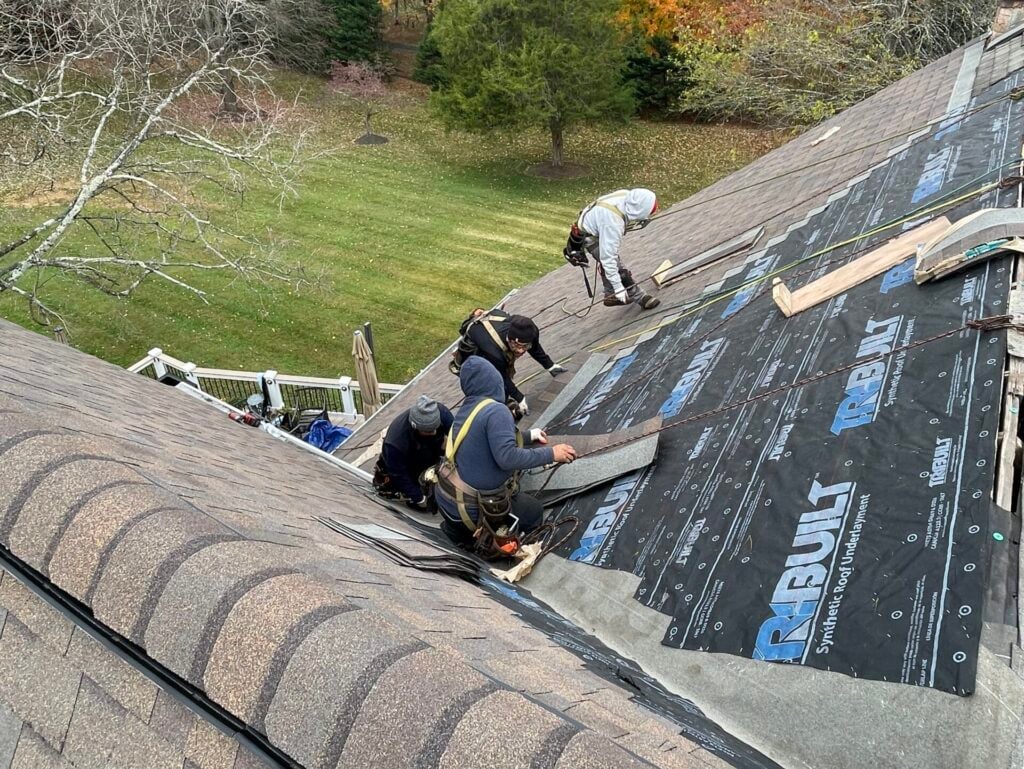
Asphalt shingles wear down over time, but most damage comes from specific causes you can usually trace. Knowing what’s behind the problem helps you decide whether repair or replacement makes more sense.
Why Do Asphalt Shingles Fail Earlier Than Expected?
Asphalt shingles fail earlier than expected because of poor ventilation, bad installation, harsh sun exposure, or storm damage that wasn’t caught right away. A roof with bad attic ventilation traps heat and moisture, which dries out shingles from underneath and shortens their life by years. Shingles installed with too few nails or in the wrong spots can lift in storms long before their warranty would suggest. Even good shingles take a beating from the strong sun and storm cycles in Arlington and surrounding areas. Most early failures aren’t really the shingle’s fault, they’re the result of something else going wrong with the roof system.
- Poor ventilation: Hot attic air bakes shingles from the underside and ages them fast.
- Bad nailing: Too few nails or wrong placement leads to blow-offs in storms.
- Sun and UV exposure: Direct sunlight breaks down the asphalt binder over years.
- Storm damage: Hail, wind, and falling branches cause hidden damage that worsens over time.
How Does Weather in Northern Virginia Speed Up Wear?
Weather in Northern Virginia speeds up asphalt shingle wear because the region sees big temperature swings, summer humidity, ice in winter, and the occasional severe storm. Shingles expand in summer heat and contract in winter cold, and that constant flexing weakens them over the years. Ice dams along the eaves push water under shingles, and summer hail can knock granules loose even when the damage isn’t obvious from the ground. Homeowners in Arlington and surrounding areas often see roofs age a bit faster than the national average because of this combination. Regular inspections after big storms catch damage before it turns into a leak.
- Freeze-thaw cycles: Repeated expansion and contraction weaken shingle bonds.
- Summer humidity: Moisture and heat together stress shingles and underlayment.
- Hail and wind: Even small hail knocks granules off and shortens shingle life.
- Ice dams: Frozen water at the eaves backs up under shingles and causes leaks.
6 Common Asphalt Roof Problems and How They’re Fixed
Most asphalt roof problems fall into a handful of categories, and each one has a typical fix and price range. Knowing which is which helps homeowners ask better questions when getting a repair quote.
1. What Causes Missing or Damaged Shingles?
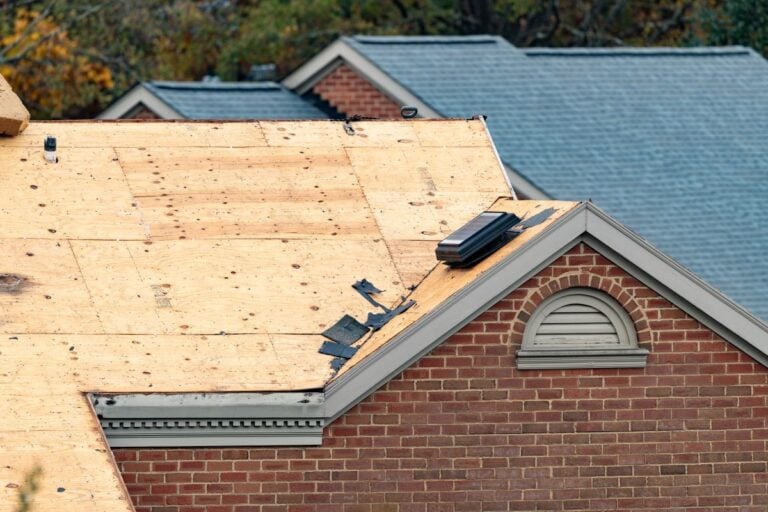
Missing or damaged shingles are usually the result of high winds, falling tree limbs, or shingles that weren’t nailed correctly during install. A single missing shingle isn’t always a leak right away, because the underlayment underneath provides a backup layer of protection, but it does leave the roof exposed and should be fixed quickly. The repair is simple: a roofer slides out the damaged shingle, replaces it with a matching one, and seals everything down. Color matching can be tricky on older roofs because sun fading changes the look, so the replacement may stand out for a while before weathering in. Most missing-shingle repairs take a couple of hours.
- Typical cost: $200 to $500 for a small repair of one to a few shingles.
- Fix timeline: Usually completed in two to four hours.
- Color matching: May take time to blend in with the rest of the roof.
- When it spreads: If multiple sections are missing shingles, the whole roof may be due.
2. Why Do Asphalt Roofs Develop Leaks?
Asphalt roofs develop leaks most often around flashing, vents, chimneys, and skylights, not in the middle of the roof where the shingles are. These spots have penetrations or transitions where two surfaces meet, and that’s where water finds a way in if the flashing has rusted, lifted, or sealed poorly. Sometimes the leak shows up in your ceiling far from where it’s actually coming in, because water runs along rafters before dripping down. A roofer locates the source with a careful inspection, then either reseals or replaces the flashing and any damaged shingles around it. Leaks should be addressed right away to prevent attic and drywall damage.
- Typical cost: $400 to $1,500 depending on location and complexity.
- Common sources: Chimneys, plumbing vents, skylights, and valleys.
- Fix timeline: Usually completed in half a day to a day.
- Why fast matters: Untreated leaks lead to mold, rotted decking, and ceiling damage.
3. What Does Granule Loss Mean for an Asphalt Roof?
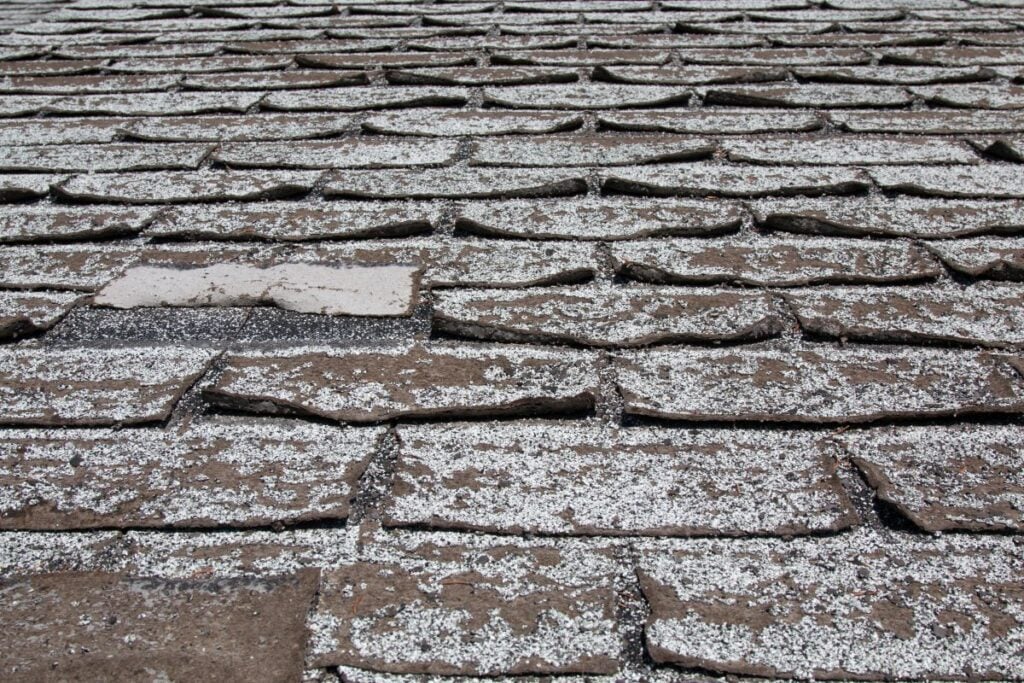
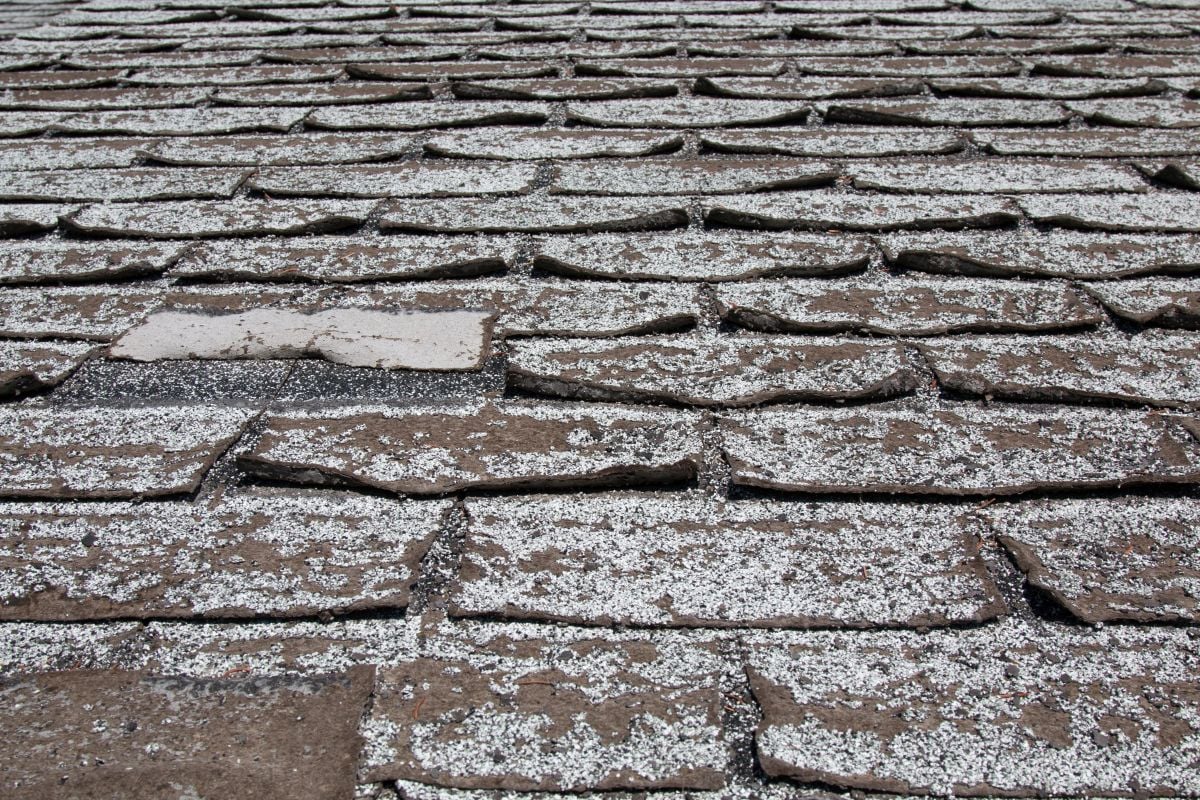
Granule loss means the protective coating on the shingle surface is wearing off, and it shows up as bare spots on shingles or piles of sand-like material in gutters and downspouts. Some granule loss is normal in the first year after install as loose granules from manufacturing wash off, but heavy loss on older roofs is a sign the shingles are aging out. Granules protect shingles from UV damage, and once they’re gone, the asphalt underneath breaks down quickly. There’s no real repair for major granule loss, only replacement of the affected shingles or the whole roof. Catching it early gives homeowners time to plan a replacement before bigger problems start.
- Where to look: Gutters, downspouts, and the ground below downspouts.
- Cause: Age, UV exposure, hail, or low-quality shingles.
- Repair option: Spot replacement only if loss is limited to one area.
- Replacement sign: Widespread granule loss usually means a roof is at the end of its life.
According to the InterNACHI Standard Estimated Life Expectancy Chart for Homes, asphalt 3-tab shingles have an expected lifespan of about 20 years, while architectural asphalt shingles typically last 30 years or more under normal conditions, which is why age alone is often the deciding factor between repairing and replacing .
4. What Causes Curling, Cracking, or Buckling Shingles?
Curling, cracking, or buckling shingles point to either age, bad ventilation, or moisture problems in the decking underneath. Curling at the edges, called cupping, usually means shingles are drying out and reaching the end of their life. Buckling, where shingles ripple across the roof in a wave pattern, often points to moisture in the decking or underlayment causing the wood to swell. A few curled shingles can be replaced individually, but widespread curling or buckling usually means a full replacement is the smarter call. Repairing only part of an aging roof rarely solves the underlying problem.
- Curling edges: Dryness or age, often near the end of the roof’s life.
- Buckling waves: Moisture in the decking or poor ventilation pushing shingles up.
- Cracking: Shingles becoming brittle from sun and age.
- Repair scope: Limited areas can be fixed, but widespread issues mean replacement.
5. Why Does Flashing Fail and How Is It Repaired?
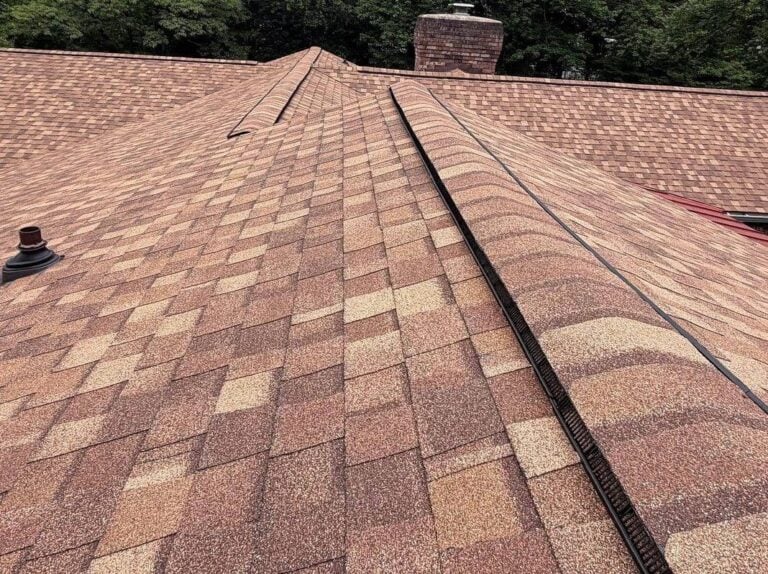
Flashing fails because it’s metal exposed to weather for years, and sealants around it dry out and crack. Most leaks on asphalt roofs come from flashing failures, not shingle failures, especially around chimneys, vent pipes, and where the roof meets walls. A roofer pulls back the surrounding shingles, removes the old flashing, installs new flashing with proper overlaps, and reseals everything. Step flashing along walls and chimneys is the most common type, and pipe boots around plumbing vents are the second most common. Replacing flashing during a regular repair is usually straightforward.
- Typical cost: $300 to $800 for a single flashing area.
- Common locations: Chimney, walls, plumbing vents, and valleys.
- Fix timeline: Half a day for most flashing repairs.
- Long-term answer: All flashing is typically replaced during a full roof replacement.
6. What Should Homeowners Do About Moss, Algae, or Stains?
Moss, algae, and dark stains on an asphalt roof are usually cosmetic at first but can shorten roof life if they’re left alone. Algae feeds on the limestone in shingles and creates dark streaks, while moss holds moisture against the shingle and accelerates wear. A roofer or specialized cleaning company can apply a treatment to kill the growth, and installing zinc or copper strips at the ridge can prevent it from coming back. Pressure washing should never be used on asphalt shingles because it strips granules and damages the surface. Catching moss and algae early is much cheaper than dealing with the damage they cause over years.
- Treatment cost: $300 to $900 for a professional roof cleaning.
- Prevention: Zinc or copper strips along the ridge stop most regrowth.
- What to avoid: Pressure washing strips granules and voids warranties.
- When it’s serious: Heavy moss with shingle damage underneath may need replacement.
When Should You Replace Instead of Repair?
There comes a point when a roof has too many problems for spot repairs to make sense. Knowing when that line gets crossed saves homeowners from throwing good money after bad.
What Are the Clearest Signs a Roof Needs Replacement?
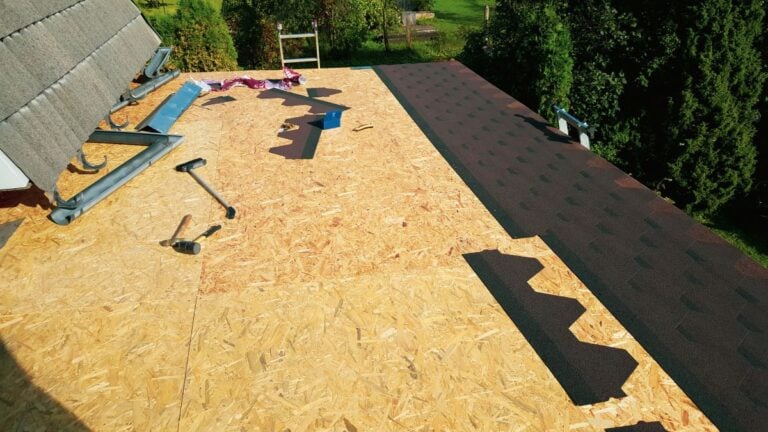
The clearest signs a roof needs replacement are an age of 20 years or more, widespread curling or cracking, heavy granule loss across the whole roof, multiple leaks in different spots, and visible sagging. If three or more of these are present at the same time, repair is usually a temporary fix at best. Multiple repair calls in the same year are another strong signal because the cost of those repairs adds up quickly and doesn’t solve the underlying problem. Homeowners in Arlington and surrounding areas often hit this point when their roofs are between 18 and 25 years old. A trusted contractor will be honest about whether a repair is worth it or whether replacement makes more sense.
- Age 20+: Most asphalt roofs are near the end of their life by this point.
- Widespread damage: Problems in multiple spots, not just one area.
- Multiple repairs in a year: A sign the roof system is failing as a whole.
- Sagging or soft spots: Possible decking damage that needs a full replacement.
How Do You Decide Between Repair and Replacement?
Deciding between repair and replacement comes down to age, scope of damage, and cost. A roof under 15 years old with a single problem area is almost always worth repairing. A roof over 20 years old with multiple problems is almost always worth replacing. The middle ground, 15 to 20 years with moderate damage, is where homeowners benefit most from a professional inspection and a clear explanation of options. Some contractors push replacement when repair would work, while others patch repairs forever to avoid the bigger conversation. A reputable contractor will lay out both options with honest pros and cons.
- Under 15 years, small problem: Repair almost always makes sense.
- 15 to 20 years, moderate problems: Get a professional inspection and discuss options.
- Over 20 years, multiple problems: Replacement is usually the smarter call.
- Insurance involvement: Storm damage may shift the math toward replacement.
Frequently Asked Questions
How much does asphalt roof repair cost?
Most asphalt roof repairs cost between $200 and $1,500, depending on what’s wrong and how much of the roof is involved. Simple shingle replacement is on the low end, and flashing or leak repairs around a chimney are on the high end. Major repairs over $2,000 usually mean replacement is worth pricing out as a comparison.
How long does an asphalt roof repair take?
Most asphalt roof repairs take a few hours to a full day, depending on the scope. Shingle replacement and small leak repairs are often done in a half day. Bigger jobs involving multiple flashing replacements or larger sections of damage can take a full day.
Can I repair my asphalt roof myself?
DIY asphalt roof repair is not recommended because of safety risk, warranty issues, and the difficulty of finding the real source of a leak. Falls from roofs are a serious risk for anyone without proper safety gear, and shingle warranties usually require professional installation to stay valid. A poorly done DIY repair often makes the problem worse.
How often should an asphalt roof be inspected?
An asphalt roof should be inspected once a year for normal maintenance and again after any major storm. Annual inspections catch small problems before they become leaks, and post-storm inspections document any damage for insurance purposes. Many reputable contractors offer free inspections for homeowners considering future work.
Will insurance cover my asphalt roof repair?
Insurance may cover asphalt roof repair when the damage results from a covered event like wind, hail, or a fallen tree, but it does not cover normal wear and tear or age-related issues. A licensed roofer can inspect the damage and help document it for an insurance claim. Each policy is different, so review your coverage with your carrier.
What’s the difference between repair and a full replacement?
A repair fixes one or a few specific problems, while a full replacement strips off the entire old roof and installs a new one from the decking up. Repairs cost a few hundred to a couple thousand dollars and last a few years to many years depending on the rest of the roof. Replacements cost much more but reset the clock on the whole roofing system.
Choose Springfield Roofing & Sheet Metal for Honest Asphalt Roof Repair Advice
When it comes to asphalt roof repair, homeowners deserve a contractor who’s honest about what’s worth fixing and what’s not. Springfield Roofing & Sheet Metal is a 1st and 2nd generation family-owned and operated company serving Arlington and surrounding areas with a dedicated in-house crew, full labor and material warranties, and CertainTeed 5-Star Select Shingle Master certification, which is held by only a small percentage of roofing contractors nationwide. We provide free, no-pressure inspections and will tell you straight whether a repair or a replacement makes the most sense for your home. Contact Springfield Roofing & Sheet Metal today to schedule your free roof inspection and get honest answers about your roof’s condition.